Have you ever caught yourself staring up at the sky every time a plane flies overhead? If you’ve felt the pull of the cockpit and wondered what it would be like to turn that fascination into a full-time career, you’re not alone. Thousands of aspiring aviators are looking to make that leap, and at Summit Flight Academy, we specialize in helping students turn their passion into a purpose-driven aviation career.
In this guide, we break down the steps that take you from aviation dreamer to airline-ready pilot.
Step 1: Take a Discovery Flight
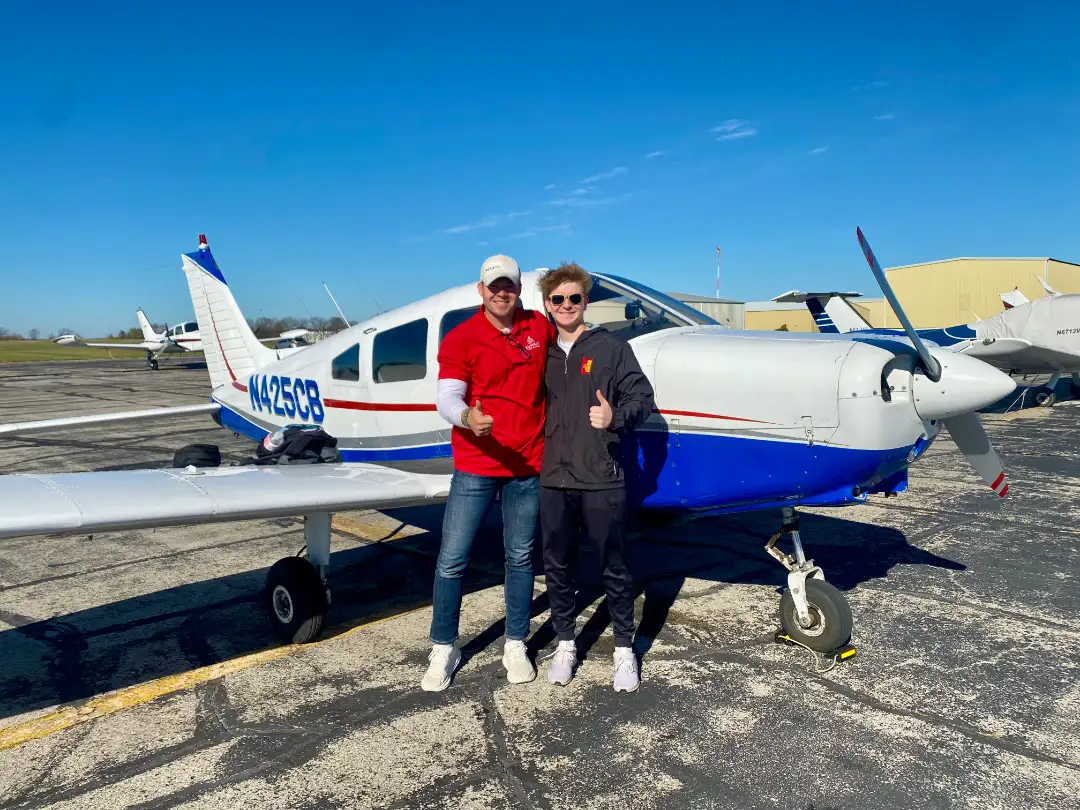
Before you commit to a long-term training program, it’s important to experience flight firsthand. A Discovery Flight gives you the chance to meet our instructors, tour the school, and actually take the controls with a certified flight instructor beside you.
It’s hands-on, eye-opening, and often the spark that turns curiosity into commitment.
👉 Book your Discovery Flight today and see if a future in aviation is right for you.
Step 2: Learn the Basics with Your Private Pilot Certificate
Every professional pilot starts with a Private Pilot License (PPL). This certification allows you to fly single-engine aircraft under visual flight rules (VFR). At Summit, our Private Pilot + Instrument Bundle is designed to help you go beyond the basics and build skills faster by combining your private and instrument training into one powerful track.
What you’ll learn:
- Flight fundamentals
- Airspace navigation
- Emergency procedures
- Communication with ATC
Step 3: Add an Instrument Rating
Instrument training teaches you how to fly in clouds, fog, and low-visibility conditions using only your instruments. This skill is not just critical for safety, it’s a major requirement for future commercial pilots.
Many students choose to enroll in our Private Pilot + Instrument Bundle to streamline their training and build a strong foundation for career advancement.
Step 4: Become a Commercial Pilot
Once you’ve logged enough flight hours and earned your PPL and Instrument Rating, it’s time to step into the professional ranks. A commercial certificate allows you to get paid to fly, opening doors to jobs in charter flights, aerial photography, banner towing, and more.
At Summit, we tailor your commercial training to meet your timeline and goals.
Step 5: Build Time as a Flight Instructor (CFI)
Most airline pilots build flight hours by becoming Certified Flight Instructors. As a CFI at Summit, you’ll get paid to teach others while growing your own experience. Many of our top graduates go on to join our team as instructors, creating a full-circle opportunity right here at Lee’s Summit Airport (KLXT).
Step 6: Add Advanced Ratings
If you’re aiming for the airlines, a Multi-Engine Rating and Certified Flight Instructor – Instrument (CFII) or Multi-Engine Instructor (MEI) credential will give you a competitive edge.
These advanced ratings prepare you for complex aircraft operations, a must-have in the regional and major airline world.
Ready to Start Your Journey?
Flying professionally isn’t just a dream, it’s a structured path, and it starts with one decision: to take action.
🚀 Book your Discovery Flight and take your first step today.
Or learn more about our programs for aspiring pilots here.
The sky isn’t the limit, it’s where your career begins.