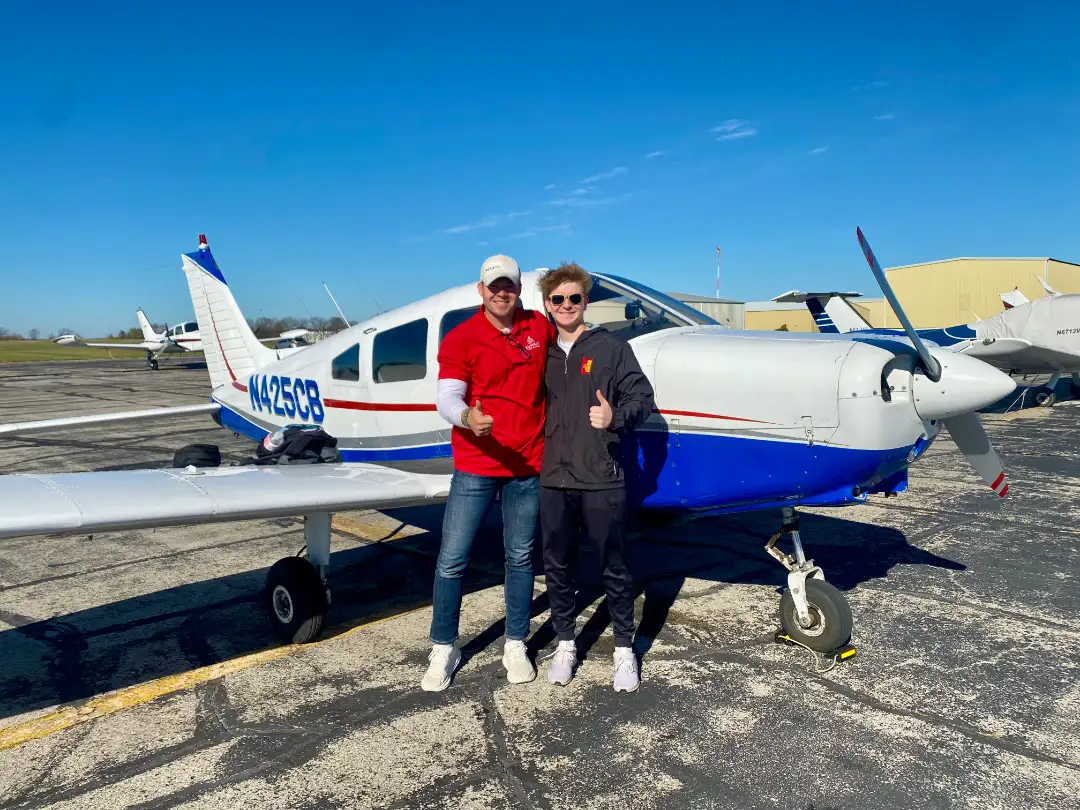
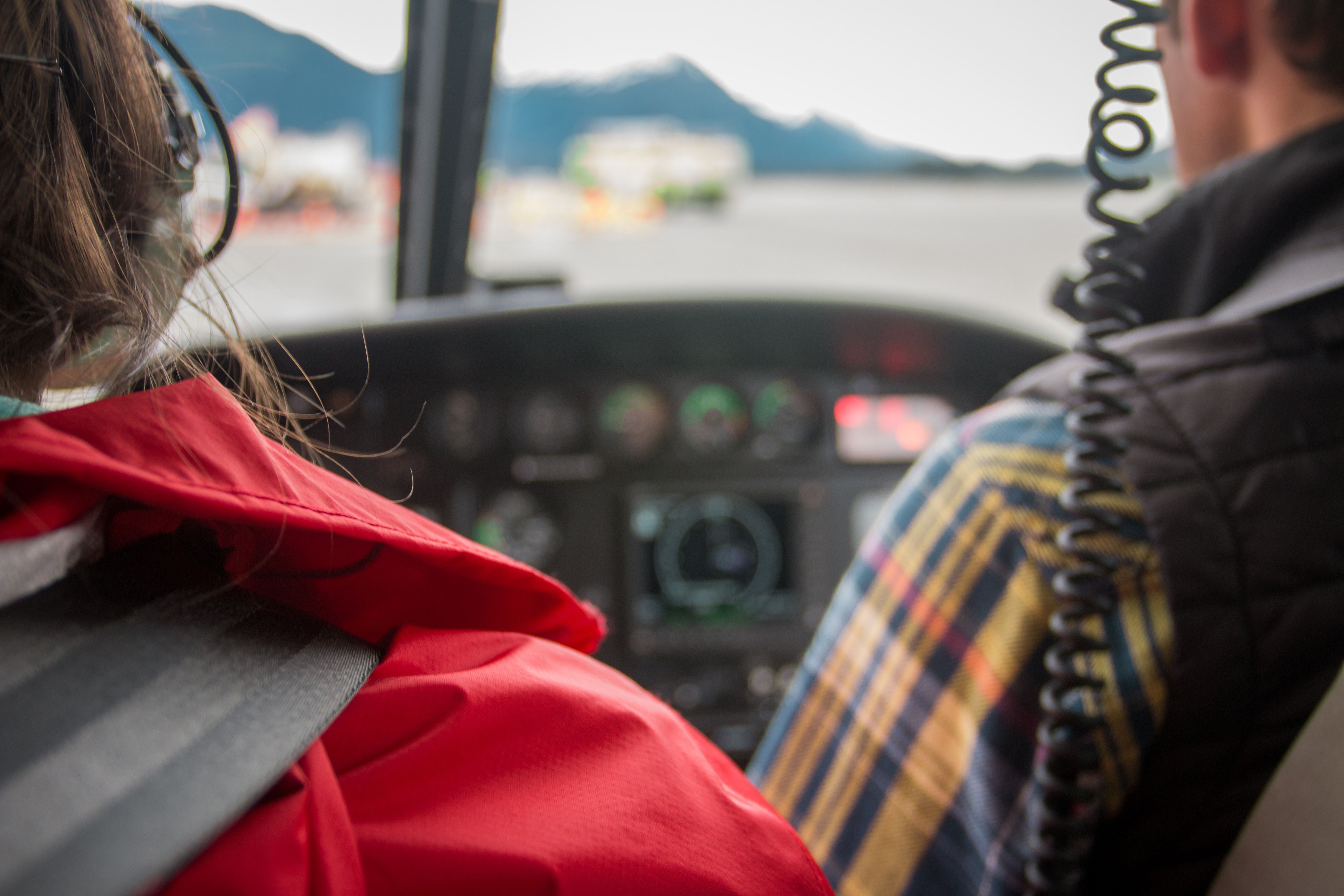
March is finally here. The ice is melting off the wings. The sun is staying out longer. You have been thinking about learning to fly, and spring feels like the perfect moment to start. But if you have been researching flight schools in Kansas City, you might wonder what spring weather really means for your training. Will you be grounded by storms? Are the wind conditions too unpredictable for a beginner?
Here is the truth that most flight schools will not tell you upfront: spring in Kansas City is not a challenge to avoid. It is an opportunity to become a better pilot.
At Summit Flight Academy, we train student pilots at Lee’s Summit Municipal Airport (KLXT) through every season. We see firsthand how spring flying conditions prepare you for real-world aviation better than any other time of year. The weather variety you experience from March through May builds skills that calm-weather pilots simply do not develop.
Let’s break down exactly what you need to know about spring flight training in Missouri, and why this season might be your best decision as a new student pilot.
Why Spring Weather in the Midwest Makes You a Stronger Pilot
Most people assume smooth, calm days create the best learning environment. That sounds logical. But aviation does not work that way in practice.
When you train only in perfect conditions, you learn to fly only in perfect conditions. The moment you face a gusty crosswind or shifting visibility, you freeze. You cancel flights. You lose confidence.
Spring weather in Kansas City gives you something better: controlled exposure to real challenges while you still have an instructor right beside you.
From March through May, the Midwest experiences rapid temperature changes. Cold fronts push through every few days. You get morning fog that burns off by noon. You see afternoon thunderstorms build on the horizon. Wind speeds shift between calm and gusty within hours.
This is not chaos. This is your training ground.
You learn to read METAR reports with actual consequences on the line. You practice the PAVE checklist when deciding if a flight is safe. You build personal minimums that reflect your actual skill level, not theoretical limits. These are the exact decision-making skills that keep pilots safe for their entire careers.
Our location at Lee’s Summit Municipal Airport positions you perfectly for this kind of training. We sit just southeast of the Kansas City metro, which means you get real airspace complexity without the overwhelming traffic of a major hub. You also benefit from two intersecting runways (18/36 and 11/29), so you can practice crosswind landings in actual crosswind conditions, not just textbook scenarios.
What March Through May Actually Looks Like in Your Training Schedule
Let’s talk about what you can realistically expect if you start your Private Pilot Training this spring.
Early March still carries some cool mornings. Temperatures hover in the 40s and 50s. You might see frost delays once or twice, but nothing like the ice storms of January. By mid-morning, conditions usually clear and you can fly. Winds are moderate but manageable.
April is prime flying weather. Temperatures climb into the 60s and 70s. The days get longer, which means you can schedule lessons after work if you commute from Independence, Overland Park, or Blue Springs. You will start seeing convective activity build in the afternoons. This is when you learn to spot developing weather and make smart decisions about continuing, diverting, or turning back.
May brings warmer temperatures and more consistent flying days. By this point, you have seen enough weather variety to feel genuinely confident. You understand how wind shear works. You know when to expect turbulence. You can read a TAF and actually trust your interpretation.
Here is how typical spring weather patterns affect your training timeline:
| Month | Avg Flyable Days | Primary Weather Challenges | Training Focus |
|---|---|---|---|
| March | 20-22 days | Variable winds, morning frost | Basic maneuvers, pattern work |
| April | 23-25 days | Afternoon convection, gusty winds | Crosswind practice, weather decisions |
| May | 24-26 days | Thunderstorm avoidance, density altitude | Cross-country planning, advanced scenarios |
This variety actually speeds up your training. You get real-world experience early in your journey. Your checkride preparation becomes more thorough because you have already faced the conditions your examiner will ask about.

How Lee’s Summit Municipal Airport Gives You an Edge in Spring Training
Not all airports are created equal when it comes to spring flight training. The specific setup at KLXT creates training advantages you will not find at other Kansas City area airports.
Two intersecting runways mean you can practice crosswinds regardless of wind direction. When the wind blows from the southwest (common in spring), Runway 18/36 gives you a perfect crosswind component. When it shifts to the northwest, Runway 11/29 becomes your training ground. You do not need to drive to another airport or wait for the wind to cooperate. You just taxi to a different runway and practice.
The airspace structure around Lee’s Summit exposes you to real radio communication without overwhelming you. Kansas City Class C airspace sits to the northwest. You will request flight following, practice radio calls, and learn to navigate controlled airspace. But you are not battling heavy airline traffic on every single flight. You get the experience without the stress overload.
Midwest weather systems move through this region with reliable patterns. You learn to anticipate frontal passages, understand wind shift lines, and recognize the signs of developing convection. According to the FAA Pilot’s Handbook of Aeronautical Knowledge, this kind of weather decision-making experience is critical for safe flying. You cannot learn it from a book. You have to live it.
Our all-Piper fleet stays ready to fly through variable spring conditions because of our in-house maintenance team. Other schools send their planes offsite for repairs, which creates scheduling delays during the busiest training season. We handle maintenance right here at the airport. This means you fly consistently, build momentum, and finish your training faster.
Spring Weather Teaches You What Simulators Cannot
We use a Redbird full-motion flight simulator for specific training scenarios. Simulators are excellent tools for practicing procedures and building muscle memory. But they cannot replicate the real sensory feedback of spring flying conditions.
You cannot simulate the subtle pressure changes you feel when a thermal lifts your wing. You cannot fully recreate the sight picture of a developing thunderstorm cell 15 miles ahead while you decide whether to continue or divert. You cannot teach the gut-level awareness that comes from feeling wind shear on short final.
Spring weather in Kansas City gives you this education naturally. Every flight becomes a masterclass in aeronautical decision-making. You start to develop what experienced pilots call “weather sense.” This is the ability to look at the sky, feel the wind, check your instruments, and make the right call.
Our certified flight instructors know how to use spring conditions as teaching moments. When you see virga in the distance, your instructor explains what it means and how it affects your flight. When you feel gusty winds on approach, you learn proper control inputs in real time. When a line of storms builds west of Olathe, you practice diversion planning with actual weather, not a hypothetical scenario.
If you are considering our Instrument Rating program, spring training pays even bigger dividends. You will already understand weather systems, cloud formations, and visibility restrictions. Your instrument training builds on real experience instead of starting from pure theory.
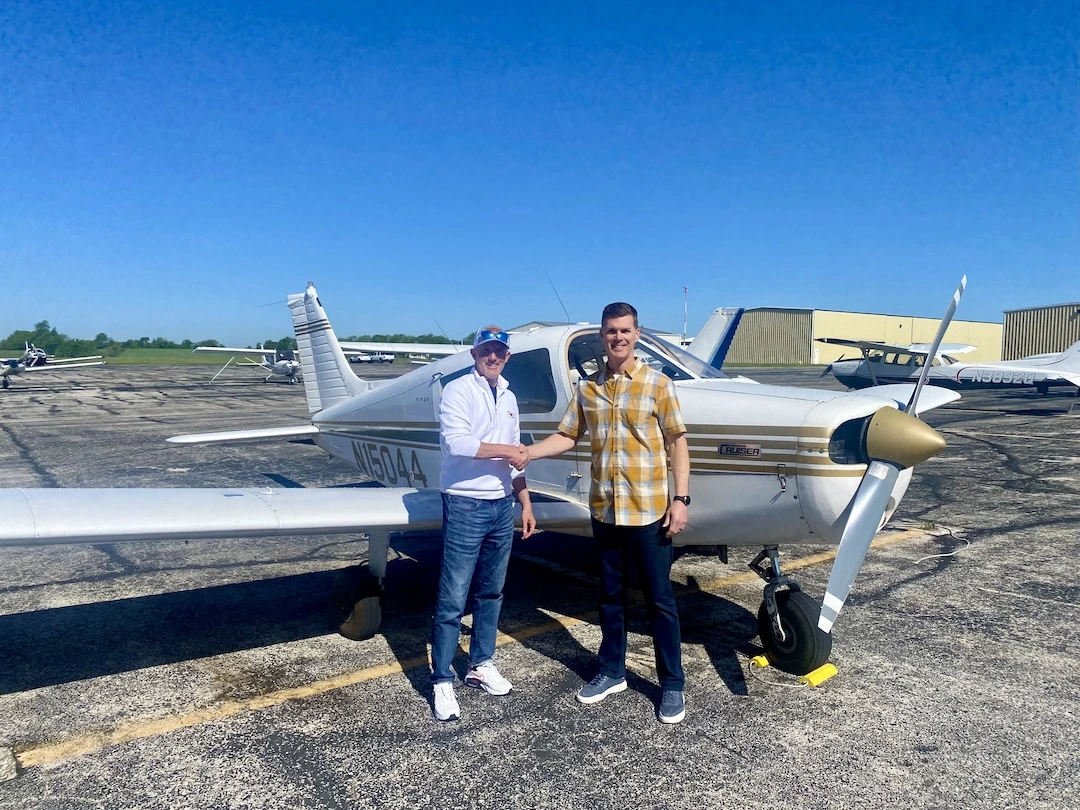
Financing Your Spring Start: Making the Investment Work
You might be thinking: “This all sounds great, but can I afford to start right now?”
Spring is actually a smart time to begin from a financial planning perspective. If you start in March or April, you can complete your Private Pilot Certificate by summer. This timing matters because it positions you to continue into advanced ratings during the fall, when many students take breaks.
Summit Flight Academy partners with Stratus Financial and Flight Training Finance to help you manage the investment. You can structure payments around your income instead of delaying your training for years while you save.
Beginning in August 2025, 529 education savings plans became eligible for qualified flight training expenses. If you or your family have been contributing to a 529 plan, you can now use those funds for your aviation training. This is a significant change that makes spring 2026 an excellent time to start your pilot journey. Learn more about 529 plan eligibility for flight training.
For Garmin employees, the company offers substantial support. You can receive up to $3,000 reimbursement per rating and $45 per flight hour. If you work at Garmin and have been considering flight training, this benefit makes spring the perfect time to commit. Check out our guide on Garmin pilot certification benefits.
Part 61 Flexibility Means You Control Your Spring Training Pace
Because we operate under Part 61 regulations, your training schedule adapts to your real life. You do not need to commit to a rigid, full-time program. If you can fly three or four times per week during spring, you will progress quickly through our expedited package (3-4 months). If you can only train two or three days per week, you simply adjust the timeline.
This flexibility matters during spring because weather creates natural scheduling variation. Some weeks give you perfect flying conditions five days in a row. Other weeks require more weather awareness and selective scheduling. Part 61 training lets you maximize good weather days without penalty.
Students commuting from Leawood, Raymore, or Grandview appreciate this flexibility. You book lessons when your work schedule and the weather both cooperate. You never feel pressured to fly in conditions that make you uncomfortable just to meet arbitrary program requirements.
If your ultimate goal is a professional pilot career, consider our Career Track program. This zero-to-hero pathway takes you from no experience to commercial ratings in 12 to 15 months if you fly three to four days per week. Starting in spring means you could complete the entire program by the following summer, positioning you perfectly for the strong pilot hiring market.
Common Spring Weather Questions Answered
-
Will I get stuck on the ground waiting for weather to clear?
Not as often as you think. Spring brings variable weather, but that variability includes many excellent flying days. Most weather systems move through quickly. A morning fog delay often means beautiful flying by noon. Our flight instructors monitor conditions constantly and communicate realistic expectations about your flying schedule.
-
Is spring too turbulent for a brand-new student pilot?
Spring turbulence is almost always light to moderate, especially in the morning hours. Your instructor will expose you gradually to bumpier conditions as your skills develop. Early flights happen in smooth morning air. As you gain confidence, you fly during slightly rougher afternoon conditions. This builds your tolerance naturally without overwhelming you.
-
What happens if a thunderstorm develops during my lesson?
Your instructor will teach you to recognize developing convection long before it becomes a safety issue. You will learn the 30-minute rule and proper spacing from buildups. If conditions deteriorate unexpectedly, you land early. This is not a failure. This is exactly the kind of real-world decision-making that makes you a safer pilot.
-
Can I still train if I can only fly on weekends?
Absolutely. Many students from Kansas City, Olathe, and surrounding areas train exclusively on weekends. Spring weekends often provide excellent weather. You will progress more slowly than someone flying four or five days per week, but you will still complete your training successfully.
-
How does spring weather training help my long-term aviation goals?
Every professional pilot flies through challenging weather at some point. The experience you gain during spring training in Missouri builds a foundation of weather competence that serves your entire career. You will make better decisions, recognize hazards earlier, and feel confident in conditions that intimidate pilots who trained only in perfect weather.
-
Do I need to complete ground school before I can start flying this spring?
No. At Summit Flight Academy, you can begin flight training and ground school simultaneously. Many students actually learn faster this way because the hands-on flying experience reinforces the theoretical concepts. You will need to pass your written exam before your checkride, but you do not need to finish it before you start flying.
-
What makes Summit Flight Academy better than other Kansas City flight schools for spring training?
Our combination of in-house maintenance, two intersecting runways at KLXT, modern Garmin avionics in our Piper fleet, and experienced instructors who know how to teach in variable weather creates an environment where you can train consistently and effectively through spring conditions. You get more flying time, better skill development, and faster progress toward your certificate.
Your Next Step: Experience Spring Flying for Yourself
Reading about spring flight training is one thing. Experiencing it is completely different. The best way to know if this is the right time for you is to see it firsthand.
Book a Discovery Flight with Summit Flight Academy. You will meet one of our certified flight instructors. You will see our facility at Lee’s Summit Municipal Airport. You will sit in the left seat of a Piper Warrior or Archer with modern Garmin glass cockpit displays. Most importantly, you will take the controls and feel what it is like to fly.
Spring 2026 offers ideal conditions to start your pilot journey. The weather challenges you just enough to build real skills without overwhelming you. The Kansas City area provides the perfect training environment. Our flexible Part 61 program adapts to your schedule.
Whether you are commuting from Shawnee, Liberty, Belton, or anywhere in the metro area, you will find that spring weather becomes your training advantage instead of your obstacle.
The pilots who succeed are the ones who start. Spring flying season is here. Your aviation journey is waiting.
👉 Ready to experience spring flying in Kansas City for yourself? Schedule your Discovery Flight today and see why this season creates better pilots.
Serious about earning your certificate? Enroll now and take advantage of ideal spring training conditions at Summit Flight Academy.