Flight Instructor Training in 2026
The complete guide to becoming a CFI in Kansas City, from your commercial certificate to your first student, with the CFII and MEI after that.
Explore CFI TrainingWhat Flight Instructor Training Actually Involves
Flight instructor training is the work that turns a commercial pilot into someone the FAA trusts to teach. You study how people learn, pass two FAA knowledge tests, earn a spin training endorsement, learn to fly and teach from the right seat, and pass a checkride where the examiner grades your teaching as much as your flying. When it's done, you hold a flight instructor certificate, the credential most people call the CFI.
The FAA spells out every step, so you can see the whole path before you start. At Summit Flight Academy, based at Lee's Summit Airport (KLXT), we train CFI, CFII, and MEI candidates on that path. If you want the step-by-step version, read our guide on how to become a flight instructor.
Each stage below links to the article that covers it in depth, so you can plan your flight instructor course in the right order and know what each stage asks of you. Quick answers on eligibility live in our flight instructor requirements FAQs.
5 Steps From Commercial Pilot to Flight Instructor
Every airplane CFI follows the same FAA sequence. Here it is in the order you'll work through it.
- 1 Confirm Your Prerequisites
- You need to be at least 18, read, speak, write, and understand English, and hold a commercial pilot certificate with an instrument rating. You also need at least 15 hours as pilot in command in the airplane class you'll teach in.
- 2 Finish Ground School and Pass the FOI and FIA
- Study the fundamentals of instructing and the technical subjects you'll teach. Then pass two FAA knowledge tests: the fundamentals of instructing (FOI) and the flight instructor airplane (FIA).
- 3 Earn Your Spin Endorsement and Train From the Right Seat
- Complete the required spin training in an airplane certificated for spins. Then learn to fly every maneuver from the right seat while you teach it out loud.
- 4 Pass the CFI Checkride
- Your examiner grades you against the FAA's flight instructor ACS. Expect to teach a lesson on the ground, then fly and instruct in the air. Our CFI checkride guide shows what examiners look for.
- 5 Add the CFII and MEI, and Start Teaching
- Most instructors add the CFII next, then the MEI. Each rating widens who you can teach. Compare them in our CFI vs CFII vs MEI guide.
By beginning training with us, you'll soon be up in the air on your own, and closer to succeeding in your aviation goals than ever before.

The Stakes
Where CFI Candidates Lose Time and Money
The calendar is the first trap. Your FOI and FIA results are good for 24 calendar months before the month of your checkride. Pass them, then let life get in the way, and the clock keeps running. Retaking a knowledge test costs a new fee and new study time.
Long gaps hurt in the airplane too. Right-seat flying is a perishable skill, and every month away means review flights you pay for before you move forward. The same is true between ratings. Stretch the time between your CFI and CFII, and you'll rebuild proficiency you already had.
The other trap is the checkride itself. The CFI test is a teaching test. Pilots who fly well but haven't practiced explaining what they do can struggle on the oral and in the air. Planning your training as one continuous sequence guards against each of these.
Flight Instructor Requirements
Check These Prerequisites Before You Start CFI Training
To earn an airplane flight instructor certificate, the FAA requires you to be at least 18 years old, to read, speak, write, and understand English, and to hold a commercial pilot certificate (or ATP) with an instrument rating and the airplane class you'll teach in.
The FAA sets no separate total flight time minimum for the CFI. The 250 hours you may have heard about is the figure for most Part 61 commercial airplane applicants. For the CFI itself, the hour rule is at least 15 hours as pilot in command in the category and class you'll teach in, and most commercial pilots already have it.
On medicals, you need at least a third-class medical any time you act as pilot in command or as a required crewmember while instructing, so most instructors keep one current. Medical questions belong with an aviation medical examiner (AME). For the full checklist, see our flight instructor requirements FAQs.
Ground School
Learn How People Learn Before You Teach Them to Fly
CFI ground school covers two big areas. The first is the fundamentals of instructing: how people learn, effective teaching methods, how to evaluate and test a student, how to build a course, and how to plan a lesson. Your instructor signs a logbook endorsement on these topics before you take the FOI test.
The second area is the technical material you'll teach: aerodynamics, regulations, weather, airplane systems, maneuvers, and more. That's what the FIA test covers. Along the way you build your own lesson plans, and you'll use them on the checkride and with your first students.
If you already teach, you may skip a test. The FOI is waived for current flight or ground instructors, state-certified teachers of 7th grade or higher, and teachers at an accredited college or university. The FAA's handbooks, including the Aviation Instructor's Handbook, are free to download on faa.gov.
Flight Training to Teach
The Spin Endorsement and the Right Seat Change How You Fly
Every airplane CFI applicant needs a spin training endorsement. That means flight training in stall awareness, spin entry, spins, and spin recovery, in an airplane certificated for spins. It's a required step, so talk to us early and we'll plan where it fits in your schedule.
Next, you move to the right seat. You've flown every maneuver from the left. Now you fly them from the other side while you explain what you're doing, watch a "student" make mistakes, and fix them in real time. Plan on about 15 hours of right-seat flying with us, plus ground work refining your lesson plans and teaching technique.
We tell our candidates the CFI is often the most challenging, yet rewarding, certificate many pilots earn. The flying is familiar. Talking someone else through a steep turn while you stay ahead of the airplane is the new skill.
The Checkride
What the CFI Checkride Really Tests: Your Teaching
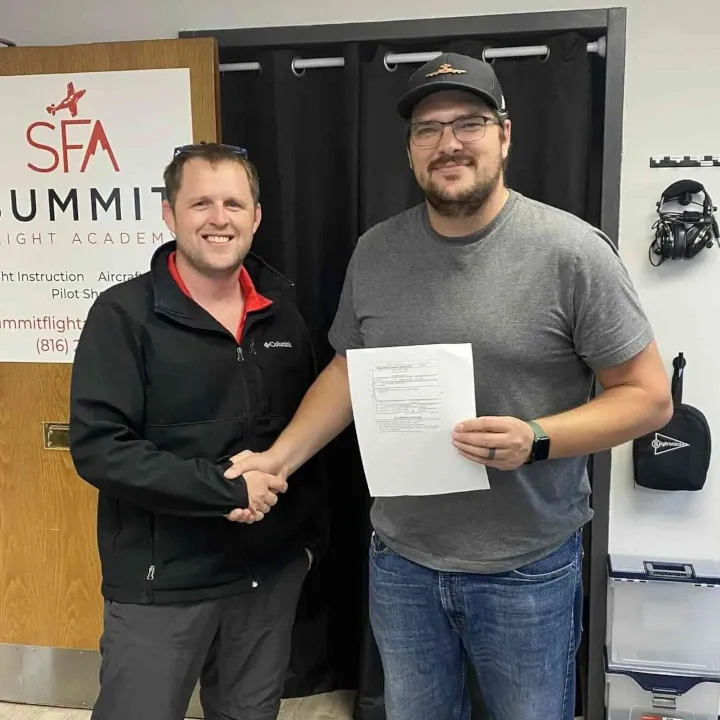
Since May 2024, the airplane CFI checkride has been graded against the Flight Instructor for Airplane Category ACS (FAA-S-ACS-25), the FAA's Airman Certification Standards. A checkride is the FAA practical test, given by an examiner, usually a Designated Pilot Examiner (DPE).
The examiner wants to see that you can apply the fundamentals of instructing, teach the subject, fly to commercial standards while instructing, and analyze and correct common errors. Expect to present a preflight lesson on a maneuver the examiner picks, and expect the examiner to act like a student during the flight. Your own lesson plans can come with you.
You also provide the airplane for the test, so plan for that flight in your budget. Our CFI checkride guide walks through the areas of operation, the endorsements to bring, and how to prepare.
CFI vs CFII vs MEI
Add the CFII and MEI to Teach More Students
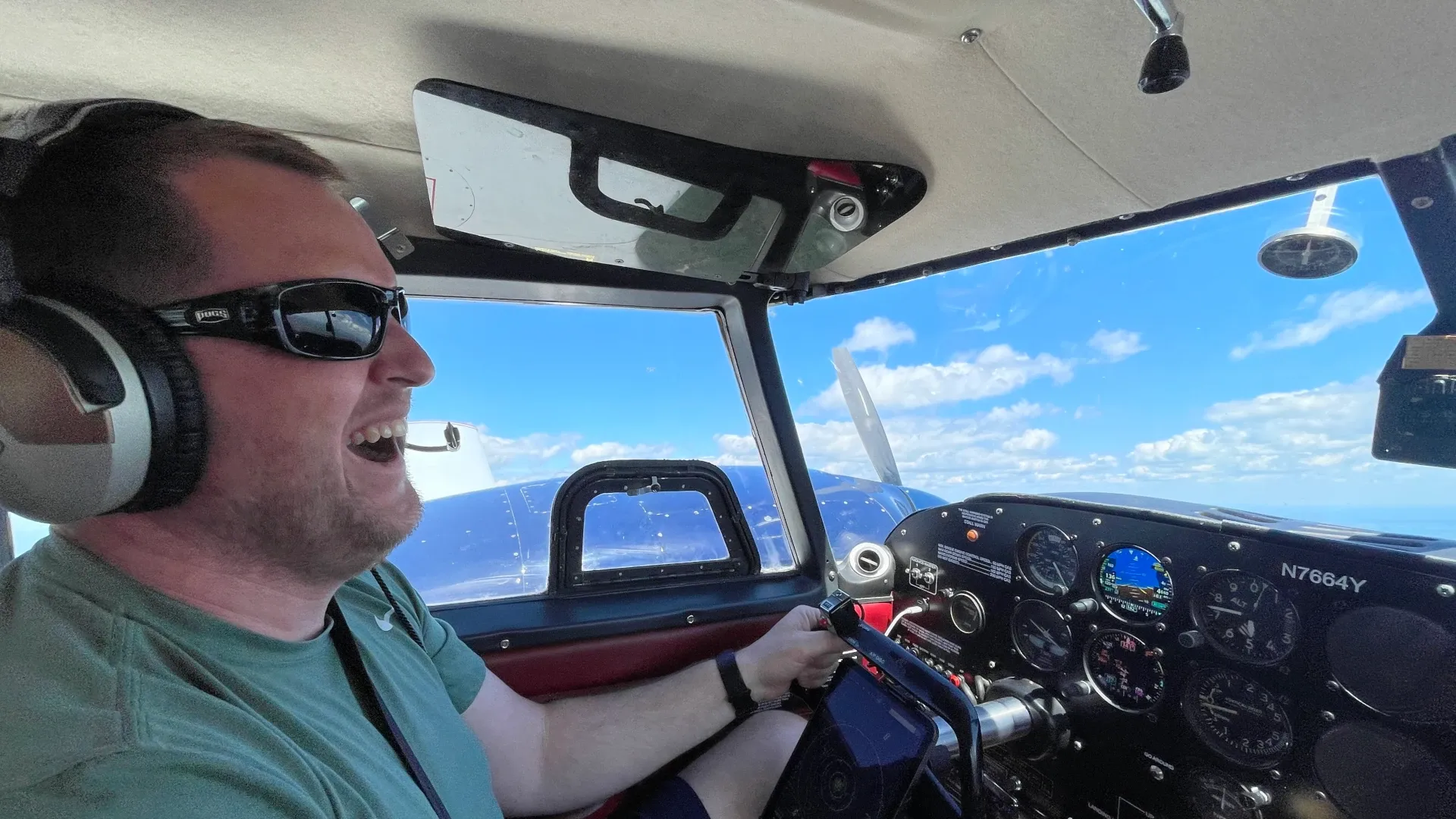
You hold one flight instructor certificate, and CFII and MEI are ratings added to it. An instructor can only give flight training in a class of airplane listed on both the pilot and instructor certificates, so each rating opens a new group of students.
The CFII lets you give the instrument training an instrument rating needs, plus the instrument training commercial applicants need. It adds one knowledge test, and you don't retake the FOI. The CFII checkride still runs on a Practical Test Standards document. Your CFII training with us includes extra simulator time so you learn to teach in the sim as well as the airplane.
The MEI needs a multi-engine rating on your commercial certificate and at least 15 hours as pilot in command in multi-engine airplanes. Adding it to an airplane CFI usually takes no new knowledge test. To teach toward a rating in a twin, an MEI also needs at least 5 hours as pilot in command in that make and model. Our multi-engine rating runs seven days in our Piper Twin Comanche, and that package starts at $4,950. Most pilots go CFI, CFII, then MEI, though the FAA doesn't require that order. Our CFI vs CFII vs MEI guide helps you choose.
Cost
What Drives the Cost of Flight Instructor Training
The FAA sets no minimum number of CFI training hours, so your cost tracks how quickly you get ready to teach. The main line items are aircraft time, instructor and ground time, knowledge test fees, the examiner's fee, the airplane for the checkride, and study materials. Examiner fees vary, and DPEs set their own.
We build your quote around what's already in your logbook and the ratings you want. Our article on how much CFI training costs breaks down each line item so you can plan.
If you'd rather not pay all at once, financing options may be available to qualified applicants through our lending partners. See our financing page to start that conversation.
Choose Your Route
Standalone CFI Training or the Full Career Track
Already a commercial pilot? You can come to us for standalone CFI, CFII, and MEI training. Starting closer to zero? Our Career Track runs from private pilot through instrument, commercial, CFI, CFII, the multi-engine rating, and MEI as one planned program.
The FAA requirements are the same either way: same tests, same checkride standard. What changes is the gap between stages. On the Career Track, flying full time can take the whole path in about a year. At 3 to 4 days a week, plan on 12 to 15 months; at 2 to 3 days, 15 to 18 months. Weather, checkride scheduling, and your own readiness move those numbers.
Not sure which fits? Our comparison of a standalone CFI training program vs the Career Track lays out who each route suits.
The Instructor Career Path
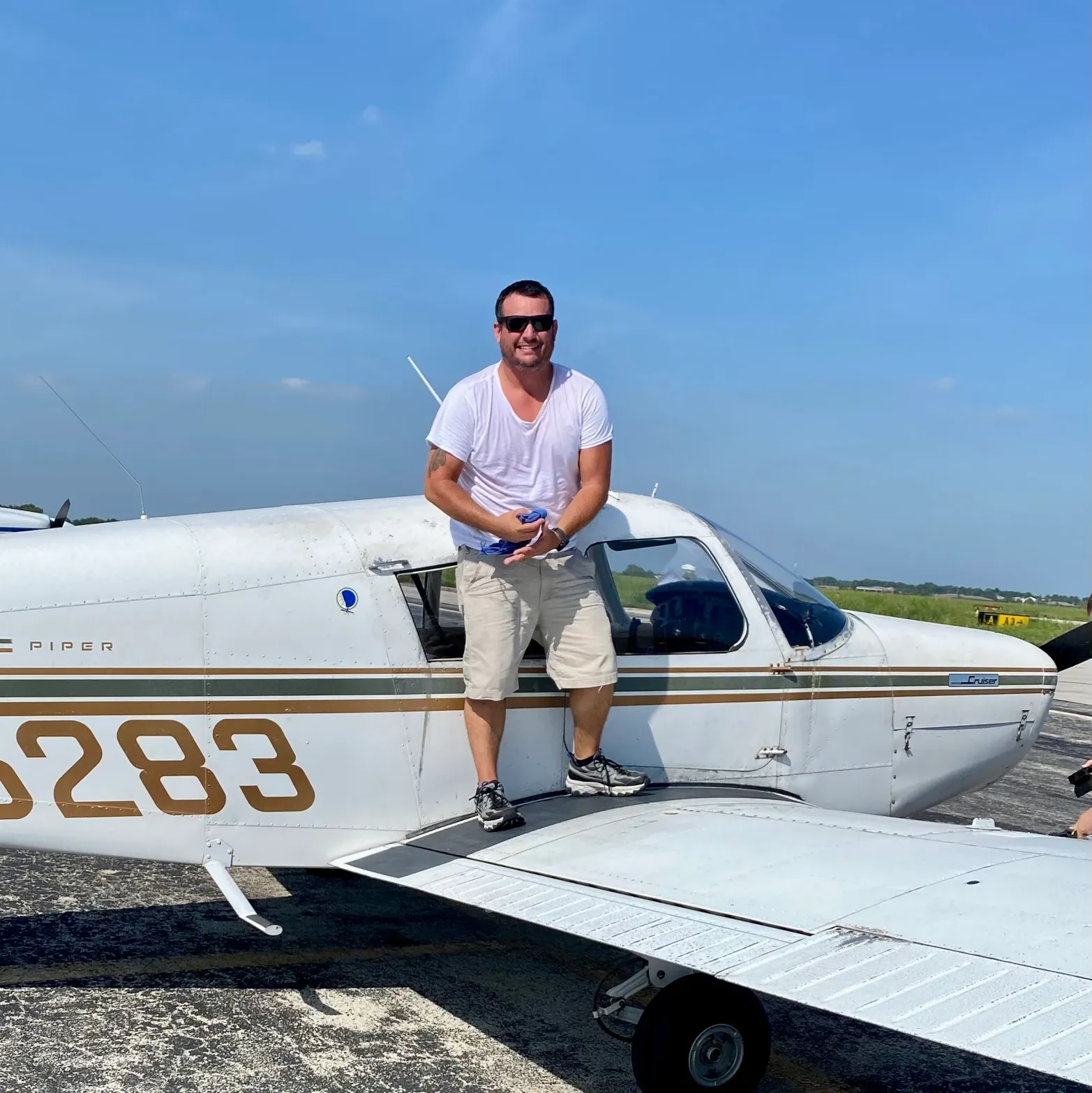
Where Instructing Takes You After Your First Student
Instructing is one of the most common ways pilots build time after the commercial certificate, and that time moves you toward the 1,500 hours a standard ATP certificate calls for. Some degree and military paths qualify for a restricted ATP with fewer hours; our article on R-ATP and ATP certification explains them.
Your ratings shape the work you can find. Many schools, including ours, prefer instructors who can keep a student from private through instrument, which is why the CFII matters. When we hire, we look for CFIIs, and MEI is a plus. Openings are posted on our Teach at Summit page.
Instructing also teaches you to brief, plan, and stay calm while someone else flies. Our guide to flight instructor jobs in Kansas City covers what local instructing work looks like, and we're proud to have sent pilots on to SkyWest.

Why Summit Flight Academy
Train to Teach With Instructors Who Hold Every Rating You're After
Both of our founders, Jeremy Davis and Levi Self, hold CFI, CFII, and MEI ratings, and most of our instructors are CFIIs. You'll learn to teach alongside working instructors at KLXT, in the same Piper fleet our students fly.
That fleet is hangared and maintained in-house, with Levi, an A&P mechanic, overseeing the work. Fewer cancelled lessons means fewer gaps between flights, which matters when you're building right-seat skills. We train under Part 61 with no fixed cohort calendar, and we're open seven days a week.
One school can take you from CFI to CFII to MEI, with our own Twin Comanche for multi-engine work. You keep one training record and one team that knows how you fly, start to finish.
Start Your CFI Training
Certified Flight Instructor Training Near Kansas City
Summit Flight Academy trains CFI, CFII, and MEI candidates at Lee's Summit Airport (KLXT), serving pilots across the Kansas City metro in Missouri and Kansas.
- Take a Discovery Flight
- The best way to see if flying is right for you is to take a discovery flight. This brief introductory flight, led by one of our seasoned instructors, offers a first hand glimpse into the world of piloting. During this experience, you'll take the controls of the plane, acquaint yourself with maneuvers, and view the Kansas City from a new perspective.
- Start Flight Training
- The first step in your aviation journey is obtaining your private pilot certificate. This allows you to be pilot in command (PIC) of an aircraft and take passengers with you. Our team of experienced instructors will work with you to craft a training regimen that perfectly suits your goals, schedule, and preferred learning style. Get your private pilot certificate at Summit Flight Academy.
- Advanced Flight Training
- Expand your aviation knowledge and skills through a diverse range of advanced courses and certifications. From instrument training to multi-engine training, commercial training, and beyond, Summit offers a selection of advanced training options.
- Start Your Pilot Career
- Begin your pilot career with Summit Flight Academy. We offer training to get your commercial pilot certificate - the level required to fly aircraft commercially and make money flying. This certificate can be extended into becoming a CFI or CFII with us too!
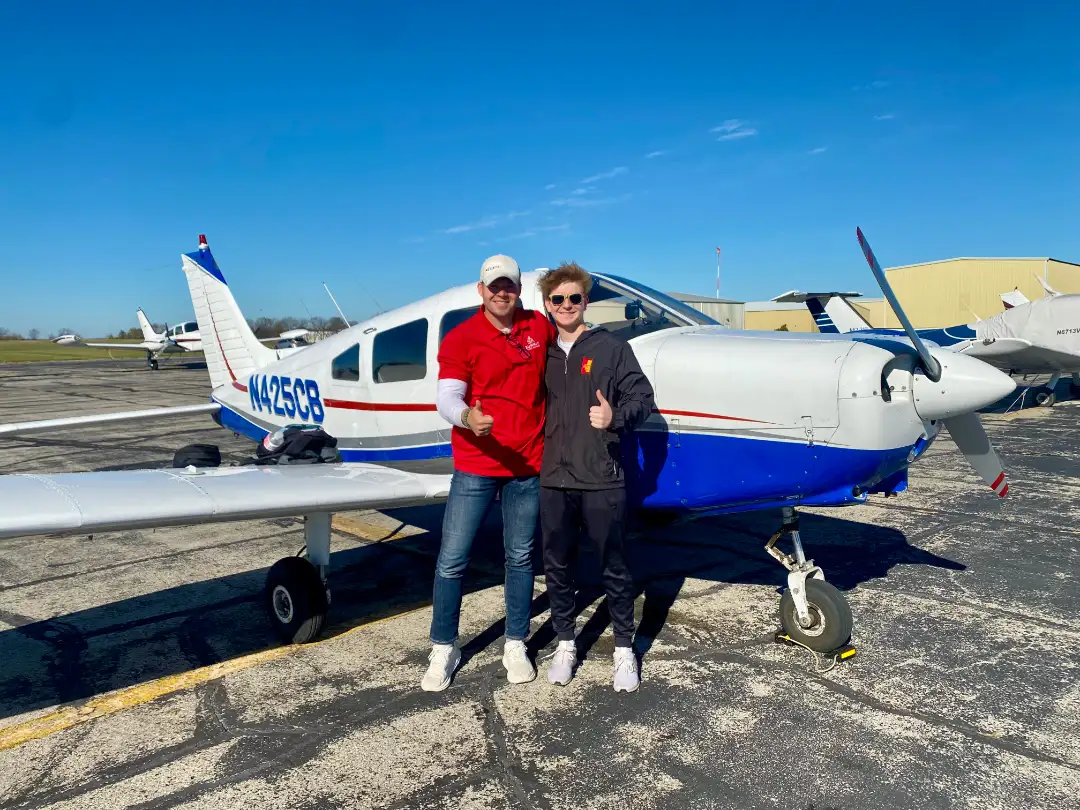
Start Your Flight Instructor Training at KLXT
Tell us where your logbook stands, and we'll map out your CFI, CFII, and MEI training from there.
Flight Instructor Training FAQs
Frequently Asked Questions About Becoming a Flight Instructor
Still have a specific question?
Our senior instructors are happy to discuss your specific goals and flight training timeline.
Schedule a Discovery Flight