CFI Checkride in 2026: What Examiners Expect and How to Prepare
Published by:
Summit Flight Academy Team
Published on:
Updated on:
Read time:
8 min read
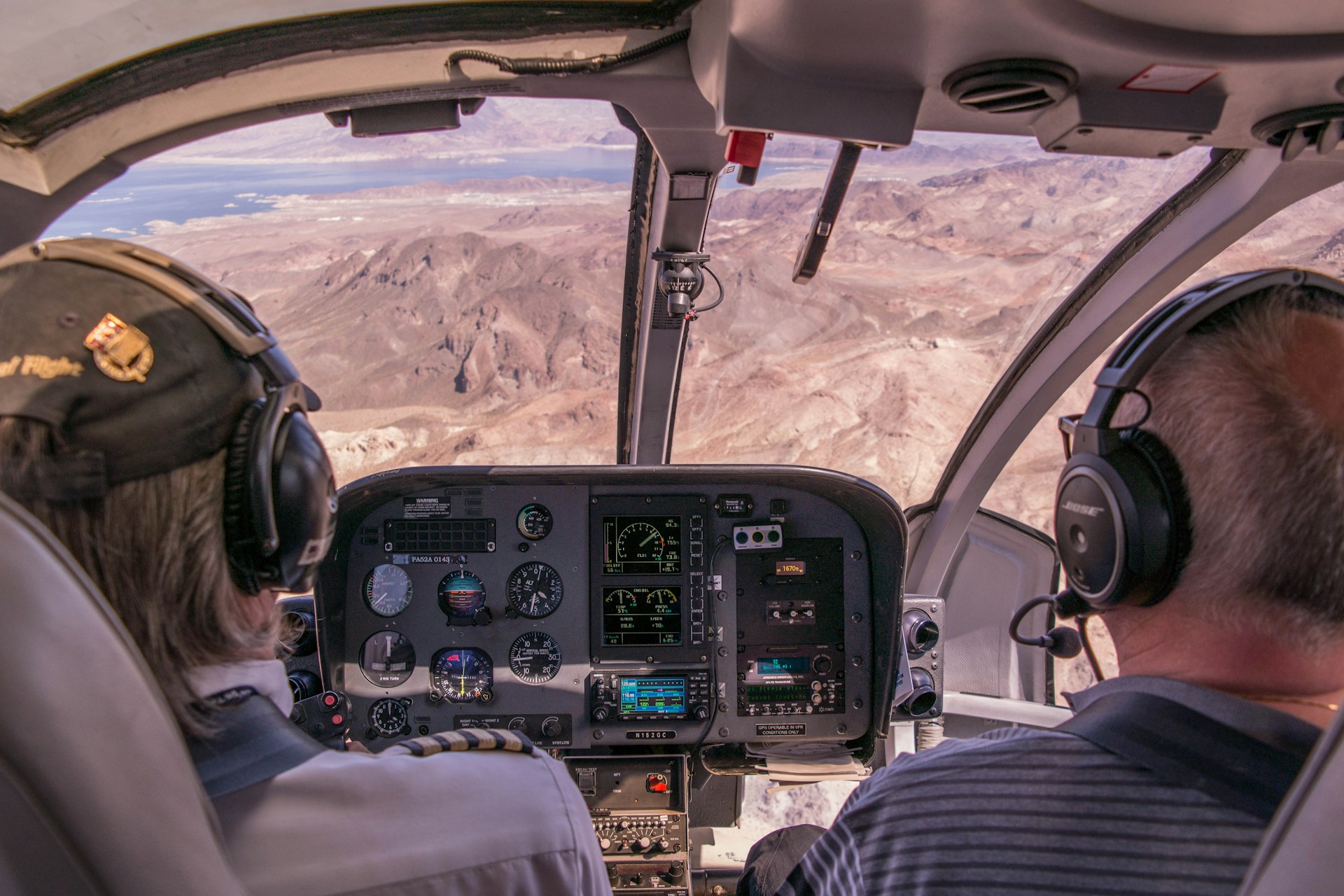
You’re in the right seat at 3,000 feet, talking your examiner through a steep turn. Halfway around, the nose starts to sag and the bank creeps past 50 degrees. Your examiner is playing your student on purpose, and wants to see whether you catch the error, explain it, and fix it while you keep the airplane inside commercial standards.
The CFI checkride is built around moments like that. It’s a practical test of whether you can teach, on the ground and in the air. In 2026 the examiner grades you against the FAA’s Flight Instructor for Airplane Category Airman Certification Standards, so the best prep has you teaching out loud from your first lesson. At Summit Flight Academy we train CFI, CFII, and MEI candidates at Lee’s Summit Airport (KLXT). Below is what the examiner expects and how we’d get you ready.
The CFI Checkride Grades Your Teaching First
Your private and commercial checkrides asked one question: can you fly the airplane safely to the standard? If you need a refresher on how any practical test works, our beginner’s guide to the checkride covers the basics. The flight instructor practical test asks a harder one. Under the FAA standard, the examiner has to confirm four things:
- Your ability to apply the fundamentals of instructing
- Your knowledge of the subject and your ability to teach it
- Your ability to fly the tasks at the level of a commercial pilot while giving effective flight instruction
- Your ability to analyze and correct common errors
The third point is where commercial pilots get caught. You have to fly a chandelle to commercial standards while explaining it, which is a separate skill from flying it well. We tell our candidates the CFI is often the hardest certificate they’ll earn, and this is the reason.

Which Standard Applies to Your CFI Checkride in 2026
If you’ve read older prep material, you’ve seen references to the Flight Instructor PTS. That document is retired for airplanes. Since May 2024, the CFI airplane checkride has been graded against the Flight Instructor for Airplane Category ACS (FAA-S-ACS-25), which replaced FAA-S-8081-6D, the Flight Instructor Practical Test Standards for Airplane. The same ACS covers the single-engine CFI and the multiengine instructor rating. If you go on to the CFII, that test still runs on a Practical Test Standards document.
The ACS is organized into 14 areas of operation. Thirteen apply to a single-engine CFI test, since Multiengine Operations only applies on a multi test. Here’s how they group up on the day of your CFI training checkride:
| Where it happens | Areas of operation | What you’re doing |
|---|---|---|
| The table | Fundamentals of Instructing; Technical Subject Areas; Preflight Preparation | Teaching how people learn, plus the aviation knowledge you’ll teach |
| The whiteboard | Preflight Lesson on a Maneuver to be Performed in Flight | Teaching one maneuver as you would to a real student |
| The ramp and runway | Preflight Procedures; Airport and Seaplane Base Operations; Takeoffs, Landings, and Go-Arounds | Flying and explaining the basics |
| The practice area | Fundamentals of Flight; Performance and Ground Reference Maneuvers; Slow Flight, Stalls, and Spins; Basic Instrument Maneuvers; Emergency Operations | Demonstrating, teaching, and correcting |
| After landing | Postflight Procedures | Securing the airplane and wrapping up |
The examiner doesn’t test every task. They build a plan of action with scenarios that cover the required areas, and they can adjust it as the day unfolds.
What the CFI Oral Exam Looks Like at the Table
The CFI oral exam is where many applicants are surprised by how much teaching it involves. The FAA says the oral questioning continues throughout the entire practical test, and you have to pass the ground portion before you fly. Expect scenario questions, not just definitions.
For an initial CFI, the examiner must test two Fundamentals of Instructing tasks: elements of effective teaching in a professional environment and effective teaching that includes risk management and accident prevention, plus at least one more. The rest of that area covers human behavior and communication, the learning process, course development and lesson plans, and student evaluation and testing. Your study from the FOI knowledge test, which our guide on how to become a flight instructor explains, becomes something you now have to teach back.
In Technical Subject Areas, two tasks are always on the plan: runway incursion avoidance and endorsements and logbook entries. Be ready to explain, or write, the endorsement a student needs for a first solo or a knowledge test. If you fumble the paperwork side of instructing, it shows fast.
Rehearse the maneuver lesson more than anything else. The examiner picks a maneuver and asks you to present a preflight lesson on it, the way you’d teach a student. They decide that task before the flight. The ACS allows you to use lesson plans from your own library, so a binder you built yourself is worth more than any printed outline.
How the Flight Portion Tests You From the Right Seat
You’ll sit where an instructor sits, which is why we train candidates to fly and teach from the right seat. Plan on about 15 hours of right-seat flying with us, plus ground work refining your lesson plans. That time is where the sight picture, the hand switch on the throttle and yoke, and the habit of talking while you fly all come together.
In the air, the examiner may act as a student during selected maneuvers. They’ll make the common errors on purpose: a sloppy entry, a late recovery, a wandering heading. Your job is to spot it, say what happened, and coach the fix. The FAA also expects examiners to add realistic distractions to test how you divide your attention.
For a single-engine test, Slow Flight, Stalls, and Spins pulls from four buckets: slow flight, one of the power-off, power-on, or accelerated stalls, one of the instructor-level demonstration stalls (cross-control, elevator trim, or secondary), and spin awareness and spins. Your spin training endorsement comes in here. At the examiner’s discretion, it can be accepted in place of the spin task, unless you’re retesting after failing for spin-related problems.
Use the positive exchange of flight controls every time, starting on your first right-seat lesson: “You have the flight controls.” “I have the flight controls.” “You have the flight controls.” The ACS calls for the same exchange during the practical test.
What to Bring on Checkride Day
The flight instructor practical test has more paperwork than your earlier checkrides, because instructing is built on records. Your examiner will confirm their exact list, but plan on:
- Knowledge test reports for the FOI (unless you qualify to skip it) and the FIA
- Endorsements: fundamentals of instructing, the areas of operation, the spin training endorsement, and your instructor’s recommendation, with training logged in the 2 calendar months before the test
- Photo ID, pilot certificate, logbook, and your completed application in IACRA
- A medical certificate if you’ll act as pilot in command on the flight, which is something to settle with your examiner ahead of time
- The airplane and its documents. You provide the aircraft. It needs the equipment for every required area and controls that both pilots can reach, plus maintenance records the examiner can review
- A view-limiting device, since Basic Instrument Maneuvers is one of the areas
- Your lesson plan binder
Examiner fees and checkride aircraft time belong in your budget too. Our breakdown of what CFI training costs covers those numbers.
The Mistakes That End CFI Checkrides
The FAA publishes its own list of typical reasons an applicant fails. You won’t find a pass rate here, but you will find exactly what an examiner is watching for:
- Any action that makes the examiner step in to keep the flight safe
- Not clearing the area before and during maneuvers
- Consistently exceeding tolerances, or not correcting promptly when you drift
- Failing to manage risk
- Failing to provide effective instruction while demonstrating a maneuver
That last one is specific to the CFI checkride. If you fly a perfect lazy eight in silence, you’ve missed the task. The standard also says that if you fail to use good aeronautical decision-making in a task, that task is failed. Many of the habits in our post on common checkride errors carry straight over.
If a task goes wrong, the test can end with a Notice of Disapproval. Weather, an airplane problem, or illness can end it with a Letter of Discontinuance instead. Either way, you keep credit for the areas you passed if you finish within 60 days, bring the paperwork, and complete any additional training and endorsement you need.
A CFI Checkride Prep Plan That Builds Teaching Habits
Good CFI checkride prep looks like instructing, because that’s what you’re being tested on. Here’s the plan we’d build around:
- Build your own lesson plan binder. One plan per maneuver and per major ground topic, tabbed by area of operation. Each plan should cover the purpose, the elements, the common errors, and the completion standard, since that’s what the ACS asks you to teach.
- Teach out loud on the ground. Brief a maneuver to a friend, a spouse, or an empty chair. If you can’t explain slow flight without notes, you aren’t ready to explain it at 3,000 feet.
- Sit through full mock orals. Ask an instructor, ideally one who isn’t your regular one, to run you through a long oral with scenario questions and a surprise maneuver lesson.
- Get sharp in the right seat. Fly every maneuver from the right until your commercial-standard flying holds up while you talk.
- Practice the paperwork. Write sample endorsements until you know where to find each one.
- Read the FAA handbooks. The Aviation Instructor’s Handbook and the Airplane Flying Handbook are free on the FAA’s aviation handbooks page, and they’re the references behind most ACS tasks.
If you’re paying for training over time, our financing options are a good first conversation before you set a checkride date. And if you want a broader look at practical test logistics, our Road to Your Checkride resource walks through them.
Frequently Asked Questions
Is the CFI checkride graded on the PTS or the ACS in 2026?
The ACS. The Flight Instructor for Airplane Category ACS (FAA-S-ACS-25) replaced the airplane flight instructor PTS in May 2024 and covers both the CFI and the multiengine instructor rating. The CFII still uses a PTS. Our instructor training is built around the current standard.
Do I have to demonstrate spins on the CFI checkride?
Not always. You need the spin training endorsement before the test, and the examiner may accept it in place of the spin task. If you’re retesting after failing for spin-related problems, expect to demonstrate. See our CFI steps guide for where the endorsement fits.
Can I use my own lesson plans during the oral?
Yes. For the preflight lesson on a maneuver, the ACS allows lesson plans from your own library. Plans you wrote yourself are easier to teach from than borrowed ones, which is why we have candidates build theirs during CFI training.
What happens if I fail part of the CFI checkride?
You get a Notice of Disapproval listing what you didn’t pass. You keep credit for the areas you passed if you retest within 60 days with the paperwork and any extra training and endorsement. Our post on checkride errors covers habits that help.
Who provides the airplane for the CFI checkride?
You do. The airplane must have the equipment for every required area and controls both pilots can reach. Budget the aircraft time with help from our CFI cost guide.
Will the examiner really act like a student?
Yes, during selected maneuvers. The examiner may make common errors on purpose so you can show how you analyze and correct them. Practicing that with an instructor in the right seat at KLXT is the best rehearsal.
Prepare for Your CFI Checkride at KLXT
By the time you meet your examiner, you should already be teaching: lesson plans you wrote, maneuvers you can fly and explain from the right seat, and endorsements you can write without guessing. Our founders, Jeremy Davis and Levi Self, each hold CFI, CFII, and MEI credentials, and most of our instructors are CFIIs, so you’ll train with people who’ve sat in that right seat. Start with our instructor training program and apply to begin your CFI training at Summit Flight Academy.