Intro Flight Lesson Near Me: Can You Log It Toward Your Pilot License?
Published by:
Summit Flight Academy Team
Published on:
Updated on:
Read time:
7 min read
When you search for an intro flight lesson near me, you are ready to stop daydreaming and find out what sitting in the left seat of an airplane actually feels like. You might wonder whether this first flight is just a scenic sightseeing ride or if your time in the cockpit legally counts toward earning your pilot license. If you are investing your weekend and hard-earned money, you want to know that every minute in the air helps you make real progress toward your goals.
The short answer is yes: an introductory flight lesson conducted with an FAA-certificated flight instructor (CFI) counts as official dual flight instruction. Under Federal Aviation Administration (FAA) regulations, your very first lesson is recorded directly in your pilot logbook, meaning your training starts the moment the propeller spins on the ramp.
Understand the Difference Between a Ride and a Flight Lesson
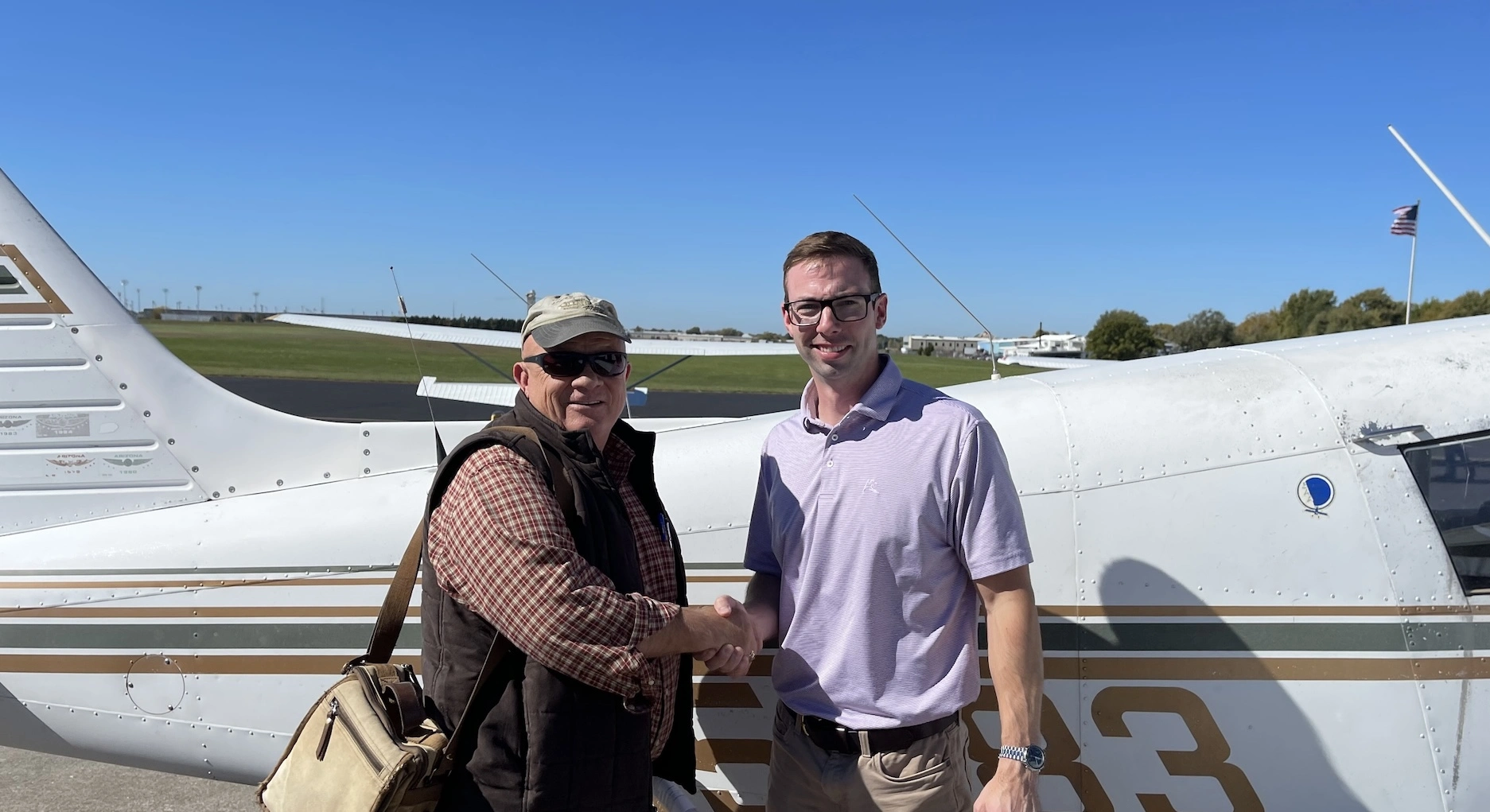
Many commercial tour companies offer scenic flights over cities or lakes, but those rides do not qualify as flight instruction because the person beside you is acting as a tour pilot, not your instructor.
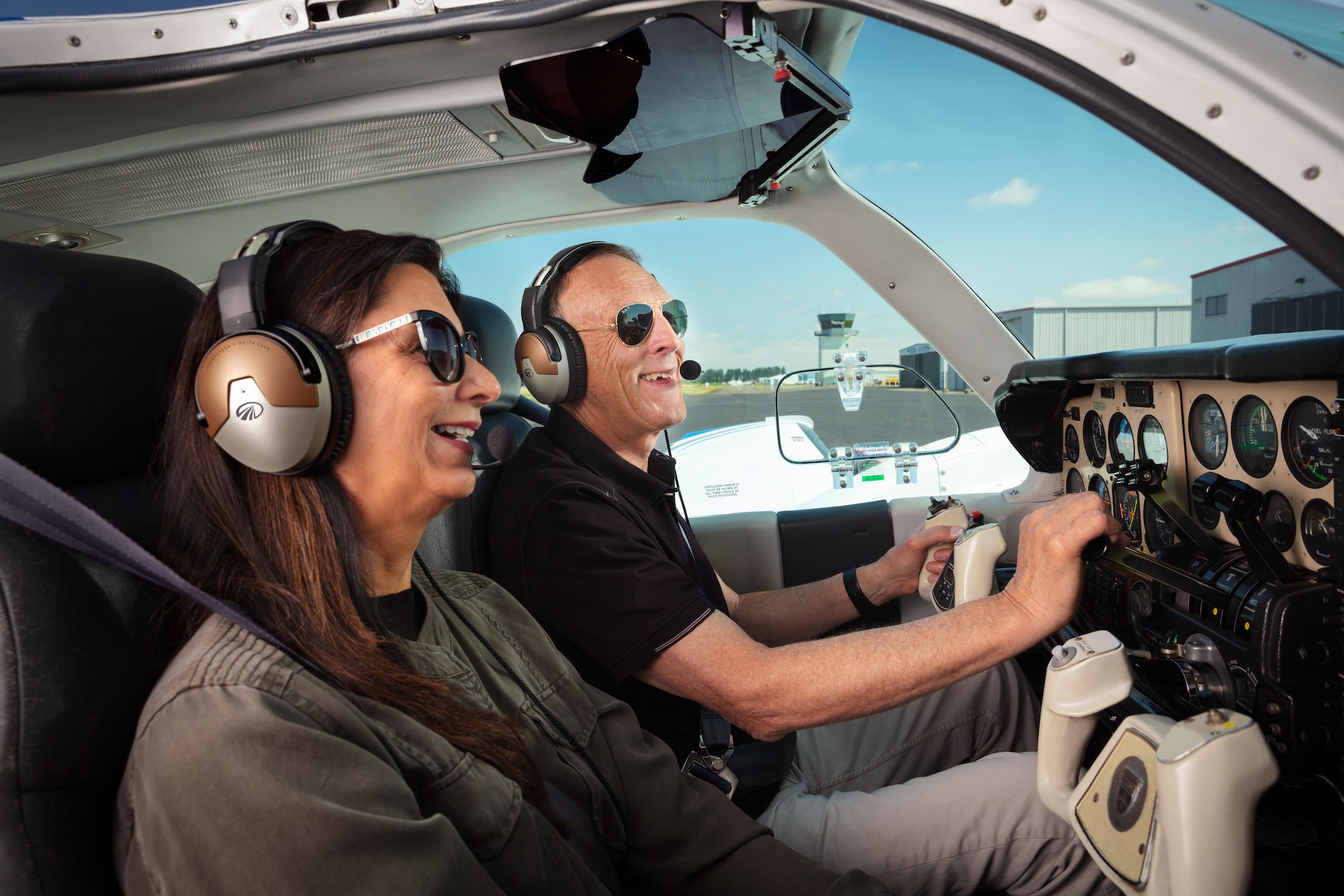
In contrast, an introductory flight—often called a Discovery Flight—is a structured educational lesson. You sit in the left seat, which is the traditional pilot-in-command seat in general aviation aircraft. Your instructor walks you through the preflight inspection, explains the cockpit flight instruments, coaches you on taxiing, and guides your hands on the control yoke throughout climbs, turns, and level flight.
Federal regulations under 14 CFR § 61.51 govern how aeronautical experience is credited:
- Dual Instruction Received: Because an FAA-certificated flight instructor provides the training and signs your endorsement, the flight time is logged as dual received.
- Flight Time Categories: The lesson logs total flight duration, daytime flight time, and the number of takeoffs and landings.
- Official CFI Endorsement: Your instructor records the training topics covered, signs their legal name, and writes their FAA certificate number and expiration date in your logbook.
At Summit Flight Academy, we provide you with your very first physical logbook at the end of your flight. Our instructor fills out line number one, giving you an official record of your entry into aviation.
Know How Intro Flight Hours Apply to FAA Requirements
To earn a Private Pilot Certificate under FAA Part 61 rules, you must complete a minimum of 40 hours of flight time, including at least 20 hours of dual flight training with an authorized instructor. While national averages show that most students require 55 to 70 total hours to build complete checkride proficiency, every single dual hour you fly reduces that remaining total.
Here is how foundational training programs integrate introductory flight hours into your certification path:
| Program | Role of Intro Lesson | Minimum FAA Hours Required | Primary Focus Area |
|---|---|---|---|
| Discovery Flight | Lesson number one in syllabus | 0.5–1.0 hour logged | Cockpit familiarization and basic maneuvers |
| Private Pilot Training | Direct credit toward 20 dual hours | 40 hours total | Cross-country navigation, emergency skills & solo |
| Instrument Rating | Foundation for advanced scan | 40 hours actual/simulated IFR | Cloud flying and instrument approaches |
| Commercial Pilot Training | Time-building foundation | 250 hours total | Commercial maneuvers and precision flying |
If you want to map out the entire journey from introductory flight to certificate completion, browse our all training programs guide or explore our starter resources for students who are new to flying.
Prepare for Your Lesson Without Bureaucratic Hurdles
A common fear among beginners is that you need an expensive FAA medical exam, TSA background checks, or government permits before taking your first lesson. Fortunately, that is not the case.
Under FAA rules, you do not need an FAA medical certificate to take an introductory flight or fly dual lessons with an instructor. Because the CFI is the legal pilot-in-command responsible for safety, you only need to obtain a medical certificate later in your training before you fly solo.
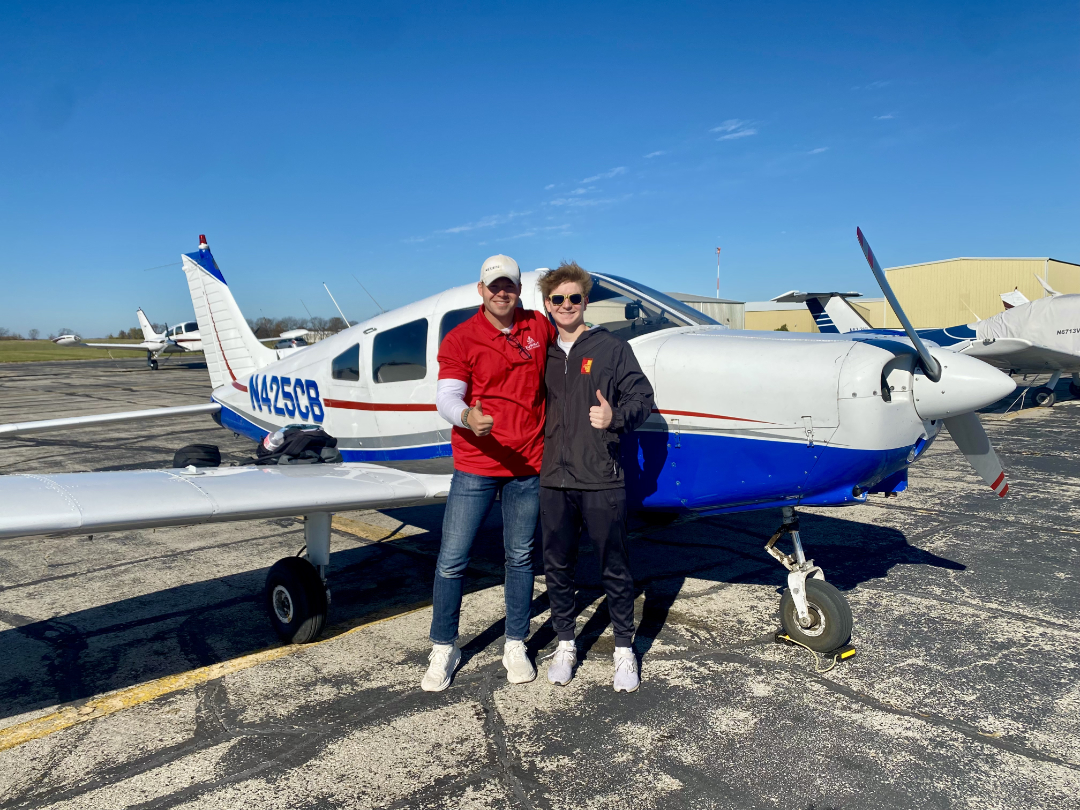
Before you arrive at Lee’s Summit Airport (KLXT), keep these practical tips in mind:
- Wear Comfortable Clothing: Dress in comfortable layers and flat-soled shoes so you can easily reach the rudder pedals.
- Bring Sunglasses: The Midwest skies are bright, and polarized or non-polarized sunglasses reduce glare off the cowling.
- Ask Questions Freely: Instructors love teaching. Ask about aerodynamics, how the engine works, or how local Kansas City airspace operates.
- Consider Training Budget: If you plan to continue training immediately after your flight, review our flight training financing options and our flight school FAQs to learn about flexible pay-as-you-go hourly options and package savings.
Take the Controls on Your First Flight
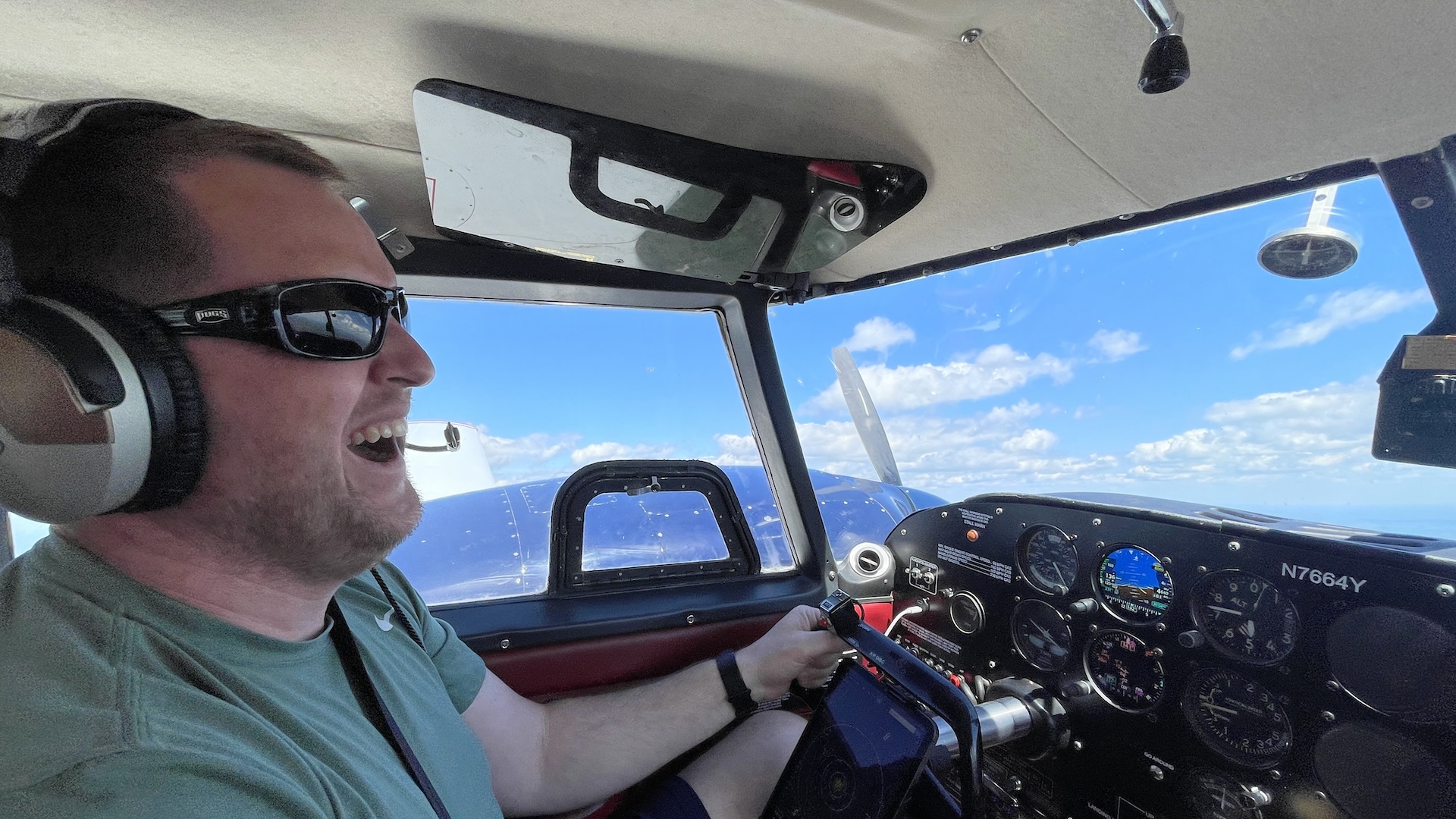
Reading about flying can never replicate the feeling of pushing the throttle forward, watching the runway stripes accelerate, and feeling the wings take flight over Lee’s Summit. An introductory flight lesson gives you hands-on experience and a certified logbook entry that belongs to you forever.
Whether your dream is flying your family to the lake for the weekend or training for an airline career, every pilot’s story starts with a single flight.
If you are ready to log your first flight hour in the pilot seat, book your introductory discovery flight today and discover how attainable flight training really is.