Pilot Radio Communications 2026 Guide: Talk to ATC Confidently
Published by:
Summit Flight Academy Team
Published on:
Updated on:
Read time:
7 min read
Pilot radio communications can feel harder than flying the airplane at first. In 2026, the basics are still the same: listen first, speak clearly, and keep flying the airplane. The fix is not to talk more. The fix is to use a simple structure, practice often, and build confidence in real airspace one call at a time.
For student pilots in Lee’s Summit and the Kansas City metro, “mic fright” is normal. You do not need a perfect radio voice to start Private Pilot Training. You need clear words, good timing, and enough practice to make each call feel routine.
Why Pilot Radio Communications Feel Hard at First
Most new pilots struggle with radio work because it happens while the airplane is moving. You hear a call, think about what it means, plan your reply, and still have to fly. That is a lot for a first lesson.
Summit Flight Academy trains at Lee’s Summit Municipal Airport (KLXT), at 2751 NE Douglas St in Lee’s Summit, Missouri. KLXT sits in the Kansas City metropolitan area, so students can build radio habits in a real local training environment without starting inside the heaviest kind of airport workload.
That local setting helps because you can connect each call to something you can see. A runway, a pattern leg, a nearby practice area, or a route back toward the airport becomes part of the lesson. The decision takeaway is simple: if radio calls make you nervous, train where the airspace gives you real practice without burying you on day one.
Use a Simple Radio Flow Before Talking to ATC
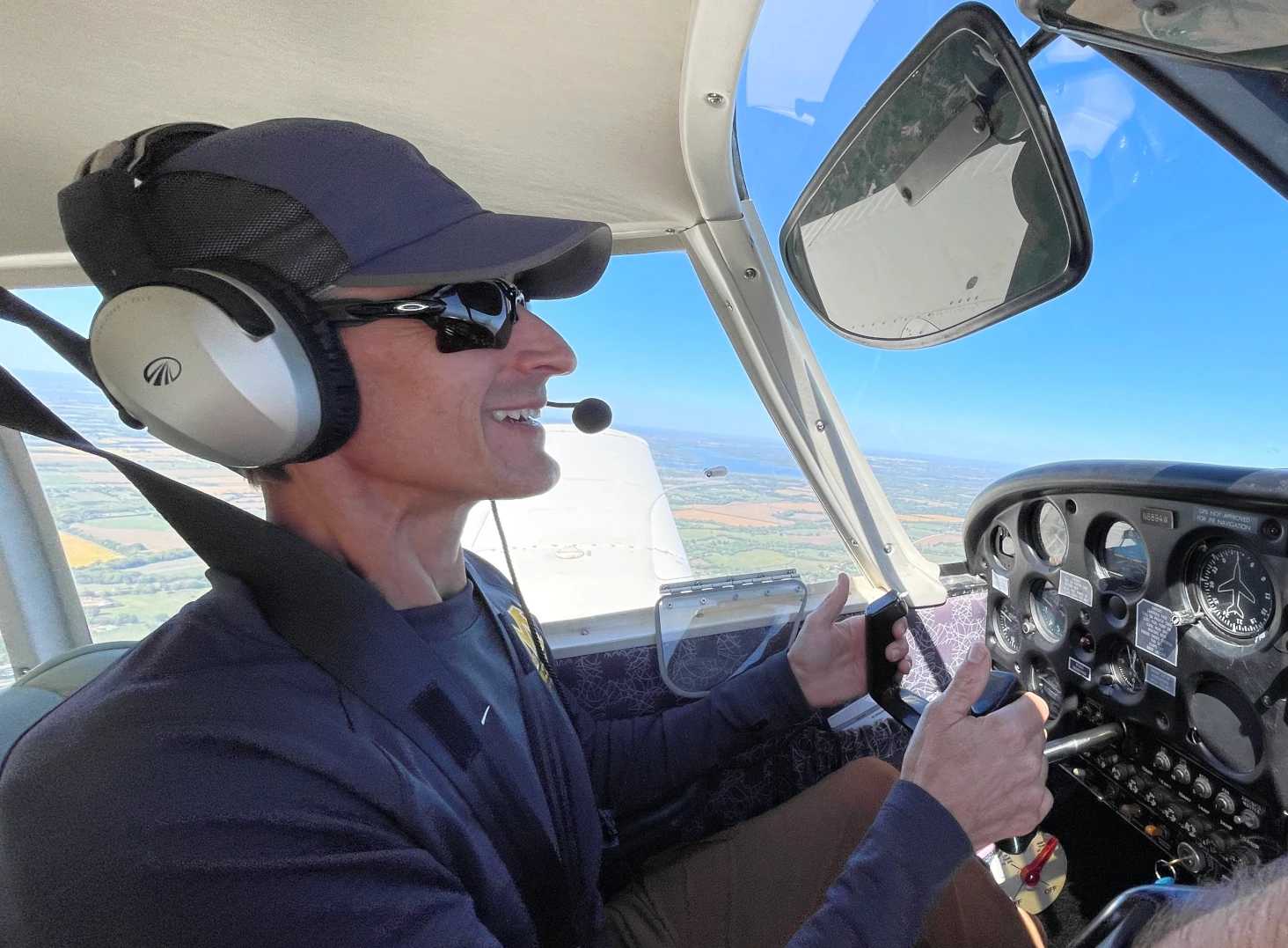
Good aviation radio etiquette starts before you press the push-to-talk button. The FAA publishes official radio communications phraseology and techniques, and your instructor will teach you how to apply that guidance in the cockpit.
For early training, a simple call flow keeps you from freezing:
| Radio piece | Plain meaning | Student habit |
|---|---|---|
| Who | Who you are calling | Listen first, then name the facility or traffic you need |
| You | Who you are | Say the aircraft identification clearly |
| Where | Your position | Use the location your instructor briefed with you |
| Want | Your request or plan | Keep it short and say the next thing you need |
Summit operates under FAA Part 61 regulations, which allows flexible, customized, and adaptable training schedules. That matters for radio work because you can spend extra time on the skill instead of rushing through a fixed lesson order. The decision takeaway: if talking to ATC is your sticking point, choose a training path that can slow down and repeat the right habit until it sticks.
How KLXT Radio Practice Builds Real Confidence
KLXT has two intersecting runways, 18/36 and 11/29. That layout gives student pilots repeated chances to connect radio calls with runway choice, traffic pattern planning, and wind decisions.
The airport also offers a low-traffic volume environment. For a new pilot, that means you can build a clear rhythm before your workload increases. You still learn to listen, wait your turn, and make concise calls. You just do it in a setting that supports learning.
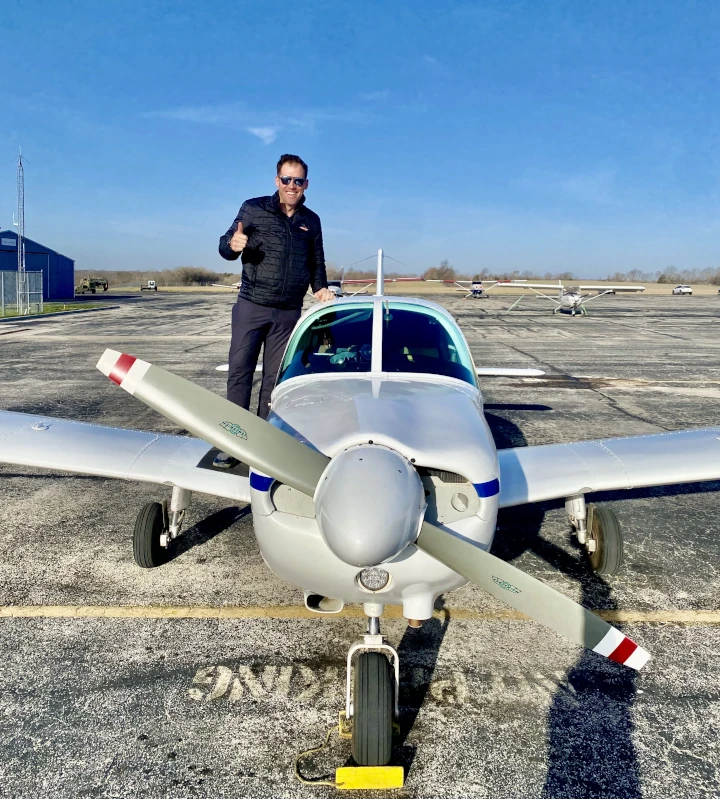
Summit Flight Academy’s single-engine training fleet uses Piper PA-28 variants, including the Piper Archer II, Piper Warrior, and Piper Cherokees. The cockpit consistency helps reduce the mental load. When switches, sight pictures, and procedures feel familiar, you have more attention left for KLXT radio calls, traffic scanning, and instructor coaching.
If your long-term goal is flight training in Kansas City, this local practice matters. You are not learning radio work in a vacuum. You are learning it near the same metro area where you will plan flights, talk through weather, and build confidence toward cross-country flying. The decision takeaway: radio skill grows faster when the airplane, airport, and instructor flow stay familiar.
How Summit Compares With a More Rigid Training Path
Some students need a fixed program. Others need room to repeat a weak skill before moving on. Radio communication is one of the clearest places where that difference shows up.
Summit’s Part 61 model lets lesson order and frequency adapt to the student. A stricter Part 141-style timeline can be less flexible by design. Neither path is automatically right for everyone, but a nervous radio student should understand the tradeoff before choosing a school.
| Training fit | What it means for mic fright | Decision takeaway |
|---|---|---|
| Summit’s Part 61 model | Lessons can be tailored to your pace and schedule | Fit if you need more repetition on talking to ATC |
| A more rigid sequence | The training path may leave less room to slow down for one skill | Fit if you prefer a fixed full-time structure |
| KLXT local environment | Low-traffic volume and intersecting runways support practical radio habits | Fit if you want local Kansas City area exposure with a manageable early workload |
Summit also maintains its aircraft in-house with a certified maintenance team. That reduces aircraft downtime and helps students stay on schedule. For radio confidence, schedule consistency matters because long gaps make new habits feel unfamiliar again. The decision takeaway: steady training helps radio work become routine instead of something you relearn each lesson.
A Practice Plan From Mic Fright to Clear Calls
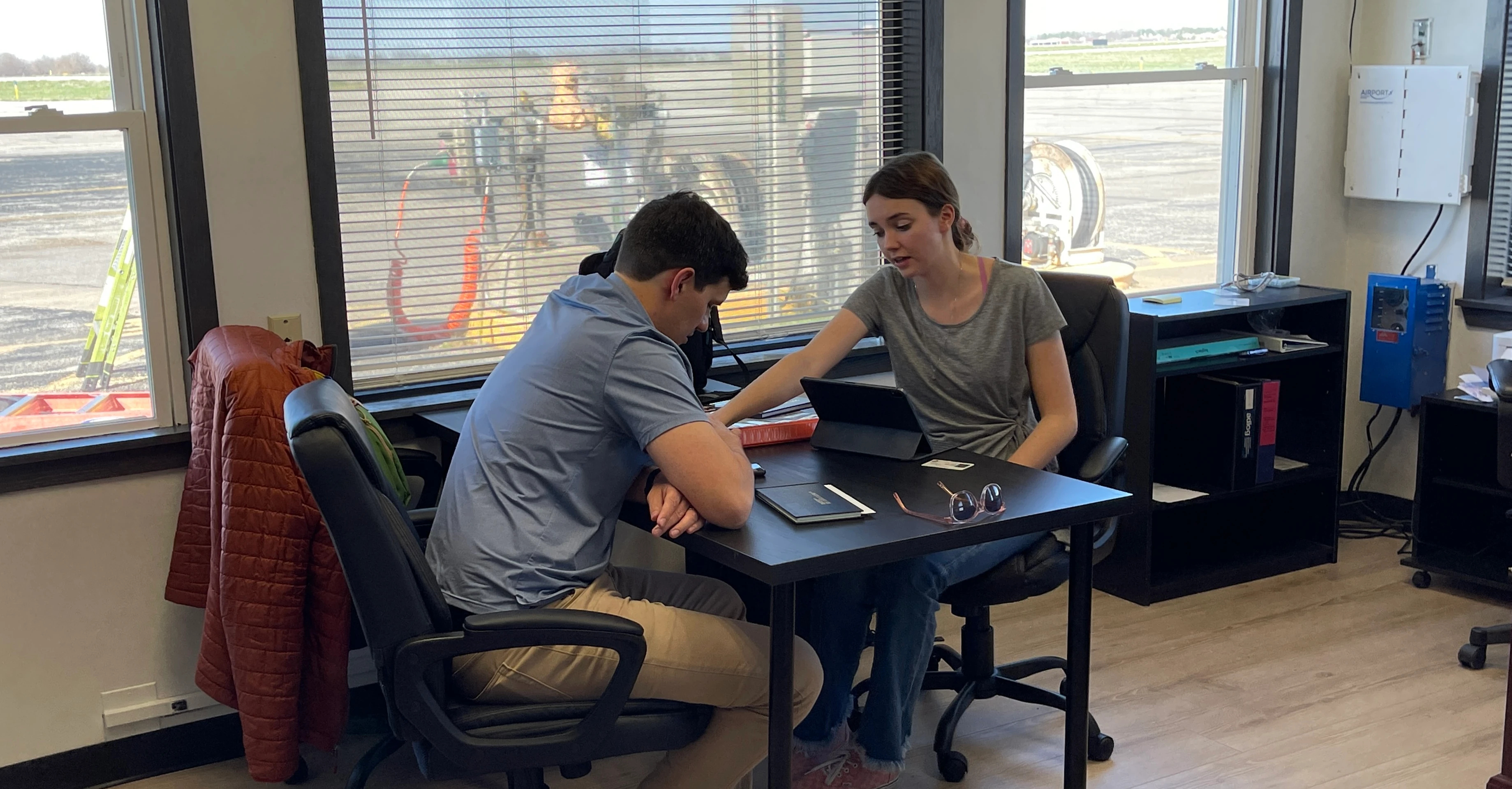
Start on the ground. Before each lesson, write the likely calls in plain language. Say them out loud with your instructor. Then listen before speaking. That pause matters. It keeps you from stepping on another call and gives your brain time to sort the traffic picture.
Next, practice one skill at a time. On early lessons, your goal may be to make one clear call. Later, your goal may be to handle a full sequence with your instructor nearby. In instrument rating training, radio work becomes even more important because you are managing procedures, clearances, and cockpit tasks in a tighter flow.
Summit uses Garmin technology in its aircraft, including systems such as G1000 displays, Garmin 430W, GTN 650Xi, and GTX 345 ADS-B transponders. The school also uses a Redbird full-motion flight simulator for instrument and multi-engine procedures. Those tools give students ways to build cockpit awareness and procedure habits while instructors keep the learning focused.
If you are training for a career, radio confidence is not a side skill. It supports every later step, from private pilot work to commercial training and the Career Track path. The decision takeaway: do not wait until radio work feels urgent. Build it early, while each lesson still gives you time to ask questions and correct habits.
FAQ
-
Do I need to know radio calls before my first lesson?
No. You can start as a beginner. Your instructor will teach the words, timing, and listening habits during training.
-
Is talking to ATC required for private pilot training?
You will need to learn aviation radio etiquette and clear communication as part of becoming a safe pilot. The goal is not to sound perfect. The goal is to be brief, clear, and correct.
-
Does KLXT help nervous students practice radio work?
Yes. KLXT has two intersecting runways and a low-traffic volume environment, which gives students practical radio practice in a manageable setting.
-
What if radio work takes me longer than other skills?
Summit’s Part 61 model allows flexible, customized training schedules. If talking to ATC takes extra practice, your training can adapt to that need.
-
How much should I budget before starting?
Summit’s Discovery Flight is listed at $149, and the Private Pilot Certificate base cost estimate is $12,600 to $15,600. Actual costs depend on your learning speed and how often you fly. Summit also lists financing support through Stratus Financial, Flight Training Finance, and AOPA on its financing resources.
-
Where can I learn more before I enroll?
You can review common training questions on the student FAQ page or look at Summit’s fleet to understand the aircraft used in training.
Schedule a Discovery Flight
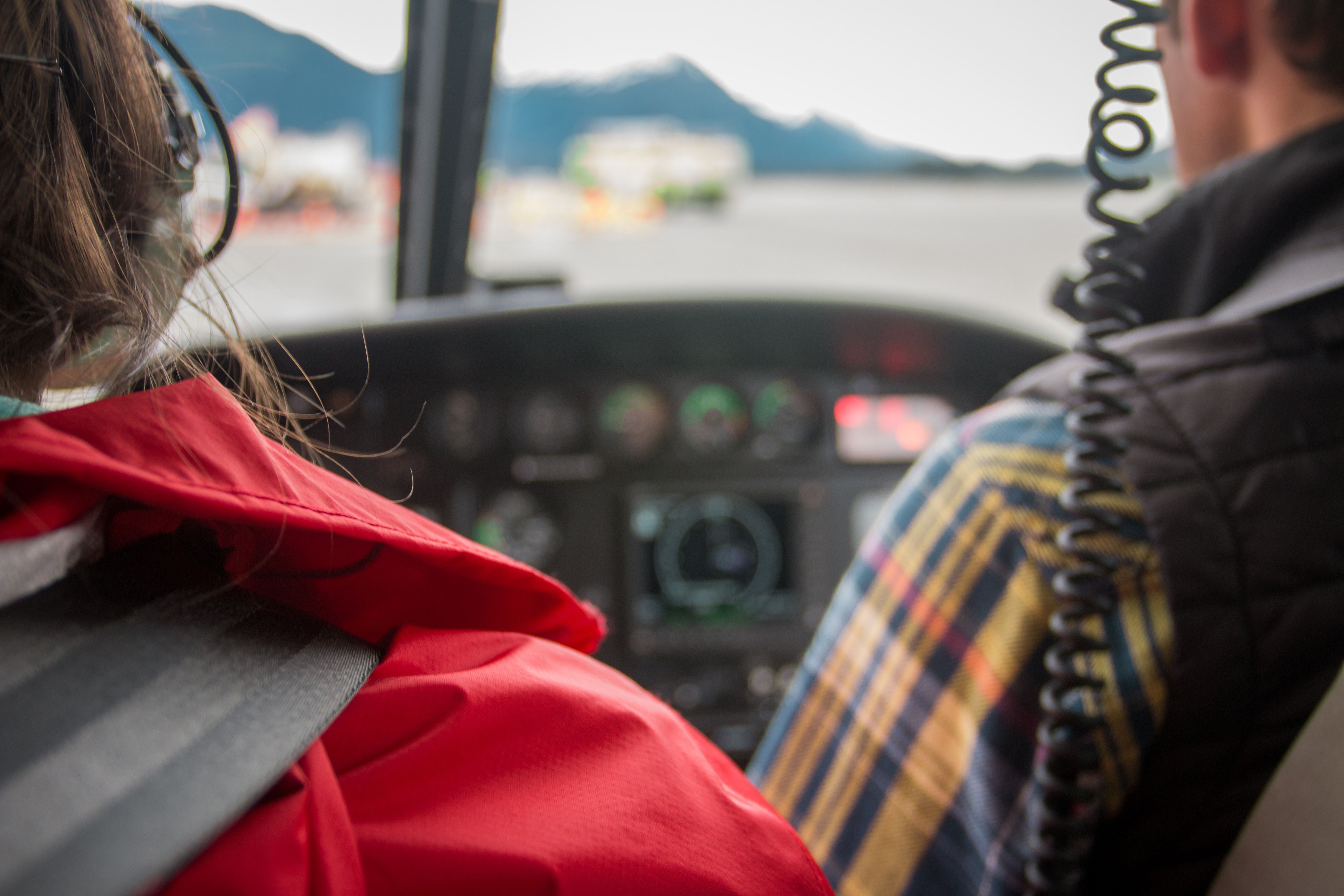
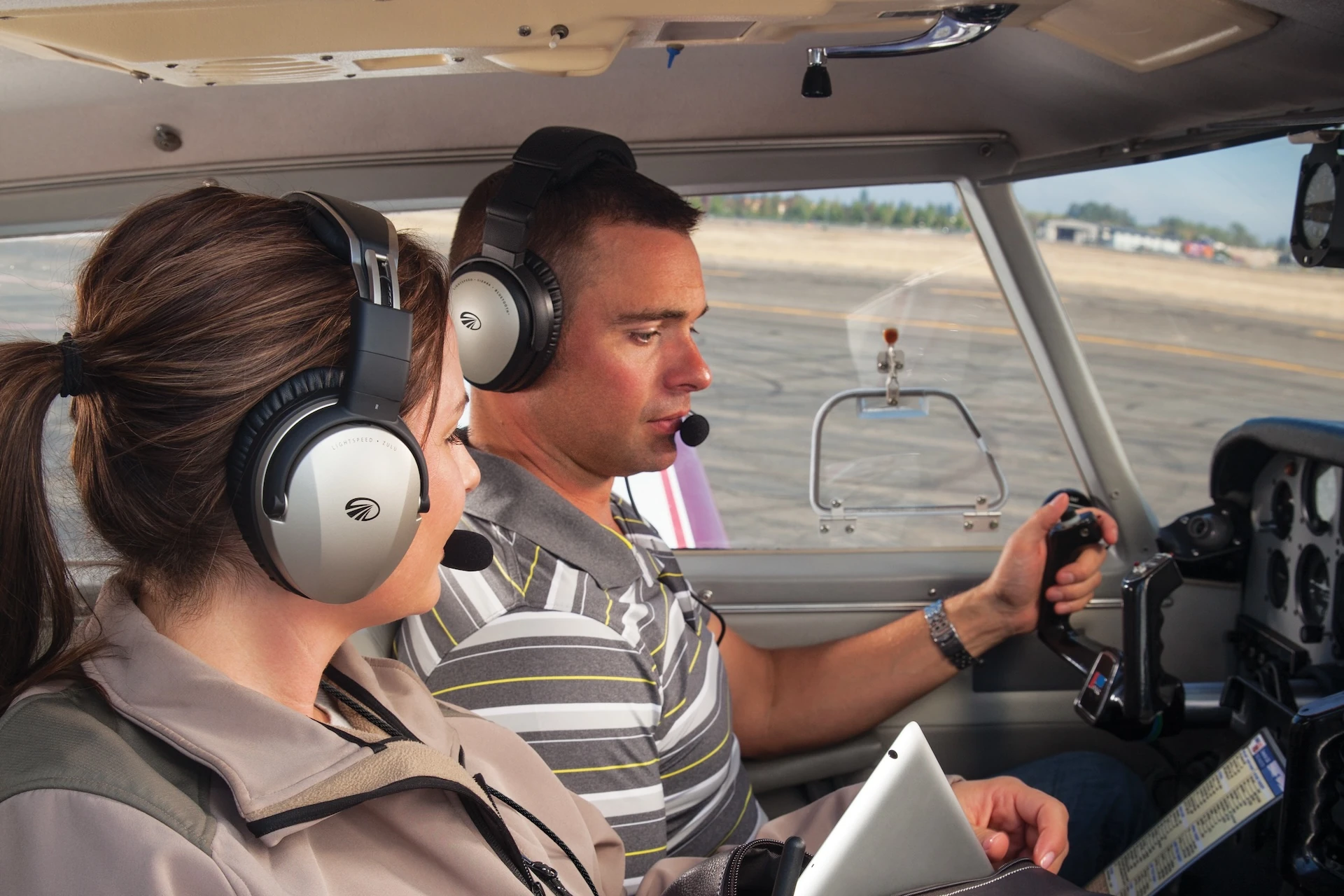
The best first step is to sit in the airplane, hear the radio environment, and see how an instructor coaches each call. Book a Discovery Flight with Summit Flight Academy and start building pilot radio communications confidence from the first lesson.