FAA Medical Certificate: 2026 Student Pilot Guide

Published by:
Summit Flight Academy Team
Published on:
Updated on:
Read time:
7 min read
If you are training for a private pilot certificate in 2026, you normally need an FAA medical certificate before you fly solo. For most new student pilots, that means a third-class medical issued by an Aviation Medical Examiner, often called an AME.
There are exceptions. Summit Flight Academy’s Sport Pilot Certificate path uses a valid U.S. driver’s license instead. But if your goal is Private Pilot Training, instrument training, or the Career Track, the medical step should happen early.
Here is how the certificate classes work, what to expect during the student pilot medical exam, and how Kansas City area students can find an AME before training momentum depends on it.
FAA Medical Certificate Basics for Student Pilots
Under 14 CFR 61.23 student, recreational, and private pilot privileges generally require at least a third-class medical certificate unless you are operating under an allowed alternative such as sport pilot rules or BasicMed.
You can start learning before the medical is complete, but you should not wait until your first solo is close. A delayed or deferred exam can slow down your schedule.
Summit Flight Academy operates under FAA Part 61 rules, which allows flexible, customized training schedules. That helps if you need lessons around work, school, or a medical appointment. The decision takeaway is simple: start the FAA medical process before solo planning becomes urgent.
First Class Medical vs Third Class: Which One Fits?
Most new recreational students ask about the difference between a first class medical vs third class medical. Third class is usually the student pilot and private pilot route, while first class is tied to airline transport pilot privileges.
If you are considering professional training, you may still choose a higher class early. That can reveal whether a medical issue needs extra FAA review before advanced training.
| Medical path | Common use | FAA duration rule to know |
|---|---|---|
| Third class | Student, recreational, and private pilot privileges | For student/private privileges, 60 months if you were under 40 on the exam date, or 24 months if you were 40 or older |
| Second class | Commercial pilot privileges | 12 months for commercial pilot operations |
| First class | Airline transport pilot privileges | For ATP pilot-in-command use, 12 months if under 40, or 6 months if 40 or older |
| Sport pilot with driver’s license | Sport Pilot Certificate path | Summit’s sport pilot program uses a valid U.S. driver’s license instead of an FAA medical certificate |
| BasicMed | Certain pilots with prior FAA medical history | Not usually a first-medical shortcut because BasicMed includes prior medical certificate conditions |
For a private pilot student, the practical choice is often a third-class medical. For a student aiming at commercial or airline training, ask the AME about a second- or first-class application. The decision takeaway: pick the medical class based on your next certificate and long-term goal.
What to Expect During the Student Pilot Medical Exam
Before your AME visit, complete the FAA Form 8500-8 application through FAA MedXPress. The FAA says MedXPress submits applicant information and shortens the office visit.
During the appointment, the AME reviews your history and performs the required exam. FAA guidance says the exam can include vision, hearing, ear, nose, throat, heart, lungs, abdomen, musculoskeletal, skin, neurologic, and general psychiatric observation checks. If documentation is present and the exam meets FAA standards, the AME can issue the certificate. If a condition needs FAA review, the AME may defer the exam.
A deferral is not the same as a denial. It means the FAA needs more information. Bring medication details, prior diagnosis records, and current physician notes if your history may need review. The decision takeaway: complete MedXPress carefully and bring documentation the first time.
How Kansas City Students Can Find an AME
If you are searching for an aviation medical examiner Kansas City option, use the FAA’s official AME locator. Search by location and confirm the examiner handles the class you plan to request.
Do this early if you commute from Kansas City, Overland Park, Leawood, or Blue Springs. Appointment availability can vary, and some applicants need extra time to gather records.
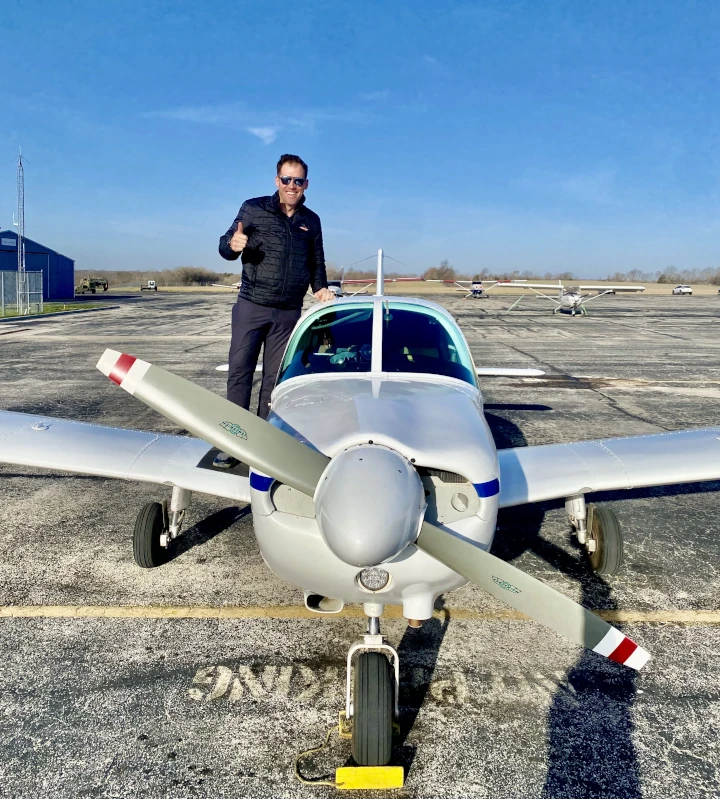
Summit Flight Academy is based at Lee’s Summit Municipal Airport (KLXT), at 2751 NE Douglas St in Lee’s Summit. The airport has two intersecting runways, 18/36 and 11/29, and a lower-traffic environment for building early skills. The local decision takeaway: handle the medical early so airport time can stay focused on learning.
How Summit Fits Into the Medical Step
Summit Flight Academy provides recreational and career pilot training under FAA Part 61. For private pilot students, Part 61 requires a minimum of 40 flight hours, and Summit’s client data lists an average of 55 hours. That gives you room to train steadily, but administrative delays can still disrupt a plan.
The school also offers a Sport Pilot Certificate path with a minimum of 20 flight hours and no FAA medical certificate requirement when using a valid U.S. driver’s license. For some students, that makes sport pilot a useful comparison point. For others, private pilot training better supports progression into instrument, commercial, and instructor training.
Summit’s all-Piper single-engine fleet creates cockpit consistency, and its in-house maintenance team helps reduce aircraft downtime. That does not change FAA medical rules, but it does help your schedule once you are cleared to solo. The decision takeaway: choose the training path first, then choose the medical route that matches it.
Plan for Medical Timing and Training Costs
FAA medical exam fees are paid directly to third parties, not to Summit Flight Academy. The same is true for written test fees and Designated Pilot Examiner fees. Build those outside costs into your budget.
For private pilot training, Summit lists a base cost estimate of $12,600 to $15,600, depending heavily on learning speed and flight frequency. Students planning the broader budget can review financing resources or ask training staff how medical timing fits into the plan.
If you are comparing schools, ask how they handle scheduling when a student is waiting on an FAA medical decision. A flexible Part 61 environment can keep useful ground work moving while the process is pending. The decision takeaway: do the medical early, budget for third-party fees, and avoid building your first solo plan around an unfinished certificate.
FAQ
-
Do I need an FAA medical certificate before my first flight lesson?
Usually no. You can take lessons with an instructor before solo, but private pilot students normally need the FAA medical certificate before exercising student pilot solo privileges.
-
Which medical class should a student pilot get?
Many private pilot students choose third class. If your goal is airline or commercial training, ask an AME whether applying for a higher class early makes sense for your situation.
-
What happens if my AME defers my exam?
The FAA reviews the application and usually requests more information. A deferral can delay issuance, so bring current records and medication details to the first appointment when possible.
-
Is BasicMed a good first step for a brand-new student?
Usually not. BasicMed is built around specific conditions, including prior FAA medical certificate history, so first-time students often start with an AME exam instead.
-
Does sport pilot training require the same FAA medical certificate?
Summit’s Sport Pilot Certificate path does not require an FAA medical certificate and uses a valid U.S. driver’s license. That can be worth discussing if your goal is recreational flying.
-
Are medical exam fees included in Summit’s training cost?
No. Medical exam fees, written test fees, and DPE fees are paid directly to third parties. Add them to your budget before you compare training options.
-
Where should I look for an aviation medical examiner in Kansas City?
Use the FAA AME locator and search near your home, work, or Summit Flight Academy’s Lee’s Summit location. Confirm the AME handles your planned class.
Take the Next Step
If you are sorting out pilot medical requirements before training, start with the path you want: sport pilot, private pilot, or career track. Then schedule the matching medical step.
Book a Discovery Flight with Summit Flight Academy to see the training environment at Lee’s Summit Municipal Airport and ask how the FAA medical certificate fits into your first lessons.