Commercial Pilot School in Kansas City: How Summit's Career Track Works
Published by:
Jami Heckman
Published on:
Updated on:
Read time:
9 min read
Most people searching for a commercial pilot school in Kansas City already know what they want. A clear path. A real plan. A school that will take them from first flight to a professional certificate without making them piece together five different programs at five different schools.
That is exactly what our Career Track at Summit Flight Academy is built to do.
This post walks you through how the program works at our school, including the sequence, what happens at each stage, what the training environment looks like, and what to expect before you commit. No vague promises about the cockpit. Just a practical explanation of the path.
What the Career Track Actually Is
The Career Track at Summit Flight Academy, which is sometimes called a zero-to-hero program at other schools, is a structured, sequential training path that takes you from your Private Pilot Certificate (PPL) all the way through your Multi-Engine Instructor (MEI) certification.
Every stage builds on the one before it. There are no gaps between programs where you have to figure out where to go next, negotiate with a different school, or wait months to restart momentum.
We operate as a Part 61 school at Lee’s Summit Airport (KLXT) in Lee’s Summit, Missouri. That matters for Kansas City-area students because Part 61 gives you real flexibility: training fits around your work schedule, your life, and your readiness, rather than a rigid school calendar or cohort start date.
The Five Stages of the Career Track
Here is how the path actually works. This is not a brochure overview, but a stage-by-stage breakdown of what you are working on and why each step prepares you for the next.
Stage 1: Private Pilot Certificate
This is where every pilot starts. Your Private Pilot Certificate gives you the authority to fly single-engine aircraft for personal and recreational flights. It is the foundational license that everything else is built on.
During this stage, you learn to:
- Operate an aircraft safely in visual meteorological conditions
- Navigate cross-country routes by map, landmarks, and GPS
- Communicate with ATC in controlled and uncontrolled airspace
- Handle emergencies (such as engine failures, off-airport landings, or unexpected weather)
- Pass the FAA Knowledge Test (written) and the FAA Practical Test (checkride)
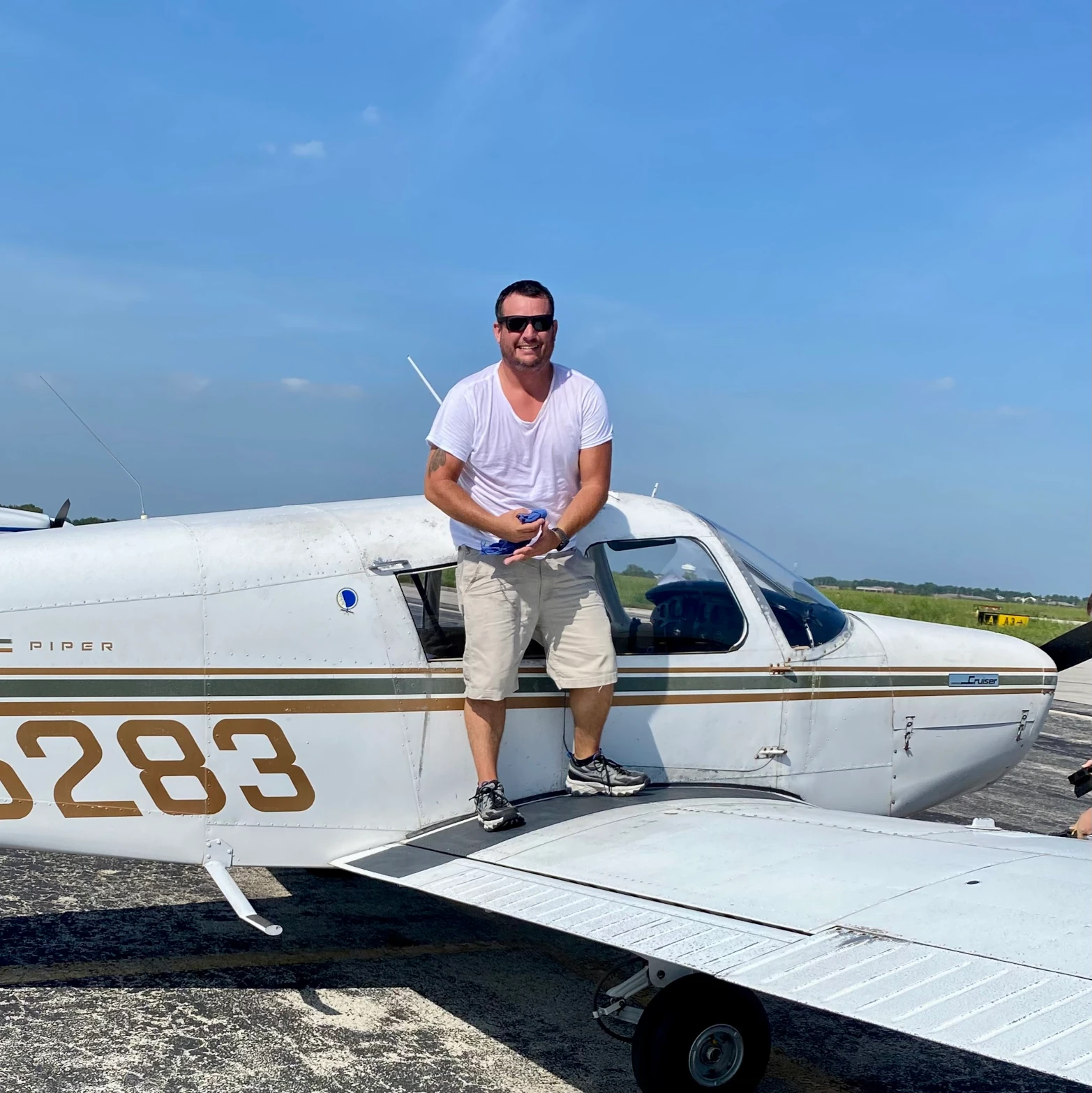
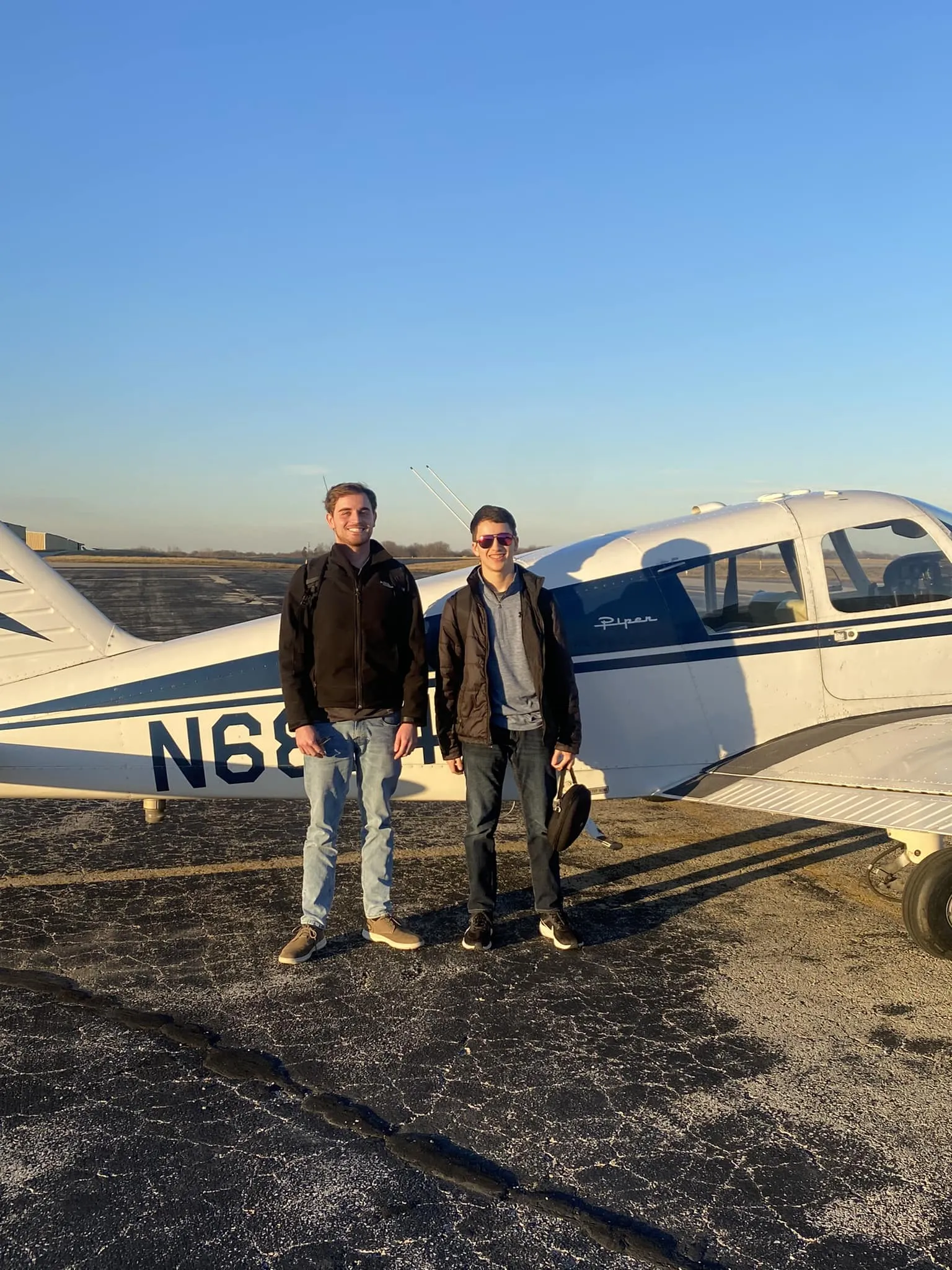
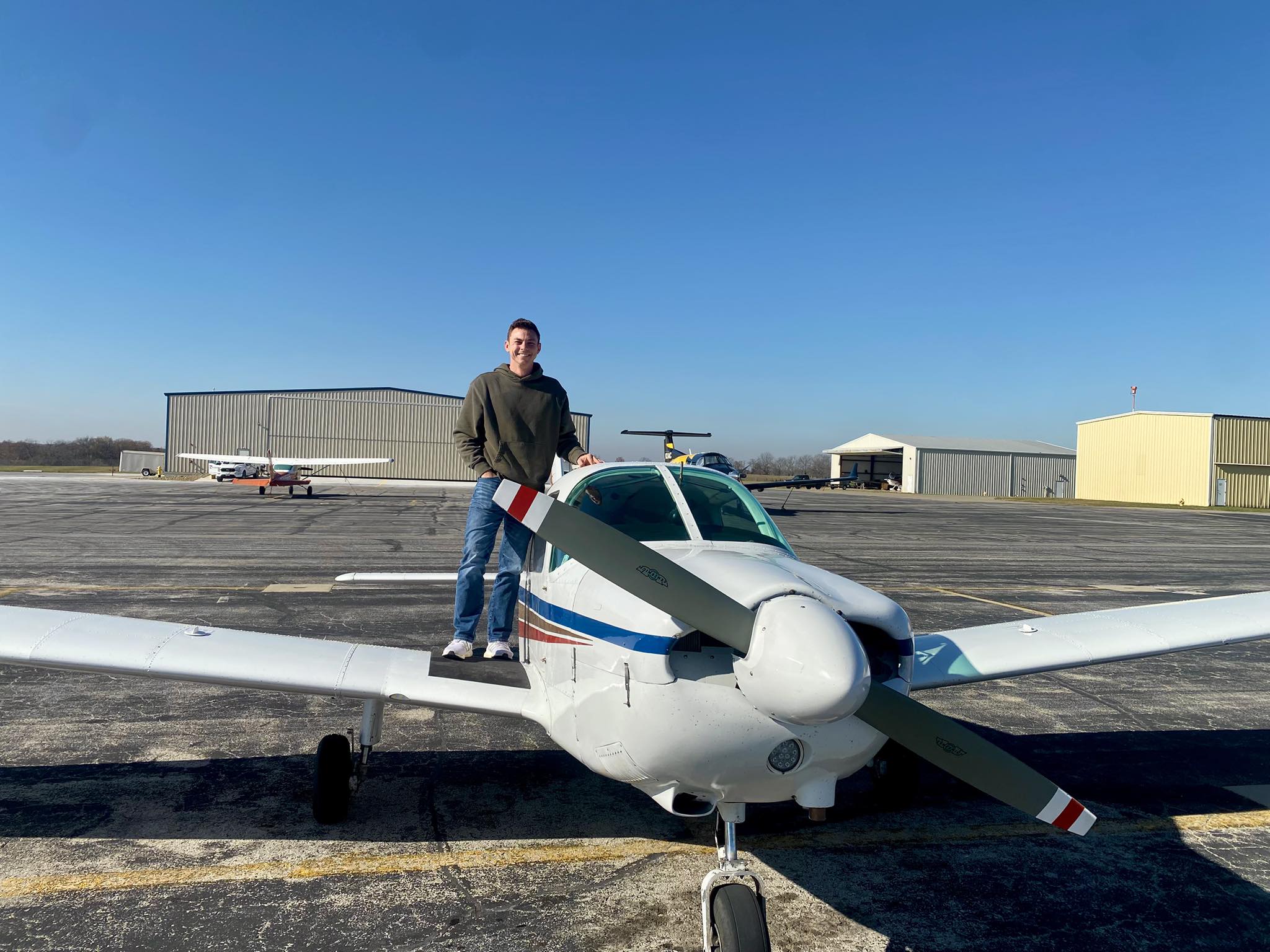
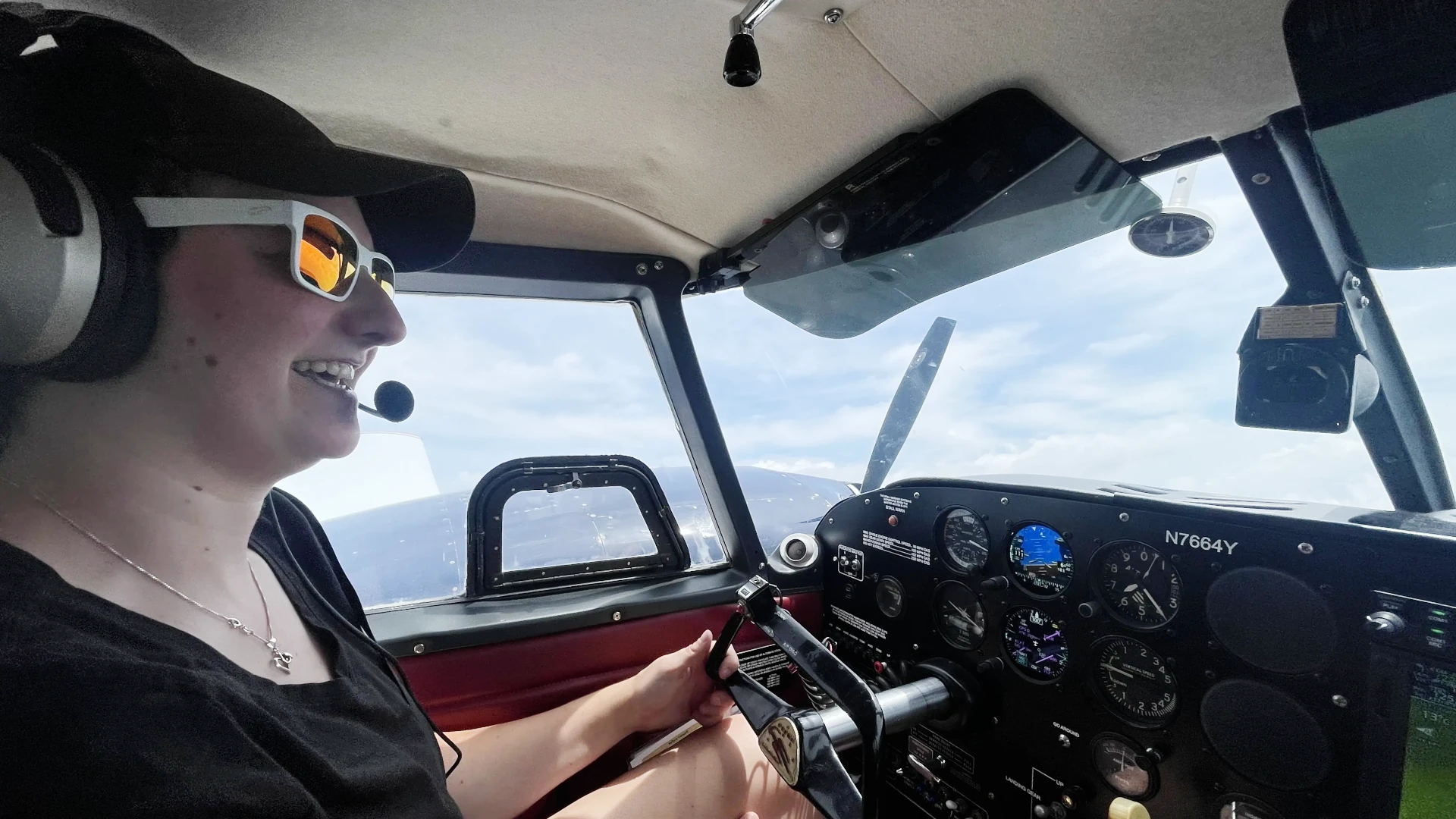
We train in our Piper Cherokee fleet, using well-maintained single-engine aircraft with Garmin glass-cockpit avionics. You are building skills and logbook hours at the same time.
Stage 2: Instrument Rating
Once you hold your Private certificate, the Instrument Rating is your next major step. This rating qualifies you to fly in lower visibility conditions and navigate using instruments alone — a non-negotiable skill for any serious career path.
Practically speaking, the Instrument Rating:
- Dramatically expands your operating envelope so you are no longer grounded by marginal VFR days
- Sharpens your precision and discipline in the cockpit, which commercial training builds on heavily
- Prepares you for real-world conditions you will encounter as a professional pilot
We strongly recommend completing your Instrument Rating before adding your Multi-Engine Rating. The skills transfer directly, and the two certificates working together are what professional aviation programs expect to see in a logbook.
Stage 3: Commercial Pilot Certificate
This is the professional license. A Commercial Pilot Certificate allows you to act as pilot-in-command and receive compensation for your flying. It is the credential that turns aviation from a personal passion into a professional qualification.
Commercial training shifts the standard significantly. You are not just demonstrating that you can fly — you are demonstrating that you can fly with precision, judgment, and consistency at a professional level. Maneuvers are more demanding. Decision-making standards are higher. The practical test reflects that.
Commercial requirements include building meaningful flight hours before the checkride. That is part of the reason the Career Track is structured as a complete program — your time in the air during each earlier stage counts toward commercial eligibility, so nothing is wasted.
Stage 4: Multi-Engine Rating
The Multi-Engine Rating is an add-on to your existing commercial certificate. It qualifies you to act as pilot-in-command of aircraft with more than one engine — the type of aircraft regional carriers, charter operators, and corporate aviation departments fly every day.
At Summit, our multi-engine training uses the Piper PA-30 Twin Comanche, which is a genuine twin-engine aircraft rather than a simulator stand-in. Training includes:
- Ground school covering systems, aerodynamics, and emergency procedures specific to multi-engine aircraft
- Simulator sessions to practice engine-out procedures safely before flying the aircraft
- Aircraft flights building your comfort with twin-engine handling, Vmc awareness, and asymmetric thrust scenarios
- Mock checkride to identify any gaps before the FAA practical test
- FAA Practical Test with a Designated Pilot Examiner (DPE)
The multi-engine add-on is structured as a focused, approximately one-week intensive. Most regional airline hiring programs expect to see a commercial certificate and multi-engine time in your logbook. Building both inside the same Career Track means the progression is clean and documented from day one.
Our multi-engine package starts at $4,950. Contact us to confirm current pricing and training-window availability.
Stage 5: Instructor Certifications — CFI, CFII, MEI
The final stage of the Career Track is instructor training. This is where you earn the credentials to teach the next generation of pilots and, importantly, build flight hours efficiently toward ATP-level requirements.
Teaching as a CFI allows you to log pilot-in-command time with your students. That time counts toward your total flight hours, making instructing one of the most efficient paths to the 1,500-hour benchmark that ATP certification requires.
At this stage, you are working toward three credentials:
- CFI (Certified Flight Instructor, single-engine)
- CFII (CFI with Instrument endorsement, allowing you to teach instrument students)
- MEI (Multi-Engine Instructor, allowing you to teach the multi-engine add-on)
Holding all three opens the widest possible door in flight instruction and keeps your career options broad while you build hours.
Why Train the Full Path at One School
Plenty of pilots piece their certificates together over years — private here, instrument there, commercial at a third school. It works. But it creates real friction that a structured career track eliminates.
| Training Approach | What You Manage |
|---|---|
| Modular (school-by-school) | Re-enrollment paperwork, new instructor relationships, inconsistent techniques, logbook transfers, gaps in momentum |
| Career Track at Summit | One enrollment, one instructor team, one consistent training environment from PPL to MEI |
The difference is not just convenience. It is continuity. Your instructors know your logbook. They know where your skills are strong and where you need more time before a checkride. That relationship compounds over a full training path in a way that switching schools cannot replicate.
Summit was founded in 2022 specifically to offer this kind of full-service training environment at Lee’s Summit Airport. We are not a discovery-flight-only school that added a career track as an afterthought. It is the core of what we do.
What Part 61 Means for Your Schedule
This matters more than most prospective students realize before they start comparing schools.
As a Part 61 school, we do not operate on a fixed cohort calendar. You do not enroll in a class that starts on a specific date and runs for a fixed number of months. Training is scheduled around your availability (mornings, evenings, or weekends) and moves at the pace your readiness allows.
That flexibility is valuable when:
- You are working full-time while training
- Weather, maintenance, or DPE scheduling creates a brief delay
- You are not quite ready for a checkride and need more practice before the practical test
Part 61 does not mean slower. It means your training timeline is honest, tied directly to your actual readiness rather than a calendar deadline that may not match your proficiency.
Financing Your Career Track
Professional pilot training is a significant investment. We do not pretend otherwise.
We work with aviation-specific financing partners to help students plan costs before their first lesson, not after. Our financing resources page explains the options. We can help you compare paths before you decide on a start date.
A cost estimator is also available on the Career Track page — it adjusts based on your current certifications and your desired endpoint, so you get a realistic picture of what the full path costs given where you are starting from.
Frequently Asked Questions
Do I need any prior flying experience to start the Career Track? No. The Career Track starts with your Private Pilot Certificate, which requires no prior experience. If you already hold a PPL or another certificate, we can build a path from your current level.
How long does it take to complete the full Career Track? Timeline varies depending on your schedule, pace, weather, and checkride availability. There is no single correct answer, which is one reason we offer the cost estimator rather than a fixed timeline promise. Most students training consistently move through the program in stages that fit their life.
Is a discovery flight required before enrolling in the Career Track? It is not required, but many students find it useful. A discovery flight gives you 30 to 60 minutes in the cockpit to confirm that aviation is what you want before making a larger commitment.
What aircraft will I train in? Single-engine training uses our Piper Cherokee fleet. Multi-engine training uses our Piper PA-30 Twin Comanche. All aircraft are equipped with Garmin avionics.
Can I do the Career Track part-time? Yes. Part 61 flexibility means you can train around a work schedule. You will not fall behind a cohort because there is no cohort, only your training plan.
Do I have to complete every stage to enroll? No. We can build a path starting from whichever certificate you currently hold. If you already have a commercial certificate, we can focus on multi-engine and instructor training. Bring your logbook and certificates, and we will map the right next step.
Is financing available for the full program? Yes. Aviation-specific financing options are available. Contact us to talk through financing before committing to a start date.
Ready to See the Full Path?
If you are researching commercial pilot training in Kansas City, the Career Track at Summit Flight Academy is the most complete answer we can give you: one school, one instructor team, and a clear sequence from your first lesson to your instructor certifications.
Get started by visiting the Career Track page and using our cost estimator to build a realistic picture of your path before you commit.
-certified-flight-instructor-summit-flight-academy-lees-summit-pilot-training.jpg)