How Long Does It Take to Become a Pilot? Kansas City Career Timeline
Published by:
Jami Heckman
Published on:
Updated on:
Read time:
10 min read
The question we hear most from people seriously considering the Career Track is also the most honest one: How long is this actually going to take?
Not a brochure estimate. Not a best-case scenario. A real answer that accounts for weather, written tests, checkride scheduling, and the fact that most students in Kansas City have jobs, families, or both.
This post gives you that breakdown. Stage by stage. With the variables named plainly so you can build a realistic plan, not just a hopeful one.
Why There Is No Single Honest Answer
Every flight training timeline article you read online eventually admits the same thing: it depends. But that caveat is only useful if you understand what it depends on.
Here are the variables that actually move the needle:
- Training frequency: Flying two to three times per week moves you through maneuvers faster than flying once a week. The difference compounds over months.
- Weather: Kansas City has four distinct seasons. Spring and summer bring convective weather that can ground lessons for days at a time. Winter brings fog and icing conditions. Plan for interruptions; they are normal.
- Written exam scheduling: Each certificate and rating requires a written knowledge test. Passing the FAA Knowledge Test before your checkride is a hard prerequisite. Study time and scheduling both take real calendar space.
- Checkride (DPE) availability: Designated Pilot Examiners have limited availability. Scheduling a checkride can add two to six weeks onto the back end of any stage, depending on the time of year and local demand.
- Individual proficiency: Some maneuvers take one session. Others take fifteen. Your instructor will tell you honestly when you are ready, not just when the minimum hours are logged.
Knowing these variables does not mean you cannot plan. It means your plan should account for them instead of pretending they do not exist.
The Career Track: Stage-by-Stage Breakdown
Our Career Track at Summit Flight Academy takes you from no flying experience to Multi-Engine Instructor eligibility, the common zero-to-hero path. Here is what each stage involves, what the FAA requires, and what a realistic timeline looks like.
Stage 1: Private Pilot Certificate
What you are doing: Learning to fly a single-engine aircraft safely, navigate cross-country routes, communicate with ATC, and handle emergencies, all in visual flight conditions.
FAA minimum: 40 flight hours under Part 61, including at least 20 hours of dual instruction and 10 hours of solo flight time. Your 40 hours must include specific cross-country, night, and instrument reference requirements before you are eligible for the checkride.
Realistic hours logged: Most students reach checkride readiness between 55 and 75 hours. The FAA minimum is a floor, not a finish line.
Timeline range:
| Training Pace | Typical Duration |
|---|---|
| Full-time (flying daily or near-daily) | 2–3 months |
| Consistent part-time (2–3x per week) | 3–5 months |
| Working-professional pace (1x per week) | 6–10 months |
What moves you faster: Flying more often. Recency matters in aviation, as the longer between lessons, the more ground you review at the start of each session. Students who fly at least twice per week build skills and confidence noticeably faster.
What slows you down: Written exam delays, weather stretches, and DPE scheduling at the end. Build extra time into your estimate for the checkride scheduling window.
Stage 2: Instrument Rating
What you are doing: Learning to fly using instruments alone, navigating approaches, departures, and en-route segments in low visibility and in clouds. This rating dramatically expands your operating range and the conditions you can legally fly in.
FAA minimums under Part 61: At least 50 hours of cross-country flight time as pilot in command (some of which you already built during your private pilot training) and at least 40 hours of actual or simulated instrument time.
Why it matters for the career track: The instrument rating sharpens the precision your commercial training will demand. You will fly tighter tolerances, make more complex decisions, and develop the discipline that distinguishes career pilots from recreational ones.
Timeline range:
| Training Pace | Typical Duration |
|---|---|
| Full-time | 2–3 months |
| Consistent part-time (2–3x per week) | 3–5 months |
| Working-professional pace | 5–8 months |
Note on cross-country hours: Some of your instrument cross-country requirements start building during your private pilot stage. If you fly cross-country lessons as a private pilot student, those hours count toward your instrument rating requirements. Nothing is wasted.
Stage 3: Commercial Pilot Certificate
What you are doing: Training to professional standards — precision maneuvers, advanced aerodynamics, complex aircraft operations, and the judgment that compensated flying requires. The commercial certificate allows you to act as pilot in command for compensation or hire.
FAA minimum under Part 61: 250 total flight hours. This is the most important milestone in the career track to understand — because it means the stage is partly about accumulating hours, not just learning new maneuvers.
What those 250 hours include: Everything you flew during your private and instrument training counts. You are not starting a new hour counter. But depending on your pace, you may need to build deliberate solo cross-country time between your instrument rating completion and commercial training to reach the 250-hour minimum.
Timeline range:
| Training Pace | Typical Duration (from instrument rating completion) |
|---|---|
| Full-time | 3–5 months |
| Consistent part-time | 5–8 months |
| Working-professional pace | 8–14 months |
The working-student reality: The commercial stage is where working students sometimes see the gap widen. Flying once a week still builds hours, but the path to 250 takes longer when you are flying 4 hours a month instead of 20. Some students use this stage to pick up pace — scheduling longer weekend flights specifically to build cross-country time efficiently.
Stage 4: Multi-Engine Rating
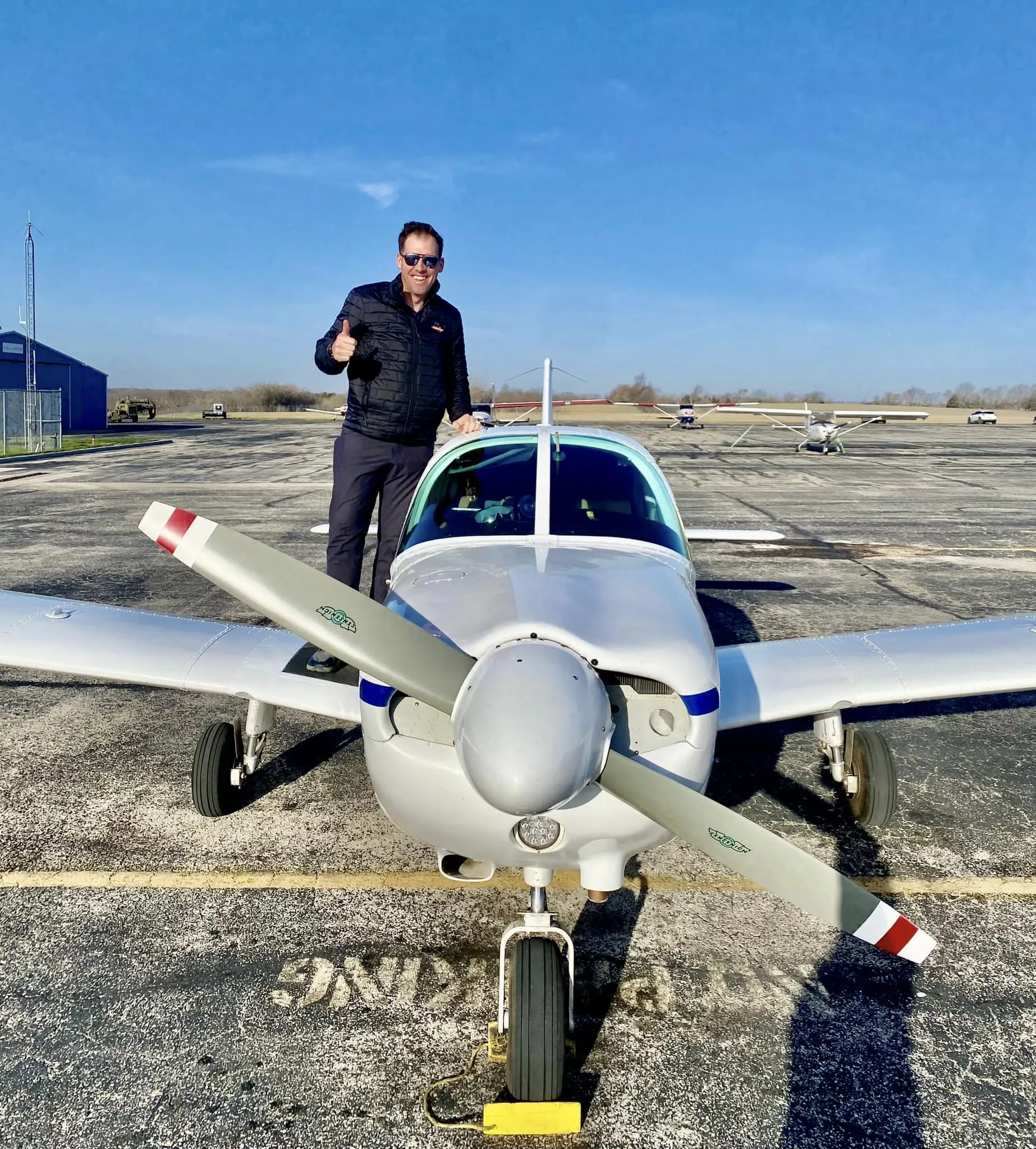
What you are doing: Adding an airplane multiengine land class rating to your commercial certificate. You will train in our Piper PA-30 Twin Comanche (a genuine twin-engine aircraft) while learning multi-engine aerodynamics, engine-out procedures, and the Airman Certification Standards tasks that the FAA practical test requires.
FAA requirement: This is an add-on class rating, not a separate certificate. The FAA requires demonstrated proficiency to ACS standards; there is no published minimum hour count for an additional class rating.
Summit’s program: We structure this as a focused, approximately one-week intensive. The syllabus runs ground school, simulator emergency drills, aircraft flights, a mock checkride, and the FAA practical test with a Designated Pilot Examiner. Our package starts at $4,950. Contact us to confirm current pricing and training-window availability.
Timeline: Approximately one week for the intensive itself. Add scheduling lead time for the DPE and your own calendar availability.
Why the timing matters: Getting your multi-engine rating immediately after your commercial certificate means you have a commercially rated, multi-engine pilot logbook, which is the profile most professional flying operations want to see from a career-track candidate.
Stage 5: Instructor Certifications — CFI, CFII, MEI
What you are doing: Training to teach — first in single-engine aircraft as a CFI, then adding instrument instructing privileges as a CFII, then multi-engine instructing privileges as an MEI.
Why this stage belongs in a career timeline discussion: Flight instruction is how most professional-track pilots build the hours they need for ATP eligibility. Teaching as a CFI generates pilot-in-command time with students. Those hours count toward your total flight time, making instruction one of the most efficient paths to the 1,500-hour benchmark associated with standard ATP requirements.
Timeline range (CFI/CFII/MEI combined):
| Training Pace | Typical Duration |
|---|---|
| Full-time focus | 3–5 months |
| Part-time with existing ground knowledge | 5–8 months |
The long-term picture: Students who complete the Career Track and transition to instructing at Summit — or elsewhere — are in the phase of the career path where hours compound most reliably. The question stops being “how long until I have enough ratings?” and starts being “how long until I have enough hours?”
Putting It Together: Total Career Track Timeline
The table below summarizes realistic ranges. These are not Summit-guaranteed timelines; they are illustrations of how pace compounds across the full path. Discuss your specific situation with our team before making plans.
| Stage | Full-Time Estimate | Consistent Part-Time | Working-Professional |
|---|---|---|---|
| Private Pilot | 2–3 months | 3–5 months | 6–10 months |
| Instrument Rating | 2–3 months | 3–5 months | 5–8 months |
| Commercial Pilot | 3–5 months | 5–8 months | 8–14 months |
| Multi-Engine Rating | ~1 week | ~1 week | ~1 week |
| CFI / CFII / MEI | 3–5 months | 5–8 months | 7–12 months |
| Full path total | 10–16 months | 16–26 months | 26–44 months |
Every range in this table has students who finished faster and students who took longer. Weather alone can add a month to any stage. Checkride availability can add another few weeks at the end of each one. The table is a planning tool, not a promise.
What Part 61 Flexibility Actually Means for Your Timeline
Summit trains under Part 61 at Lee’s Summit Airport (KLXT). For students trying to plan a realistic timeline, here is what that means in practice:
No cohort calendar. You do not enroll in a class that starts on a fixed date with a fixed end point. If you need to pause for a work project, a family commitment, or a stretch of poor weather, you pick up where you left off. Your logbook does not reset.
Pacing is yours to control. A student flying three times per week will complete each stage faster than a student flying once per week. Part 61 does not impose a pace; it lets your readiness drive the schedule.
Checkride timing is yours to manage. We endorse students for a checkride when they are genuinely ready, not when a calendar says it is time. That means fewer checkride failures and less money re-spent on additional training.
The flip side: no external deadline means the timeline is your responsibility. Students who want accountability and momentum do better when they set a training frequency goal at enrollment and stick to it. Our career track page includes a cost estimator that adjusts based on your starting point and preferred schedule, which is a good place to start building your personal plan.
Financing the Full Path
Career-track pilot training is a significant investment. The 250-hour commercial milestone alone represents meaningful aircraft time, and that is before instructor certifications.
We work with aviation-specific financing partners to help students plan costs before starting, not after they are mid-program and surprised. Visit our financing resources page to review options, or contact us to talk through the path before you commit to a start date.
Frequently Asked Questions
Can I start the Career Track with no flying experience at all? Yes. The Career Track begins with your Private Pilot Certificate, which has no prior flight experience requirement. If you have never sat in a cockpit, a discovery flight is a good first step, as it gives you 30 to 60 minutes in the air before you commit to enrollment.
What is a “zero to hero” program and is that what Summit offers? Zero to hero is a common industry term for a structured training path that takes a student from no flying experience to professional-level certifications under one program. Summit’s Career Track serves that purpose — Private Pilot to Multi-Engine Instructor — at KLXT, under Part 61’s flexible scheduling model.
Do I have to complete every stage in sequence? Yes — the FAA requires the sequence. You need a private pilot certificate before an instrument rating, an instrument rating plus commercial certificate before advanced operations, and a commercial certificate before CFI certification. The Career Track is designed around that regulatory order.
What is the fastest realistic completion time? For a student who trains daily, has no major gaps, passes all knowledge tests on schedule, and finds DPE availability quickly, the full path from private pilot to MEI can realistically take 12 to 18 months. That is a full-time, focused pace. Most students fall in the 18–30 month range depending on their schedule.
Does Summit offer the entire path from private through MEI? Yes. Our Career Track is designed to cover every stage: Private, Instrument, Commercial, Multi-Engine, CFI, CFII, and MEI at our facility at Lee’s Summit Airport.
How much does the full Career Track cost? Total cost depends on your starting point, your pace, and how many hours each stage requires for your proficiency. Use the cost estimator on our Career Track page for a personalized estimate based on your current certifications and goals.
Can I still train if I work full-time? Yes. Many of our students hold full-time jobs. Part 61 flexibility means you can train on evenings and weekends. The trade-off is that working-professional pacing extends the timeline, which is honest and not a problem.
Ready to Map Your Timeline?
Understanding how long it takes is the first step. The second step is figuring out what your personal pace looks like — based on your schedule, your budget, and where you want to start.
Get started by visiting the Career Track page, using the cost estimator, and reaching out so we can map the right entry point for your situation.
-certified-flight-instructor-summit-flight-academy-lees-summit-pilot-training.jpg)