Is a Career Track Flight Program Right for You? 2026 Student Guide
Published by:
Jami Heckman
Published on:
Updated on:
Read time:
9 min read
Most people who research a career track flight program already believe flying is something they want. What they are not sure about is whether they are the right person for it.
That is a smarter question than most people realize. And it is the one this post is designed to answer honestly.
We are not going to tell you that everyone should pursue a career track program. The truth is that this path requires a specific kind of commitment, and students who start without understanding what that means are the ones who stall mid-program, waste money, and walk away frustrated.
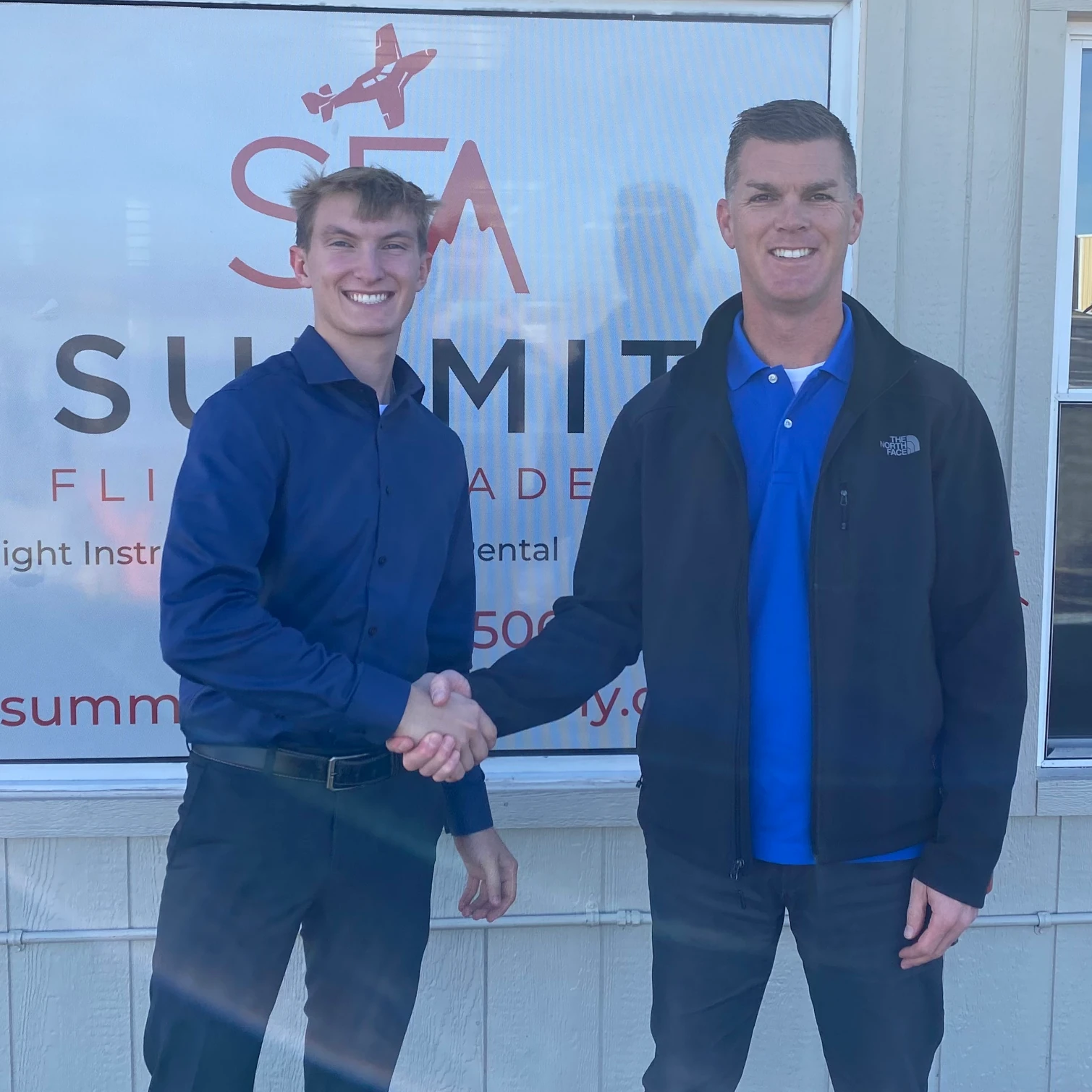
What follows is a clear-eyed look at who the Career Track at Summit Flight Academy is built for. Read it like a qualification checklist. If the profile fits, we want to hear from you. If it does not, we would rather you know now.
What the Career Track Actually Demands
Before describing the ideal student, it helps to name what this path actually requires from you — so the profile makes sense.
The Career Track takes you from your Private Pilot Certificate through Instrument Rating, Commercial Pilot Certificate, Multi-Engine Rating, and instructor certifications (CFI, CFII, MEI). That is a multi-stage commitment measured in months to years, thousands of dollars, dozens of checkride prep sessions, and a lot of early mornings or late evenings around your existing life.
It is not a casual commitment. It is not something you do halfway. But it is also not impossible, and it does not require you to already be an exceptional person. It requires you to be a ready one.
The Student Who Thrives in a Career Track Program
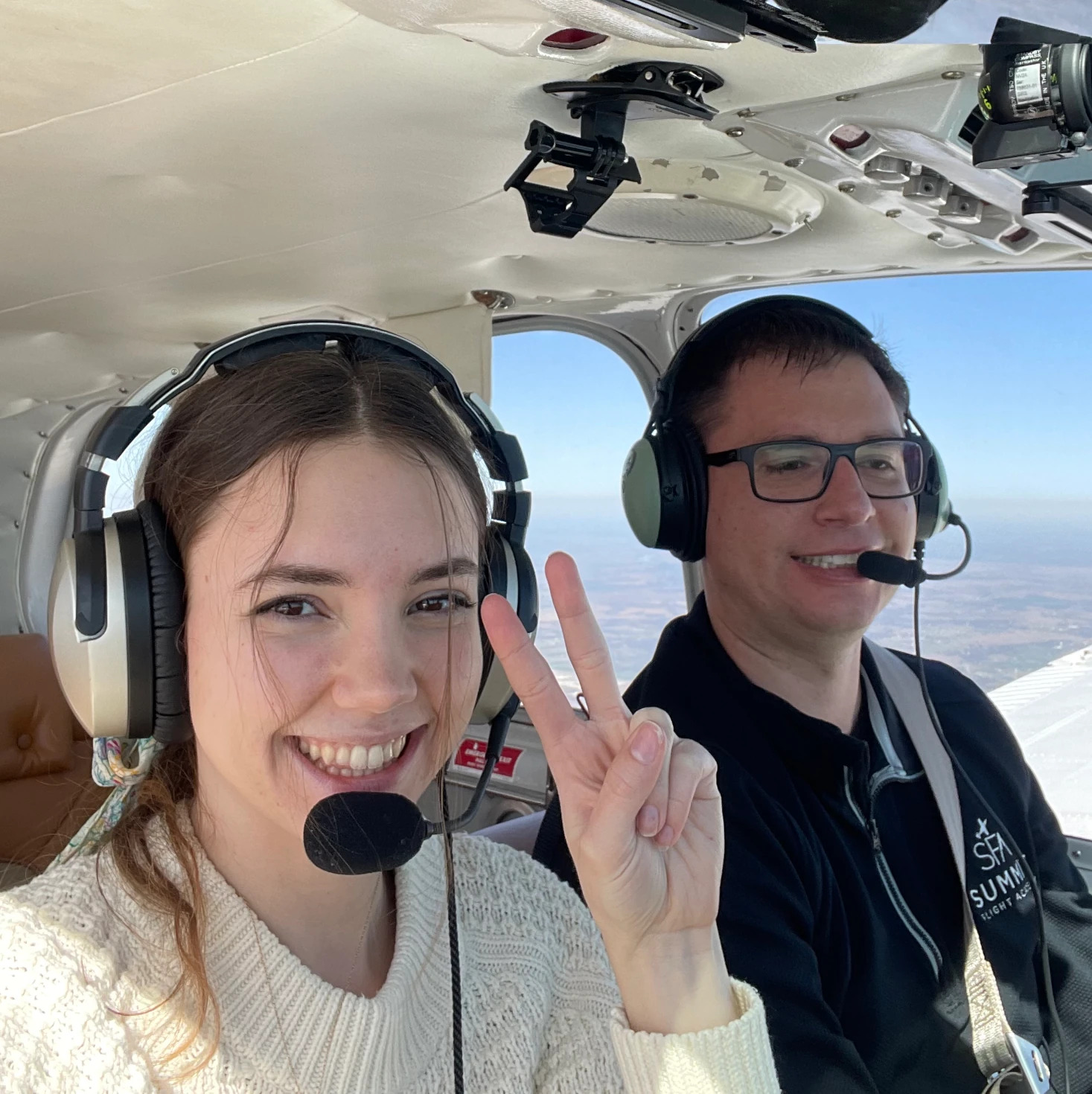
Here is the profile we see most often in students who complete the path successfully. You do not have to check every box perfectly, but if several of these descriptions do not sound like you, that is worth a conversation before you enroll.
They have a clear reason to fly professionally
This is not about passion: passion is common among people who never finish. The students who thrive have a specific reason they want to reach the commercial or instructor certification level. It might be a career change. A long-held goal they finally have the means to pursue. A decision that the desk job has run its course.
Whatever the reason, it is specific enough to carry them through the hard parts, such as a 45-minute hold over an approach in instrument training, a ground lesson they have to repeat, or a checkride prep session that exposes a weak area and sends them back to practice.
“I’ve always wanted to fly” is a starting point. It is not enough on its own to get through 18 to 30 months of progressive training.
They can commit to a consistent training frequency
Under Part 61, the regulatory framework we train under at Lee’s Summit Airport, your schedule is flexible. There is no fixed cohort calendar, no rigid start date, no mandatory daily attendance.
What Part 61 flexibility does not mean is that sporadic training works. The research on pilot skill retention is consistent: long gaps between lessons cost you proficiency, and that proficiency has to be rebuilt before you can move forward. Students who train once every three weeks move backward faster than they move forward.
The students who do well fly at least twice a week when their schedule allows. If work or family genuinely limits you to once a week, the Career Track still works, though it just takes longer, and you need to accept that going in. If flying once a month is the realistic ceiling, the timing may not be right.
They have done a preliminary financial plan — or are willing to do one
Career-track training is a significant investment. The exact cost depends on your starting certifications, your training pace, and how many hours each stage requires for your proficiency. Our career track page includes a cost estimator that adjusts for your specific situation, and that is the first tool any serious candidate should use.
What disqualifies someone is not having less money, but rather starting without a plan. Students who begin training without understanding the cost structure run out of runway mid-program, which wastes what they have already spent and leaves them with certificates that do not yet qualify them for the work they want to do.
Financing options are available through aviation-specific lending partners. Visit our financing resources page to review what is available. We can help you compare options before you commit to a start date.
They understand that readiness drives the schedule, not the calendar
This is the mindset shift that separates students who complete the path from students who chase a timeline.
Under our Part 61 program, we endorse students for a checkride when they are genuinely ready, not when a predetermined number of days has passed. That means you might reach a stage faster than expected if you have a strong aptitude for a particular skill. It also means you might take longer on a maneuver that does not click immediately.
Students who struggle with this are the ones who treat a difficult lesson as evidence that they are not cut out for this. Students who thrive treat it as information: a data point about where to focus the next session.
The Three Objections We Hear Most Often
These are the doubts that most often stop people from even starting the conversation. We address them directly because they deserve real answers, not brochure-level reassurance.
”Am I too old for this?”
The FAA sets a minimum age of 17 to earn a private pilot certificate. There is no maximum age in the regulations. The age question that actually matters is the medical one, and that is assessed individually by an Aviation Medical Examiner, not by a flight school or a blog post.
What we can tell you from our experience: students who start the career track in their 30s and 40s are common. The relevant factors are not your birth year; they are your commitment level, your schedule, and your medical eligibility. Consult an Aviation Medical Examiner early if you have health questions. That conversation is productive and worth having before you invest in training.
For career-focused students aiming at commercial privileges, note that a second-class medical certificate is generally required for exercising commercial pilot-in-command privileges. Confirming your medical eligibility before starting is part of responsible career-track planning.
”I’m not sure I can afford this.”
The cost of a career track program is real, and we do not pretend otherwise. What we have found, though, is that the students who struggle financially are usually the ones who started without looking at the numbers first, not the ones who looked at the numbers and decided to proceed carefully.
Use the cost estimator on our Career Track page. It is built to give you a realistic picture based on where you are starting from and what level you want to reach. Then check the financing resources page. Aviation-specific financing exists precisely for this training path.
The honest framework: if the financing math does not work for you right now, that is useful information. It is better to know that before your first lesson than after your instrument rating.
”I don’t know if I’m smart enough or capable enough.”
This one comes up more than people expect. And it almost never has anything to do with intelligence.
What actual pilot training reveals is that the ability to fly competently is a skill that develops with structured practice, honest feedback, and repetition, not innate aptitude measured before you start. The students who fall behind are rarely the ones who lacked ability. They are the ones who did not fly consistently, who avoided the hard conversations with their instructors, or who stopped after a difficult session instead of scheduling the next one.
Our instructors are not looking for natural-born pilots. They are looking for students who show up, take feedback well, and keep coming back. That profile is trainable.
What the Training Environment Looks Like
Understanding the program matters. Understanding where and how you train also matters — especially for students who will invest significant time at our facility.
Location: We train at Lee’s Summit Airport (KLXT) in Lee’s Summit, Missouri. KLXT is a general aviation airport with controlled airspace nearby and enough traffic to give students realistic radio communication practice without the complexity of a major commercial hub.
Aircraft: Our training fleet includes Piper Cherokees, Piper Warriors, a Piper Archer, a Cessna 182 Skylane, and a Piper PA-30 Twin Comanche for multi-engine work. Several aircraft are equipped with Garmin avionics, including GTN 650Xi touchscreen navigators, G3X glass panel displays, and ADS-B IN/OUT, so your cockpit experience builds on equipment that is relevant to professional aviation environments.
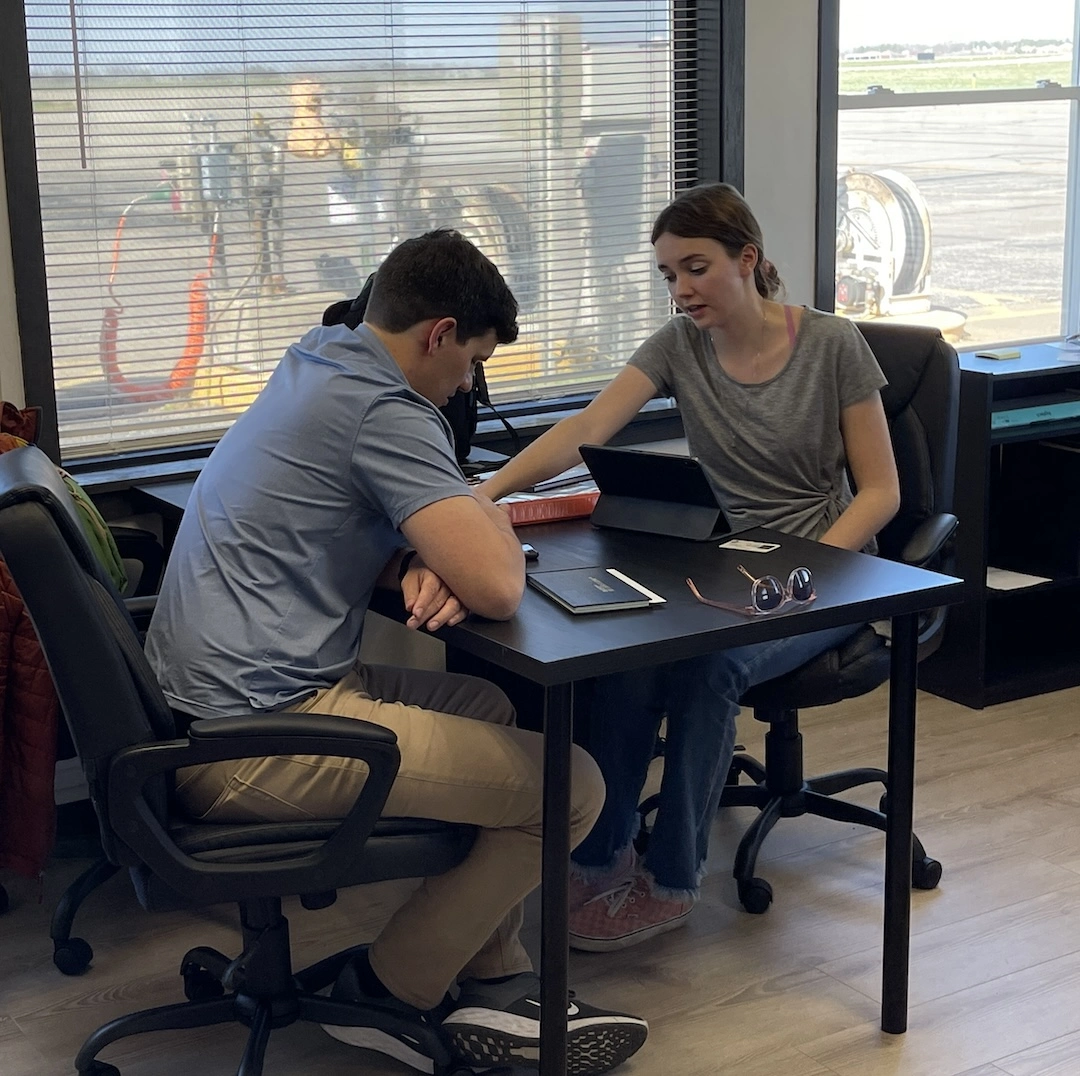
Instruction model: Part 61 means one-on-one instructor-student relationships, not cohort classes. Your instructor knows your logbook, your strengths, and where you need more time. That continuity is part of what makes the Career Track model work.
The Student the Career Track Is Not Built For
Specificity cuts both ways. We want to attract the right students, which means being clear about who this path is not designed to serve well.
The Career Track is not a good fit if:
- Flying is primarily a hobby interest. If recreational flying is your goal, a private pilot certificate is a better starting point. The Career Track is a professional development path, not a lifestyle option.
- You want to see if you like flying before committing to the path. A discovery flight is the right first step. Committing to a career-track program without first experiencing flight is not something we recommend.
- Your schedule genuinely allows only occasional training. The path works on a working-professional timeline, but it requires consistent scheduling, not training when it becomes convenient. If your schedule has significant uncertainty for the next year, a conversation about timing is worth having first.
- You are expecting guaranteed outcomes. No flight school can guarantee career placement. What we can offer is structured training, experienced instructors, and a complete curriculum from private pilot to MEI. What you do with those credentials is your decision and your effort.
How to Start the Conversation
If the profile described above sounds like you, the next step is a straightforward one.
Visit our Career Track page and use the cost estimator to build a preliminary picture of your path. Then reach out so we can talk through your starting point, your timeline, and what the training structure looks like for your situation.
If you are still in the research phase and want to understand what flying actually feels like before committing, book a discovery flight first. Thirty to sixty minutes in the cockpit tends to clarify the question more efficiently than any amount of research.
Frequently Asked Questions
Do I need any prior flying experience to start? No. The Career Track begins with your Private Pilot Certificate, which has no prior flight experience requirement. Students who have never been in a cockpit start here.
Is there an age limit? The FAA minimum age for a private pilot certificate is 17. There is no FAA maximum age. Your medical eligibility, assessed by an Aviation Medical Examiner, is the more relevant question. Consult an AME early if you have health concerns.
What medical certificate do I need? Most students begin with a third-class medical certificate, which is sufficient for student and private pilot flying. To exercise commercial pilot privileges, you will need at least a second-class medical. Consult an Aviation Medical Examiner for your specific eligibility.
Can I join the Career Track if I already have a private pilot certificate? Yes. The career track is structured to begin from your current certification level. The cost estimator on the Career Track page adjusts for your starting point.
How long does the Career Track take? Timeline depends on your training frequency, weather, checkride scheduling, and individual proficiency pace. Our pilot timeline blog post breaks down realistic ranges by training pace.
Is financing available? Yes. Aviation-specific financing options are available. Visit our financing resources page or contact us to talk through options before committing to a start date.
What aircraft will I fly during training? Single-engine training uses our Piper Cherokee, Warrior, Archer, and Cessna 182 fleet. Multi-engine training uses our Piper PA-30 Twin Comanche. Several aircraft are equipped with Garmin avionics including GTN 650Xi navigators and G3X glass panel displays.
Ready to Find Out If This Is the Right Path?
Start by using the cost estimator on the Career Track page. Then reach out; we can talk through your situation and help you decide whether the timing and the program are the right fit.