How Multi-Engine Training Fits Into a Professional Pilot Career in 2026
Published by:
Jami Heckman
Published on:
Updated on:
Read time:
10 min read
Most students approach the multi-engine rating the same way they approach an oil change. Something you need. Something you schedule eventually. Something you put off until it becomes unavoidable.
That framing costs pilots time, money, and momentum, because the multi-engine rating is not an oil change. It is a career prerequisite embedded in federal regulation, and when you earn it determines how much professional value it delivers.
This post explains how the rating fits into the full career arc: why the FAA requires it for ATP certification, how it contributes to your 1,500-hour plan, and why getting it as part of an integrated career track (rather than as an afterthought later) changes what your logbook looks like when hiring decisions are made.
The Regulatory Foundation: Multi-Engine and the ATP Certificate
Here is the fact that most training content glosses over: the FAA requires at least 50 hours of flight time in multiengine airplanes to be eligible for an airline transport pilot (ATP) certificate in the multiengine class.
That comes directly from 14 CFR 61.159, the ATP aeronautical experience requirements. The 50-hour multiengine minimum sits alongside requirements for total hours, cross-country time, night time, and instrument time. It is not optional. It is not negotiable. And since airline operations in the United States (from regional turboprops to mainline jets) use multiengine aircraft, pilots who want to fly professionally in that environment must eventually hold both an ATP certificate and the multiengine class rating.
The certificate path to get there runs through the ratings you build long before ATP eligibility. Your commercial certificate with a multiengine rating is the foundation. Your multiengine instructor (MEI) certification is what lets you build those hours teaching. Every stage compounds.
What this means practically: if you plan to fly professionally in a multiengine environment, the rating is not an optional add-on. It is the one step you cannot skip.
Why “Getting It Later” Is the Expensive Way to Do This
Plenty of pilots earn their commercial certificate, start instructing in single-engine aircraft, accumulate several hundred hours, and then schedule the multi-engine rating. It works. But it also creates a planning problem most people do not see coming.
Here is what the logbook looks like at that point:
- Commercial certificate ✓
- CFI ✓, CFII ✓
- Several hundred hours of single-engine PIC time
- No multiengine time yet
Now you schedule the intensive. You spend a week and several thousand dollars earning the rating. You come back with the multiengine add-on, and then you add the MEI certification to your instructor credentials.
That works, but now your entire hour-building period to that point was in single-engine aircraft. You are starting your multiengine logbook from zero while your single-engine total is already climbing. The 50 hours of multiengine the ATP requires still needs to accumulate, and it accumulates more slowly when you only have MEI work available for those specific hours, not the full mix of students a complete instructor credential supports.
The integrated approach: Earn the multi-engine rating as part of your career track, on your commercial certificate, before you start instructing. Then add the MEI certification alongside your CFI and CFII. Now every multi-engine student you instruct is building your multiengine time simultaneously with your total hours. Your logbook grows in both columns from day one of your CFI career.
The result is a cleaner progression, faster multiengine hour accumulation, and a more complete professional profile earlier in your career.
The Logbook Profile That Matters at Hiring Time
A consistent question from career-track students is some version of: “What does my logbook actually need to look like when I apply for a professional flying position?”
The regulatory baseline is clear: ATP eligibility in the multiengine class requires 1,500 total hours plus 50 hours multiengine, along with specific cross-country, night, and instrument time. Beyond FAA minimums, individual employers set their own standards, and those vary. But there are patterns in what professional operations value.
What a strong early-career logbook tends to show:
| Column | What It Signals |
|---|---|
| Total time | Hours and commitment, which is the baseline employers check first |
| PIC time | Your authority and experience flying in command |
| Multiengine time | Readiness for commercial twin or turbine transition |
| Instrument time | Precision and professional-weather capability |
| CFI/CFII/MEI logged | Instructional depth — you know the material well enough to teach it |
| Cross-country time | Navigation and planning experience at scale |
A logbook with multiengine entries starting early in the CFI career tells a different story than one where multiengine hours appear only in the final training block. The former shows a pilot who was thinking about the career arc before they started hour-building. That is what the Career Track is designed to produce.
How to Build 1,500 Hours: The CFI Path
The question behind the keyword is a real one: once you have your commercial certificate and multi-engine rating, how do you actually get to 1,500 hours?
For civilian pilots without a military background, the most common route is flight instruction. Here is how the ratings compound:
- CFI (single-engine instructor): You instruct private and instrument students in single-engine aircraft. Every lesson generates pilot-in-command time in your logbook.
- CFII (instrument instructor): You add instrument students to your roster: longer lessons, more complex sessions, more hours.
- MEI (multiengine instructor): You instruct students doing their multi-engine add-on. These hours build your multiengine time column directly.
Each rating you hold is another type of student you can instruct. More student types means more scheduling flexibility, more hours per month, and a more complete logbook.
The math is not complicated, but the timing matters. Students who complete their MEI before starting their CFI career are building in all three columns from the beginning. Students who add MEI later are playing catch-up on the multiengine column.
Instruction is not the only path to 1,500 hours, though some pilots build time through banner towing, aerial survey, cargo operations, or other commercial work depending on availability. But for most civilian career-track pilots in the Kansas City area, instruction is the most accessible and logbook-efficient option available.
What Multi-Engine Training Actually Looks Like
Before discussing where the multi-engine rating fits in your plan, it helps to understand what training involves, because it is significantly different from anything you have done in single-engine training.
The core skills you develop:
- Engine-out procedures: What to do in the first seconds after an engine failure, including identification, verification, and feathering the failed engine. This is the most critical skill in multi-engine flying.
- Vmc awareness: Understanding the speed below which directional control cannot be maintained with one engine inoperative and full power on the other. This aerodynamic reality is unique to multiengine aircraft.
- Single-engine performance: How the aircraft climbs, descends, and maneuvers with one engine at idle or feathered. The performance reduction is significant and must be planned for.
- Systems management: Managing two sets of engines, propellers, fuel tanks, and electrical systems simultaneously.
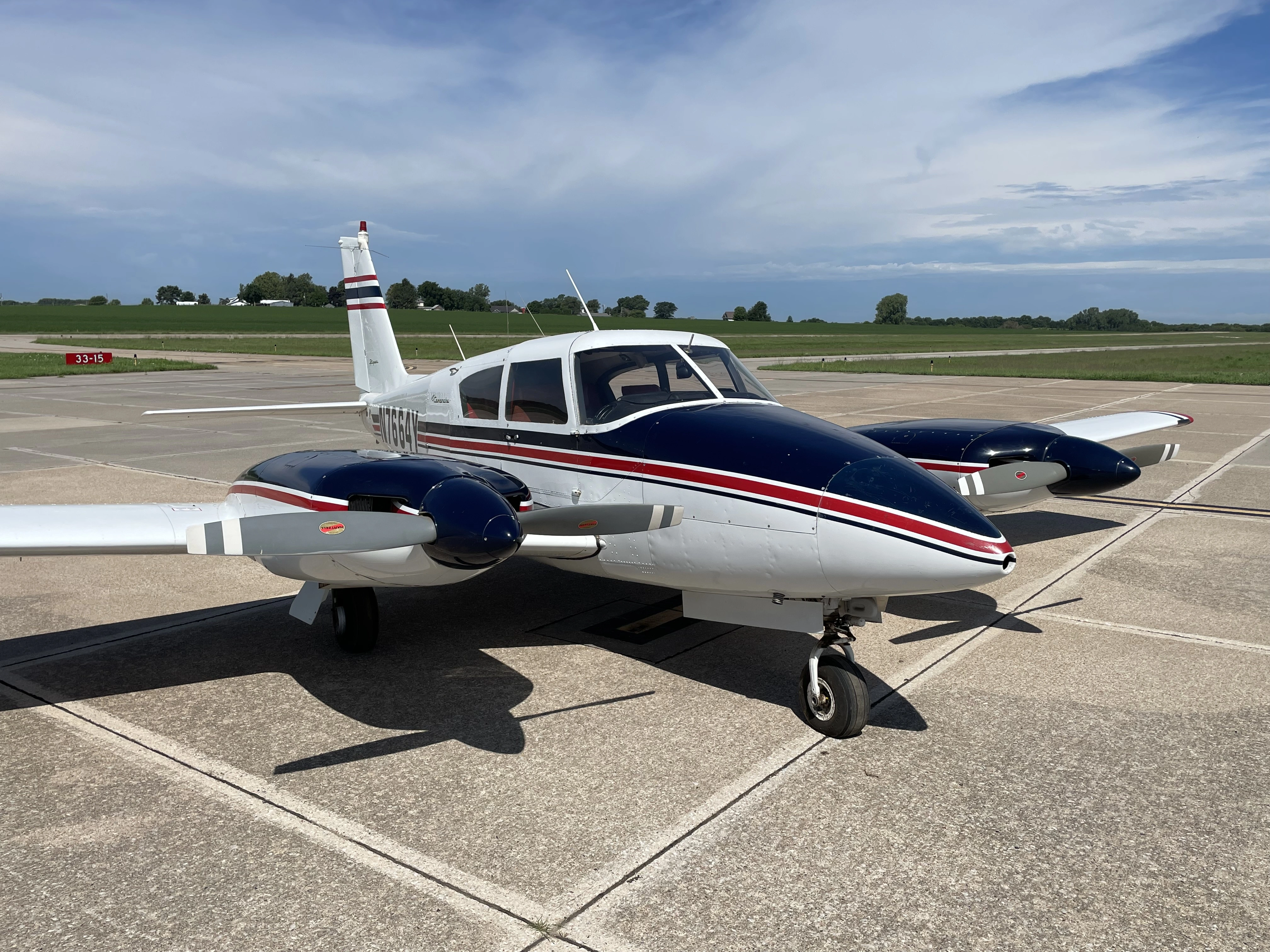
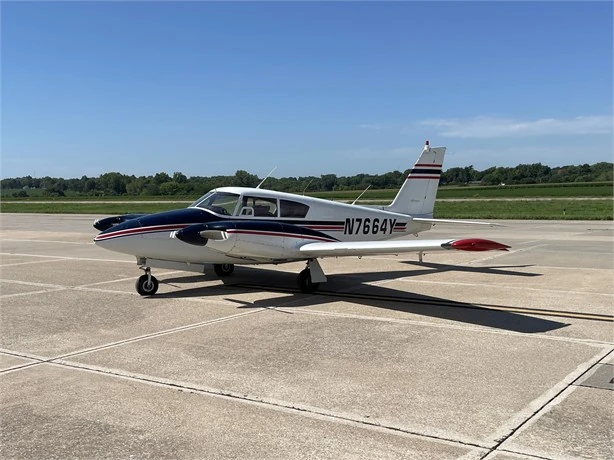
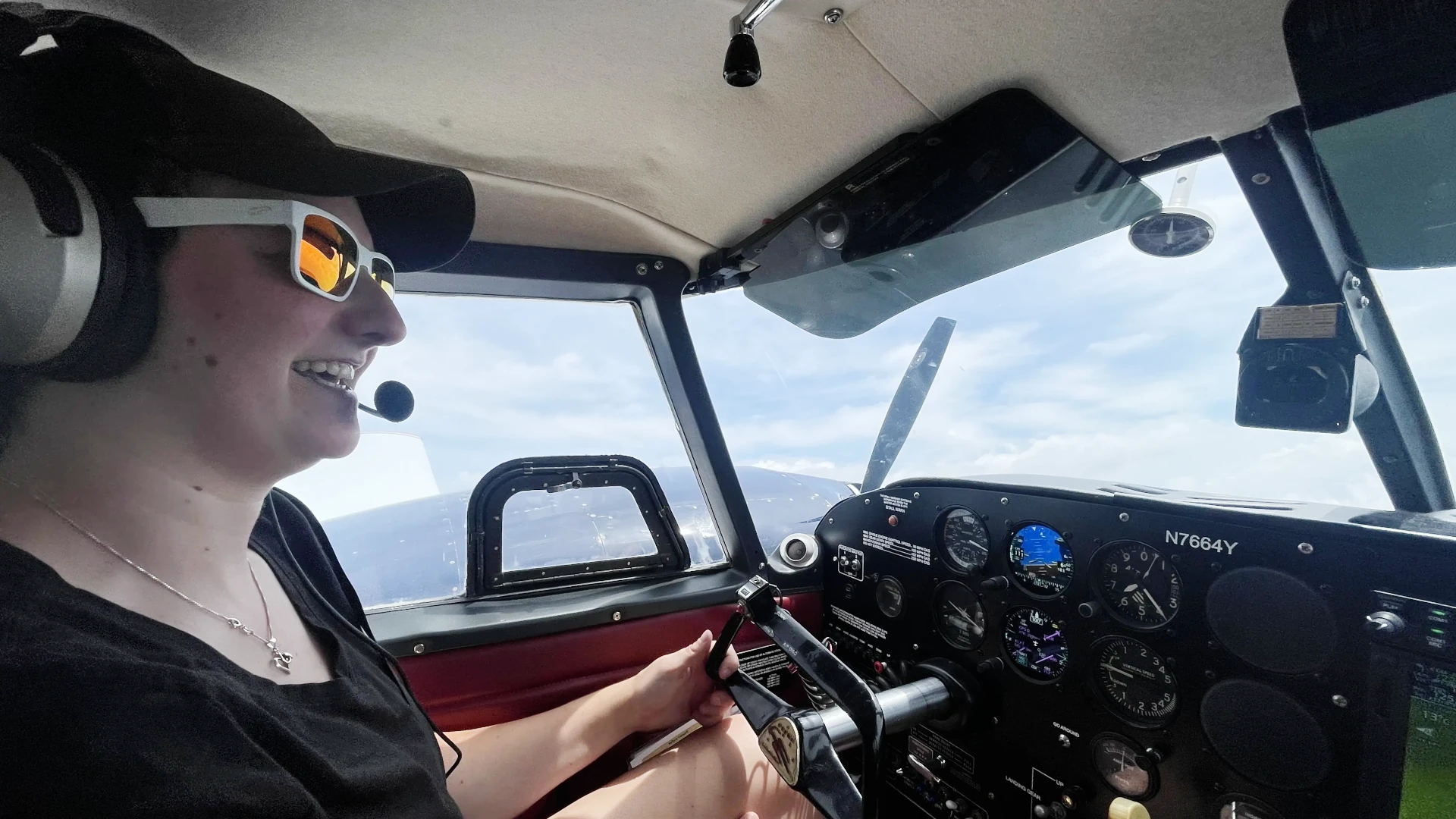
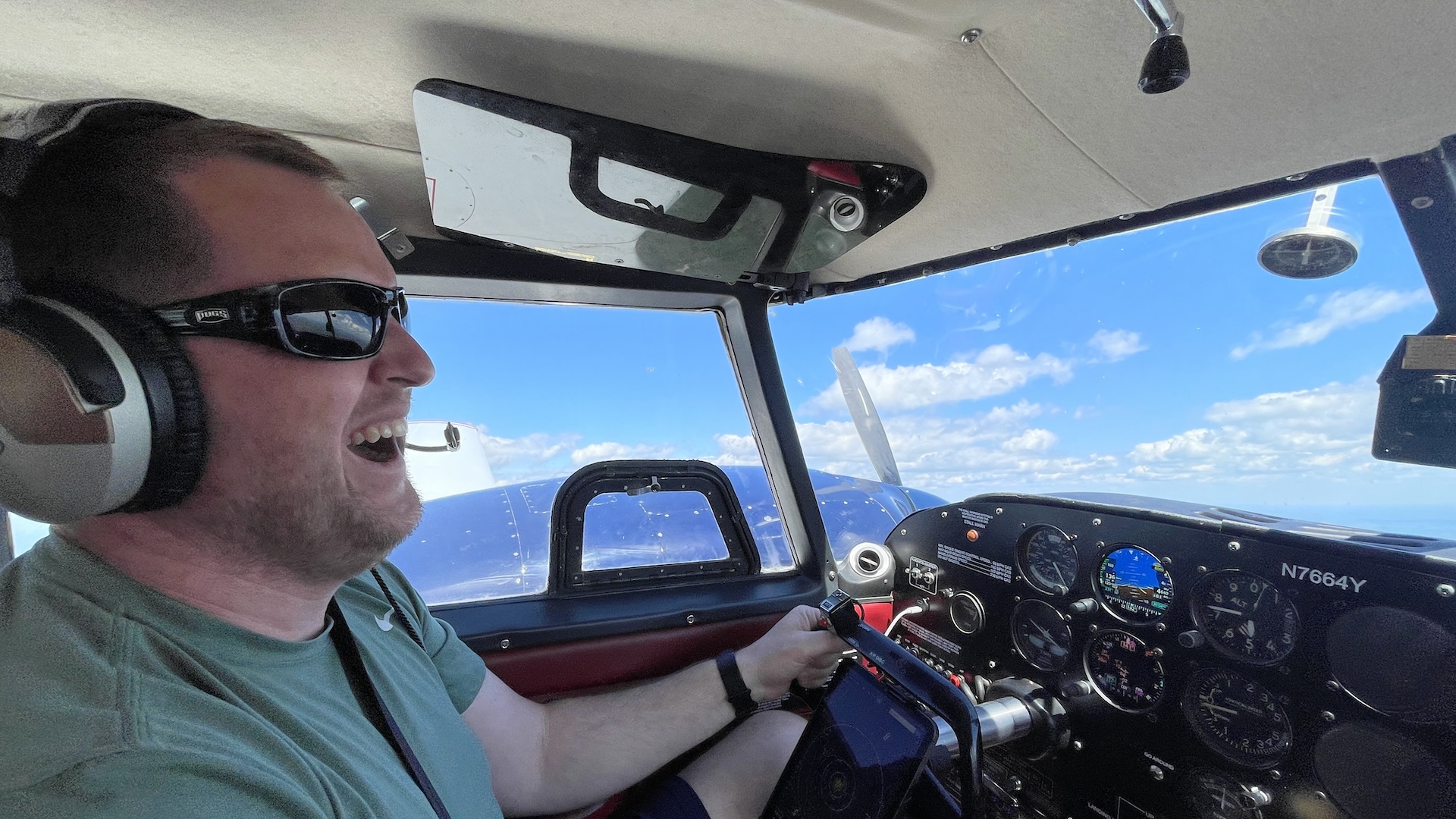
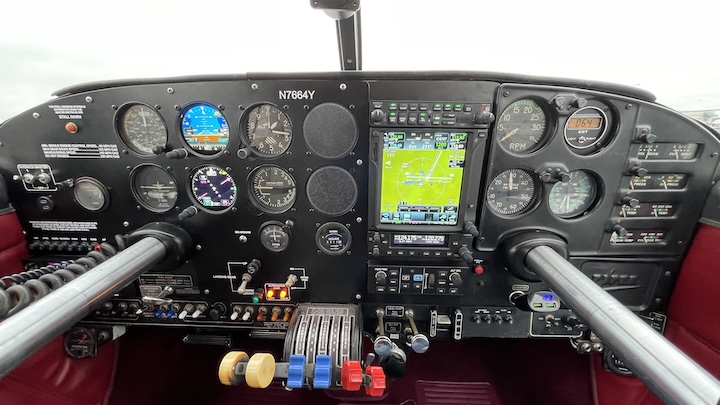
Summit’s program: We train in the Piper PA-30 Twin Comanche (N7664Y) at Lee’s Summit Airport (KLXT). Our PA-30 features counter-rotating engines, which removes the “critical engine” factor present in conventional twin designs, a detail that lets beginning multi-engine students focus on core engine-out skills without the added complexity of asymmetric thrust imbalance.
Our multi-engine program is structured as a focused, approximately one-week intensive: ground school covering aerodynamics and systems, simulator sessions to practice emergency procedures safely before flying, aircraft flights building from orientation through emergency operations mastery and ACS task integration, a mock checkride, and the FAA practical test with a Designated Pilot Examiner.
Our multi-engine package starts at $4,950. Contact us to confirm current pricing and training-window availability.
Why Doing It at a Career-Track School Changes the Experience
There is a practical difference between getting a multi-engine rating at a school that primarily does recreation flying and getting it at a school that runs a full career track.
At a career-track school, the multi-engine rating is not an isolated event. It is stage four of a five-stage sequence that your instructor team already knows. They know your logbook. They know where your instrument skills are and how your commercial training went. They are not starting a cold intake with a student they have never met.
That continuity matters for a few reasons:
- Oral prep depth: Your instructor knows what you already understand about aerodynamics, regulations, and systems. They build the multi-engine ground school from your existing foundation, not from scratch.
- Checkride readiness: Because your instructor team has seen your progress through previous stages, they have a realistic sense of when you are ready; not just when the minimum hours are logged.
- MEI pathway: After the multi-engine rating, the MEI certification is a natural next step within the same program. The transition is planned, not improvised.
Explore the Career Track Program →
What Comes Before and After the Multi-Engine Rating
For students building the full career track, the multi-engine rating sits at a specific point in the sequence. Understanding what it connects to makes the timing decision clearer.
What comes before:
| Stage | What You Build | Why It Matters Before Multi-Engine |
|---|---|---|
| Private Pilot Certificate | Core aircraft handling, cross-country, emergency decision-making | Foundation of airmanship that multi-engine instruction builds on |
| Instrument Rating | Precision flying, IFR procedures, scan discipline | Multi-engine emergencies often occur in IMC; instrument skills are assumed |
| Commercial Pilot Certificate | Professional-standard maneuvers, aeronautical decision-making | The commercial certificate is what the multi-engine rating is added to |
What comes after:
- MEI Certification: Adds multi-engine instruction to your CFI credential. Now you can instruct multi-engine students, building both total hours and multiengine hours simultaneously.
- Hour building as CFI/CFII/MEI: The main engine of your 1,500-hour plan. Every lesson in any aircraft category adds to your total. Multi-engine lessons are the ones that count toward the ATP multiengine requirement.
- ATP eligibility: After 1,500 total hours (with 50 in multiengine, plus cross-country, night, and instrument minimums), you are eligible to sit for the ATP: the certificate that opens the door to professional airline and cargo operations.
Frequently Asked Questions
Is the multi-engine rating required to fly for an airline? To hold an ATP certificate in the airplane multiengine class (which Part 121 airline PIC positions require), the FAA mandates at least 50 hours of multiengine flight time, along with total hours, cross-country, night, and instrument minimums. Since U.S. airline operations use multiengine aircraft, the rating is a practical and regulatory necessity for that career path.
Can I get the multi-engine rating on a private pilot certificate instead of a commercial? Yes: the multi-engine rating is an additional class rating added to whatever certificate you currently hold. However, for career-track purposes, most students earn it on their commercial certificate so the complete credential (commercial + multiengine) is immediately usable in professional contexts.
How much does the multi-engine rating at Summit cost? Our package starts at $4,950, which includes aircraft time, instructor fees, simulator sessions, mock checkride prep, and non-owned insurance. Contact us to confirm current pricing and training-window availability.
Does multi-engine flight time count toward ATP hours? Yes. Flight time in a multiengine aircraft is total flight time and counts toward ATP eligibility. The specific ATP multiengine category requirement (50 hours in the multiengine class) is tracked separately. How individual sessions are logged (PIC, dual, etc.) depends on your certificate level and the operation, so discuss your logging strategy with your instructor.
How long does the Summit multi-engine program take? The intensive is approximately one week: ground school, simulator sessions, aircraft flights, mock checkride, and the FAA practical test. DPE scheduling and individual readiness can affect timing. Contact us to check current training-window availability.
Does earning the MEI mean I can teach multi-engine at Summit? The MEI certification qualifies you to instruct multi-engine students. Employment opportunities at any school, including Summit, depend on openings, qualifications, and school needs. Reach out to discuss what CFI opportunities look like at our school.
I already have a commercial certificate. Can I just add the multi-engine rating now? Yes. Our multi-engine program accepts students who already hold a private or commercial pilot certificate. If you are building toward a career track from a mid-point, we can map the right path from your current logbook.
Ready to Add the Rating That Changes Your Logbook?
If you are building toward a professional pilot career, the multi-engine rating is not something to schedule later. It is the step that reshapes what your hour-building period produces, and the sooner it sits on your commercial certificate, the sooner every lesson you teach counts in the right column.
For a detailed look at current pricing and what is included, our multi-engine cost guide is the right next read. When you are ready to talk through how the rating fits into your specific training plan, reach out directly.