What Is a Checkride? 2026 FAA Practical Test Guide

Published by:
Summit Flight Academy Team
Published on:
Updated on:
Read time:
11 min read
If your checkride is starting to feel like the one scary wall between you and your pilot certificate, you are not alone. The word checkride sounds bigger than it is, and the unknowns can make a prepared student feel unprepared.
Here is the plain meaning: a checkride is the common name for the FAA practical test. It is the final evaluation for a pilot certificate or rating. For most student pilots, it has two main parts: an oral exam and a flight test.
The test is serious. It is also understandable once you know the order of the day.
At Summit Flight Academy, we want students to see the checkride as a standard to prepare for, not a monster to fear. The examiner is not looking for a perfect robot. They are looking for a safe pilot who can explain the plan, manage risk, fly the airplane, and make sound decisions.
Checkride Meaning: The FAA Practical Test in Plain English
In aviation, a checkride is the final practical test for a certificate or rating. If you are working toward your Private Pilot Certificate, Instrument Rating, Commercial Pilot Certificate, Multi-Engine Rating, or flight instructor certificate, the checkride is where you show that you meet the FAA standard for that level.
The formal name is practical test because it measures more than book knowledge. You need to show:
- Knowledge: you understand the rules, weather, aircraft, airspace, performance, and limitations.
- Risk management: you can spot hazards and make safe choices before they turn into problems.
- Skill: you can fly the required maneuvers and procedures to the applicable standard.
For common airplane certificates and ratings, that standard is found in the FAA’s Airman Certification Standards, usually called the ACS. The ACS is not a secret answer key. It is the published standard your instructor uses to train you and the examiner uses to evaluate you.
If you are early in training, keep this simple: the checkride answers one question. Are you ready to hold this certificate or rating without your instructor in the airplane?
For more targeted prep after this beginner guide, read our common checkride errors guide and our article on checkride airspace knowledge.
Your Instructor Signs You Off Before the Checkride
You do not walk into a checkride just because the calendar says it is time.
Before your practical test, your instructor must decide that you are ready and provide the required endorsement. Your instructor has watched your progress across lessons, flights, ground discussions, and scenario practice. Their signoff means they believe you have met the prerequisites and are prepared to be evaluated.
For a Part 61 flight school like Summit Flight Academy, that flexibility helps your instructor match training to your actual readiness. Some students need more crosswind practice. Some need more weather discussion. Some need more time explaining aircraft systems out loud. The goal is not to rush you into the test. The goal is to send you when your preparation is solid.
You will also need paperwork ready. For many practical tests, that can include your application, logbook, instructor endorsements, knowledge test report, medical certificate when required, student pilot certificate when applicable, and aircraft documents. Your instructor will help you organize what applies to your test.
This is one reason we tell students to treat checkride prep as a process, not a cramming session. Good paperwork, good habits, and good decision-making all reduce stress on test day.
The Oral Exam Is a Structured Aviation Conversation
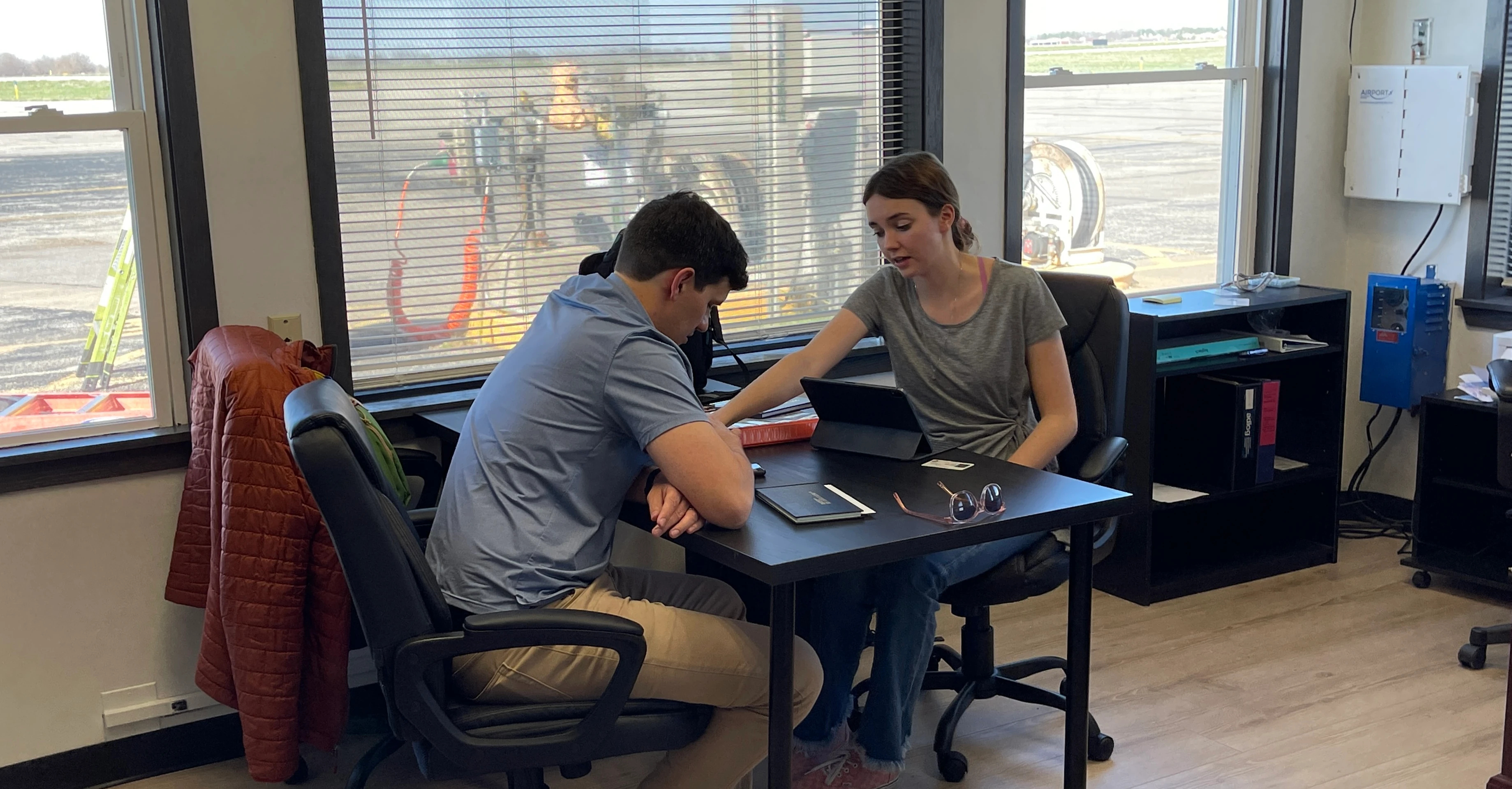
The oral exam is often what students fear most because they picture an interrogation. A better way to see it is this: the oral is a structured aviation conversation.
The examiner needs to know how you think. They may ask direct questions, but they also use scenarios. For a private pilot applicant, that could sound like planning a cross-country flight with changing weather, explaining whether the airplane is legal to fly, or walking through weight and balance before departure.
Expect key topics such as:
- Regulations: what your certificate allows, required documents, currency, and limitations.
- Weather: reports, forecasts, go/no-go decisions, and risk factors.
- Aircraft systems: fuel, electrical, engine, avionics, and emergency procedures.
- Performance: takeoff distance, landing distance, density altitude, and aircraft limitations.
- Weight and balance: loading the aircraft within safe limits.
- Airspace and charts: what airspace you will use and what rules apply.
- Risk management: personal minimums, external pressure, and changing conditions.
The examiner is not grading your ability to recite a textbook. They are checking whether you can use the information like a pilot. If you do not know an answer, stay calm. Say what you know, explain how you would find the answer, and keep your reasoning clear.
If the oral portion feels hard, stay with it. The examiner is doing their job: testing whether your knowledge can survive real-world questions.
The Flight Test Shows How You Manage the Airplane
After the oral portion, the flight test lets the examiner see you operate the aircraft.
The exact tasks depend on the certificate or rating. A private pilot checkride is different from an instrument, commercial, multi-engine, or CFI practical test. Still, the basic idea is the same: you demonstrate the required tasks while maintaining safety, control, and sound judgment.
For a private pilot airplane checkride, you can expect areas such as:
- Preflight inspection and cockpit preparation
- Normal, short-field, or soft-field takeoffs and landings
- Navigation and pilotage
- Slow flight and stalls
- Ground reference maneuvers
- Emergency procedures
- Diversions and lost procedures
- Basic instrument references, when required
- Postflight procedures
For an Instrument Rating, the focus shifts toward instrument procedures, approach briefings, holding, navigation, and decision-making in low-visibility scenarios. For a Commercial Pilot Certificate, the maneuvers demand more precision. For a Multi-Engine Rating, systems knowledge and engine-out procedures become central.
The examiner is watching more than the maneuver itself. They are watching how you brief, clear the area, use checklists, divide attention, correct deviations, manage workload, and protect safety margins. A checkride is not a talent show. It is a safety evaluation.
That should lower your fear, not raise it. If you have trained consistently, practiced to the ACS, and learned how to correct small errors early, you already understand the rhythm of the test.
The DPE Is an Examiner, Not Your Instructor
Most students take the practical test with a Designated Pilot Examiner, commonly called a DPE. A DPE is designated by the FAA to evaluate applicants. FAA inspectors can also conduct practical tests, but many students schedule with a DPE.
The DPE is not your regular instructor. Their job is not to teach during the test. Their job is to evaluate whether you meet the applicable standard for the certificate or rating.
That difference matters. On a lesson, your instructor can pause, coach, demonstrate, and reset. On a checkride, the examiner needs to see your performance. They can give instructions and clarify what they want you to do, but they are not there to train you through the task.
A good mindset is this: treat the DPE like a passenger who understands aviation and needs to see you act as pilot in command. Brief clearly. Use checklists. Speak up when something changes. If you need to discontinue a maneuver for safety, say so and explain your plan.
You are allowed to think. You are allowed to breathe. You are allowed to correct. What matters is that your decisions show you are ready for the privileges of the certificate or rating.
What Happens if You Do Not Pass?
A disapproval is not the end of your aviation path.
If an applicant does not meet the standard, the examiner issues a notice of disapproval. After that, the applicant receives necessary retraining from an authorized instructor and a new endorsement before retesting. The retraining focuses on the deficient areas, but your instructor will make sure you are ready to return as a safe, complete applicant.
This is important for nervous students: a disapproval does not erase everything you learned. It identifies what must be corrected before the next attempt.
Treat the test with respect. DPE fees are third-party costs, and a retest costs time, money, and emotional energy. But fear of failure should not become its own emergency. If something goes wrong, you regroup, train the weak area, and return prepared.
At Summit, our training culture emphasizes risk management and standard safety procedures in every flight. That training carries into checkride day because the examiner is not just looking at maneuvers. They are looking at judgment.
For more help with pressure points, read human factors and decision-making checkride prep and weather and cross-country planning for checkride success.
How to Walk Into Checkride Day With Less Fear
The best cure for checkride fright is not blind confidence. It is clarity.
Use this simple breakdown:
| Checkride Phase | What Happens | What You Should Focus On |
|---|---|---|
| Before the test | Paperwork, endorsements, aircraft documents, and test plan are reviewed | Arrive organized and early |
| Oral exam | Examiner asks questions and scenarios | Explain your reasoning like a pilot |
| Flight test | You perform required tasks in the aircraft | Fly safely, use checklists, correct deviations |
| Debrief | Examiner reviews the result | Listen carefully and ask clear follow-up questions |
| If passed | You may receive a temporary certificate | Understand your new privileges and limits |
| If disapproved | You retrain and receive a new endorsement before retesting | Fix the deficient areas and return prepared |
A checkride feels less mysterious when you know the order of events. You are not walking into a hidden trap. You are walking into a published standard with an examiner who must evaluate whether you meet it.
If you are training for your first certificate, build this habit now: after each lesson, ask what part of the ACS you worked on and what standard you are trying to meet. That turns checkride prep into a normal part of training instead of a panic at the end.

What to Study Before Your First Checkride
For a beginner, checkride prep can feel endless. Start with the areas that appear again and again in real flying.
Focus specifically on:
- Your aircraft: systems, limitations, inspections, performance, and emergency procedures.
- Your route: weather, airspace, alternates, fuel, terrain, and checkpoints.
- Your documents: pilot documents, aircraft documents, endorsements, and maintenance records.
- Your decisions: personal minimums, go/no-go choices, diversions, and risk factors.
- Your maneuvers: the tasks your instructor has trained you to perform to standard.
Do not study only to answer questions. Study so you can make decisions. That is what the examiner needs to see.
If you are still early in training, the Private Pilot Certificate is where these habits begin. If your goal is a professional path, our Career Track builds from private pilot through advanced ratings and instructor certificates, so each checkride becomes one step in a larger plan.
Financing also belongs in the planning conversation. Checkrides, written tests, medical exams, and other third-party fees can affect your budget. Summit students can review financing resources early so money friction does not interrupt training right before a practical test.
FAQ: Checkride Meaning and Expectations
What is a checkride in aviation?
A checkride is the common aviation term for the FAA practical test. It is the final evaluation for a pilot certificate or rating and usually includes an oral portion and a flight portion.
Is a checkride the same as a written test?
No. The written, or knowledge test, is separate. The checkride is the practical test where you explain your knowledge and demonstrate your flying ability with an examiner.
Who gives the FAA checkride?
Practical tests can be conducted by FAA inspectors or FAA-designated pilot examiners. Most students work with a DPE scheduled for their certificate or rating.
What does the examiner look for during the oral exam?
The examiner looks for usable pilot knowledge. Expect questions about regulations, weather, aircraft systems, performance, weight and balance, airspace, and risk management.
What does the examiner look for during the flight test?
The examiner looks for safe aircraft control, sound judgment, checklist use, correction of deviations, and performance of required tasks to the applicable standard.
What happens if I fail a checkride?
You receive a notice of disapproval, complete necessary retraining with an authorized instructor, receive a new endorsement, and retest. A disapproval is serious, but it is not the end of your training path.
The Checkride Is a Standard You Can Prepare For
The checkride is not a mystery. It is a structured FAA practical test with a published standard, an oral exam, a flight test, and a clear purpose: confirming that you are ready for the certificate or rating you are seeking.
If you are nervous, start by removing the unknowns. Learn the ACS. Talk through scenarios with your instructor. Practice explaining your decisions out loud. Keep your paperwork clean. Treat each lesson as part of checkride preparation.
When you are ready to start training with that level of structure, schedule a Discovery Flight with Summit Flight Academy and take the first step toward your pilot certificate.