Flight Training for High School Students: When to Start
Published by:
Summit Flight Academy Team
Published on:
Updated on:
Read time:
8 min read
It’s 3:00 on a Tuesday in January. School just let out, the sun will be down around 5, and every high school student pilot in the area is walking through our door at the same time, all hoping for the same airplane. If you want to finish your private pilot certificate before college, that 3 pm rush is the best argument we know for starting early.
The short answer: start flight training the fall before your deadline if you can. A January start still works, but you’ll need weekends and some flexibility. Start in the spring or summer and you’re racing the calendar, and the calendar usually wins.
Here at Summit Flight Academy, we train high school students every year, including juniors coming over from the STA Aerospace Academy across the field. Here’s how we help families plan the year, and why the students who start early have a much easier time. If you’re new to the idea, start with our overview of flight training for high school students.
Plan from your start date, not your July deadline
Many college flight programs want incoming students to have their private pilot certificate by late July. Deadlines vary by school, so check yours, but that’s the common target.
The mistake we see is working forward from that date: “July is my deadline, so I’ll start in the spring.” We’d rather you ask a different question: how soon can you get started?
We ask our high school students to aim for early to mid June. That leaves about a month of cushion before a late-July deadline for the things nobody can schedule around:
- A skill that needs a few more lessons before it clicks
- Weather that cancels a week of flights
- Waiting for an available checkride date with an examiner
- Your favorite airplane going down for maintenance
With June as your target, any one of those costs you a week or two, not your deadline.
Why a fall start gives you the whole school year
A fall start gives you nine months, which is exactly what our extended private pilot pace is built around. Here’s how our private pilot training tracks line up with a school year:
| Program | Pace | Length | How it fits a high school schedule |
|---|---|---|---|
| Private Pilot: Extended | 1-2 lessons a week | About 9 months | Start in September, finish around June. The best fit alongside classes |
| Private Pilot: Efficient | 2-3 flights a week | About 5 months | Works from January, but only with weekend flying |
| Private Pilot: Expedited | Full time | About 3 months | A summer option, but it usually runs past a late-July deadline |
At 1-2 lessons a week starting in the fall, you can fly around sports, homework, and exams without cramming. You also keep flying often enough that you don’t forget what you learned last week.
There are also a few FAA age milestones to plan around. You can take lessons with an instructor at any age, you can solo at 16, and you can take your private pilot checkride at 17. You’ll also need an FAA medical certificate before your first solo, so book it early. Our medical certificate guide for student pilots walks through that step.
The winter math most high schoolers don’t see coming
January is fine for starting. It’s just harder, for reasons that are easy to miss.
During the school year, your weekday flying options shrink fast:
- Mornings are out. You’re in class.
- Lunch is out. Most local high schools don’t let students leave campus midday.
- Evenings are out in winter. It gets dark around 5, so the 5-7 pm block disappears.
That leaves one realistic weekday block: roughly 3 to 5 pm. And it’s the same block every other high school student wants. By January, the students who started in the fall already have their regular 3 pm slots on the schedule.
A winter start can still work. You’ll need to be flexible: weekend flights, flexibility on which weekdays you fly, and a willingness to take the slot that’s open instead of the one you’d prefer. Starting in winter is still far better than waiting for spring or for school to let out.
Don’t let ground school be the thing that stalls you
Most high school students love the flying part. The part that slows them down is the studying. Ground school and the FAA written test are the homework of flight training, and they’re the piece we see students put off the longest.
If a fall sport or a packed schedule means you can’t fly yet, start ground school anyway. You can finish the coursework and knock out the written test before your first lesson, so when the season ends you go straight to the airplane instead of the books. Students who show up with the written already passed move through the flying much faster.
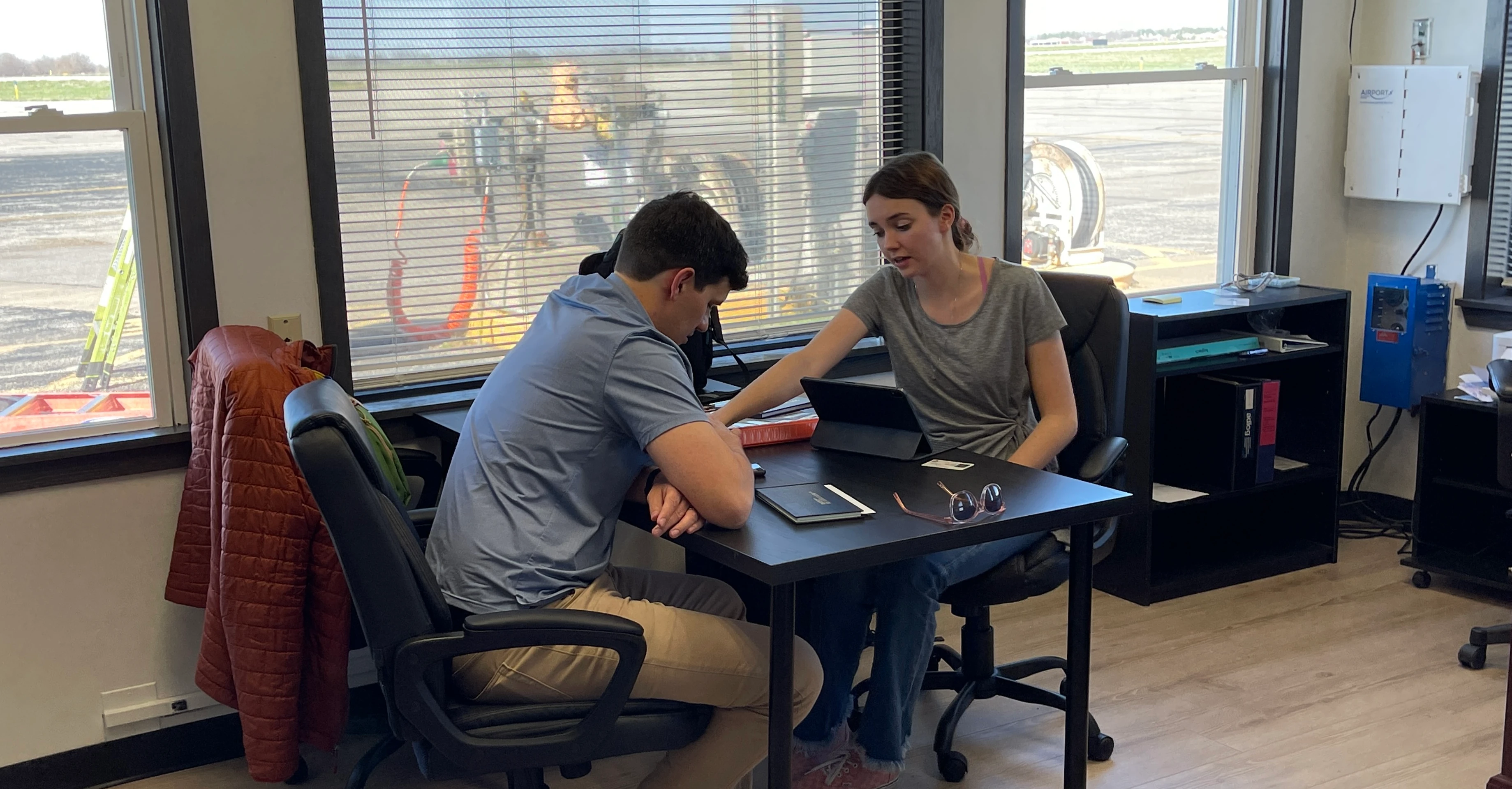
How STA juniors get a head start
If you’re in the Lee’s Summit R-7 district, the STA Aerospace Academy at Summit Technology Academy gives you a real head start. The Aerospace Academy is based in the new FBO hangar at Lee’s Summit Municipal Airport, on the other side of the field from us.
Students attend a morning or afternoon session and:
- Earn their drone certificate
- Complete private pilot ground school
- Take the FAA written test
- Earn about a dozen college credits, which some schools also accept as transfer credit
That’s a big chunk of private pilot training done before you book your first flight. From there, STA students can do their flight training with us, at the same airport where they go to class.
Finish your private pilot certificate before college and some university flight programs will let you take a proficiency check and move on to instrument training. Private pilot training can take more than a semester inside a university program, so arriving with your certificate can put you a semester to almost a year ahead.
For students who’d rather keep flying while earning a degree online, our Purdue Global partnership is another option.
Why senior spring is the hardest time to finish
By spring break, senior year gets crowded. Your grades are mostly settled, your scholarships are lined up, and you already know where you’re going in the fall. Flight training turns into one more thing on a full plate.
Most seniors still care. They’re just busy and a little overwhelmed. That’s when unfinished training tends to stall, and when a student who started in March finds themselves looking at a July deadline with the checkride still ahead.
Parents feel it too: more months of training means more flight hours and more cost. The FAA minimum for a private pilot certificate is 40 flight hours, and most students need more than that. Lessons spread thin over a busy spring usually push that number higher.
The students who finish on time usually have real progress before spring break: their first solo done and cross-country flights underway. Our high school page covers what successful student pilots have in common if you want to see how your student compares.
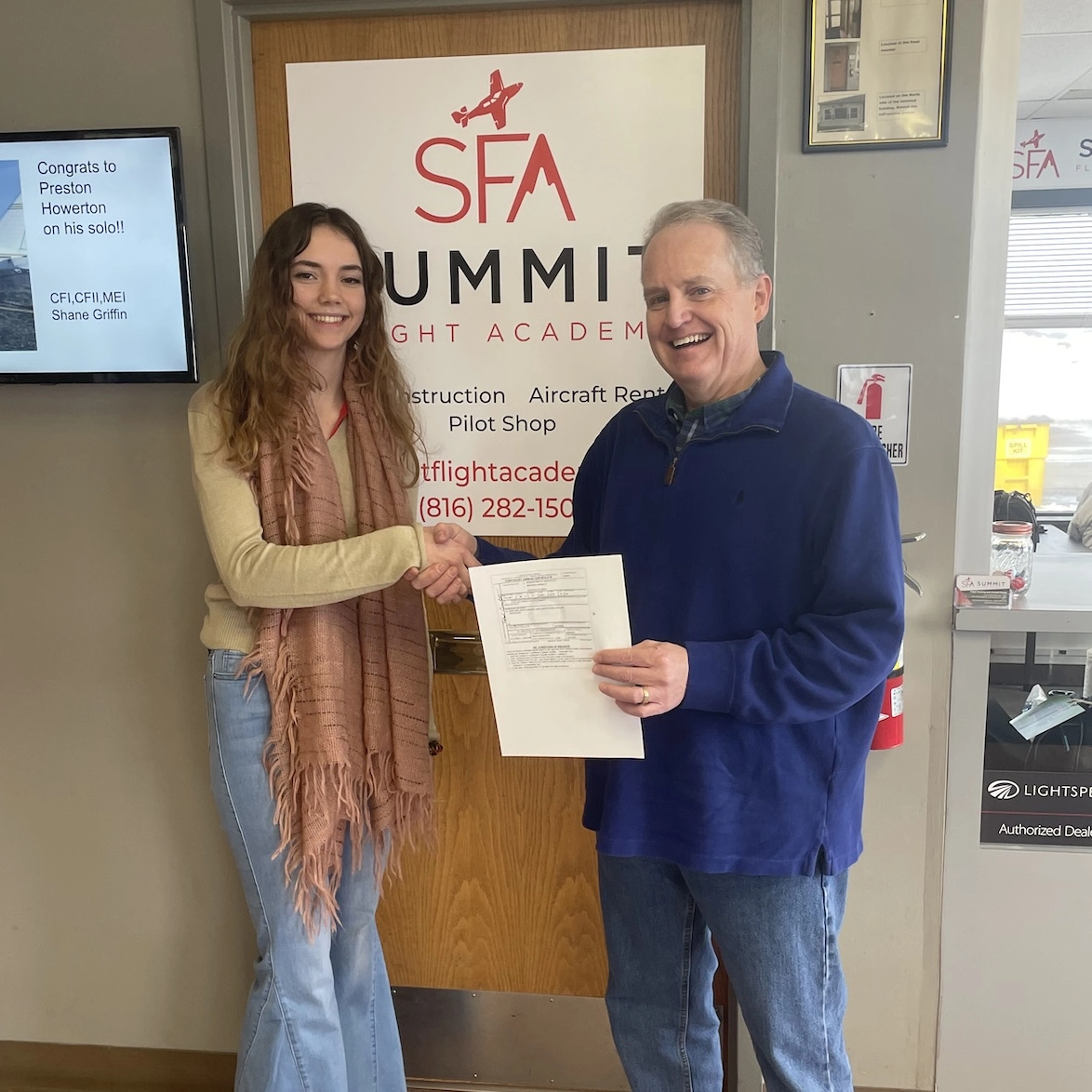
What parents can do this semester
If your student is serious about flying before college, a few steps this fall make the whole year easier:
- Book a discovery flight. It’s the fastest way to find out whether your student loves it before you commit to a program.
- Pick a pace. For most high schoolers, 1-2 lessons a week starting in the fall works best.
- Start ground school now, even if flying has to wait for a sport to end. The written test can be done before the first lesson.
- Schedule the medical exam early so it never holds up a first solo.
- Look at financing now. Our financing options let you spread the cost of training across the school year.
- Lock in a regular after-school slot before the winter rush fills the 3 pm block.
Our readiness assessment quiz is a quick way to see which pace fits your student.
Common questions from high school students and parents
What’s the best time of year for a high school student to start flight training?
The fall of the school year before your deadline. That gives you about nine months at 1-2 lessons a week and a June finish, with room to spare. Our high school flight training page has more on how that pace works.
Is it too late to start in January?
No. January is workable, but plan on weekend flights and flexible weekdays, since winter daylight limits most students to one after-school block. That’s still a lot better than waiting until spring.
Can I start flight training before I turn 16?
Yes. You can take lessons with an instructor at any age. You need to be 16 to solo and 17 to take the private pilot checkride. Our post on whether you’re too young to learn to fly covers the age milestones.
Do STA Aerospace Academy students still need flight training?
Yes. STA covers the drone certificate, private pilot ground school, and the FAA written test. The flight training itself happens with an instructor in the airplane, which STA students can complete with us through our private pilot program.
What happens if my student doesn’t finish before college?
They can keep training, but they may lose the head start of moving straight into instrument training. That’s why we aim for early to mid June: it leaves about a month of cushion for weather, maintenance, or checkride scheduling. Check your college’s exact deadline and plan backward from June, not July.
How much does private pilot training cost for a high schooler?
The cost is the same as for any private pilot student, and it depends mostly on how many hours your student needs. Consistent training usually means fewer total hours. See our financing page for ways to spread out payments.
Take the first flight this fall
The easiest way to find out whether your student will like flying is to put them in the airplane. Book a discovery flight and let them take the controls with one of our instructors at Lee’s Summit Municipal Airport. Get your student started with high school flight training while there’s still a full school year ahead.