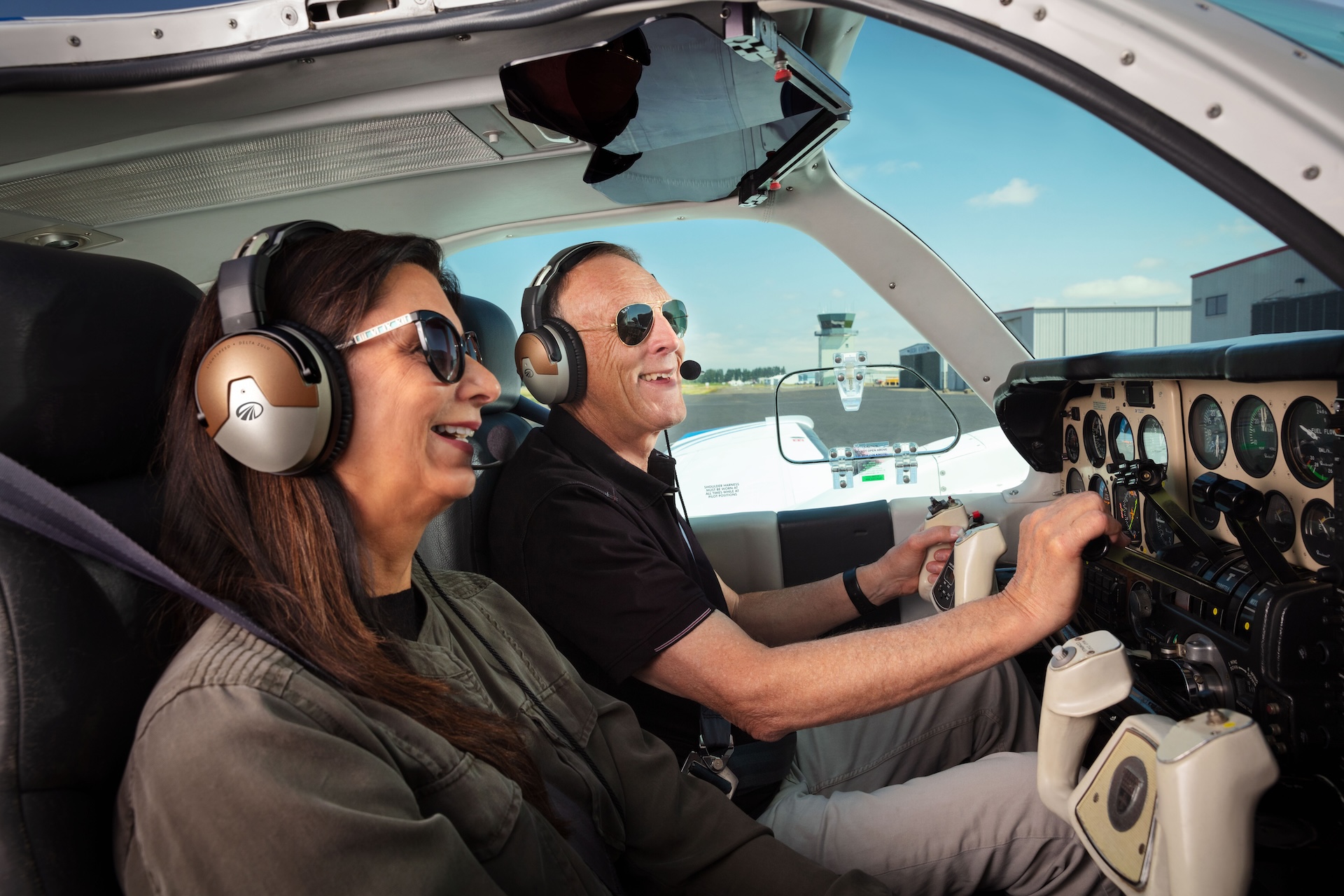
Thinking About Learning to Fly? What to Expect From Pilot Training in 2026

Published by:
Summit Flight Academy Team
Published on:
Updated on:
Read time:
10 min read
Picture the day your instructor climbs out, closes the door, and sends you around the pattern alone. There is nothing like your first solo, or your first landing, or the first time the airplane does exactly what you asked. Helping people reach those milestones is why we opened Summit Flight Academy.
If you walked into our office tomorrow and asked what pilot training is really like, we’d talk about those moments. Then we’d talk about the time, the money, the homework, and the commitment it takes to earn a certificate. So that’s where we’ll start too.
How Long Does It Take to Become a Pilot?
Probably longer than you think. And that’s okay. The biggest misconception about learning to fly is that it ends at a fixed number of hours or on a date circled on the calendar. The FAA sets minimum experience requirements. For a private pilot certificate under Part 61, that minimum is 40 hours of flight time.
Forty hours is a floor, and very few students are ready to fly alone with passengers at that floor. The FAA’s own figure for the national average is closer to 75 hours. Minimums are regulatory minimums, and how long your training takes depends on you, the weather, aircraft availability, and how consistently you show up.
That’s why our private pilot packages are built around how often you can fly, with hours to match:
| Package | Flying pace | Expected length | Flight hours included |
|---|---|---|---|
| Expedited | 5 to 6 days a week | 3 to 4 months | 48 |
| Efficient | 3 to 4 days a week | 5 to 6 months | 58 |
| Extended | 1 to 2 days a week | 9 to 10 months | 67 |
Notice the slower pace needs more hours. Skills fade between lessons, so a student flying twice a month spends part of each lesson getting back to where they left off. We don’t advance anyone because they hit an hour count or because a date says it’s time. We advance students when they’re ready.
What Does Flight Training Actually Look Like?
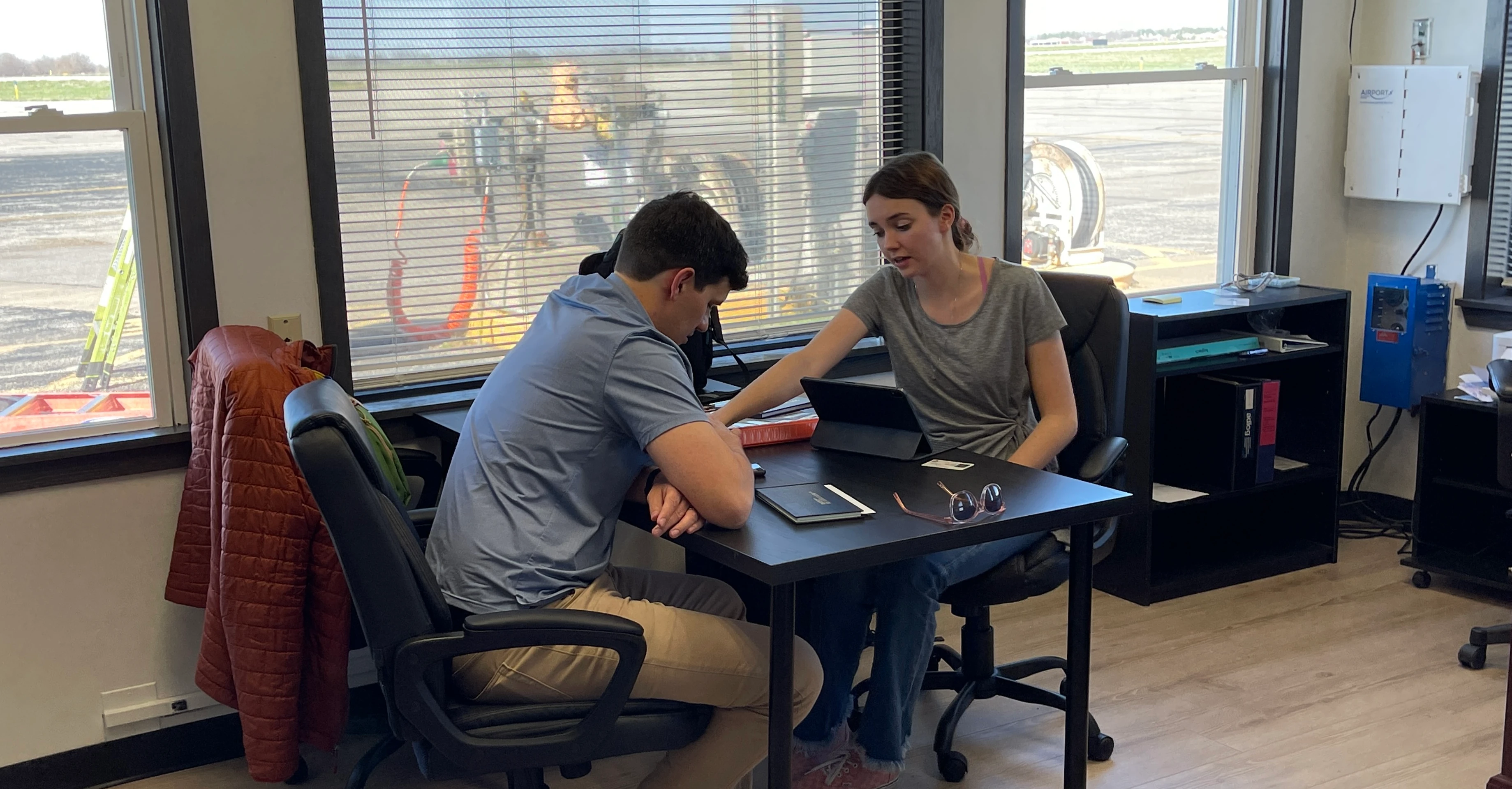
For a private pilot certificate, we break training into three stages. Each one has a milestone you’ll remember.
Stage one is learning to fly. You’ll start with the basics: controlling the airplane, taking off, landing, navigating, and making good decisions. Your first big milestone is your first solo. Before that day, you’ll complete the required training and instructor endorsements, pass our pre-solo written exam, and hold a student pilot certificate and an FAA medical certificate. Our medical certificate guide explains how to get that exam done early so it never holds you up.
At Summit, you’ll also pass the FAA knowledge test before you solo. People call it “the written.” It’s a multiple-choice exam on weather, regulations, navigation, and aircraft performance. Passing it proves you’ve learned the academic side of flying, and we’ve found that students who get it done early fly better and spend less.
Stage two is building experience. After your first solo, you’ll keep flying with your instructor while also flying on your own, including solo cross-country flights to other airports, each one signed off by your instructor. This is where everything starts to fit together and you develop the confidence that only comes from hours in the seat.
Stage three is getting ready for your checkride. The FAA practical test, which everyone calls the checkride, is given by a Designated Pilot Examiner. It has two parts: an oral exam where you answer questions and work through real flying scenarios, and a flight where you demonstrate your skills. Before we send you to it, we put you through a realistic mock checkride of our own. If you’re ready, great. If you’re not, we work on what needs improvement first. We’re not interested in sending students to checkrides hoping they’ll pass. We want them showing up prepared and confident. Our road to your checkride page walks through every milestone on the way there.
The training investment
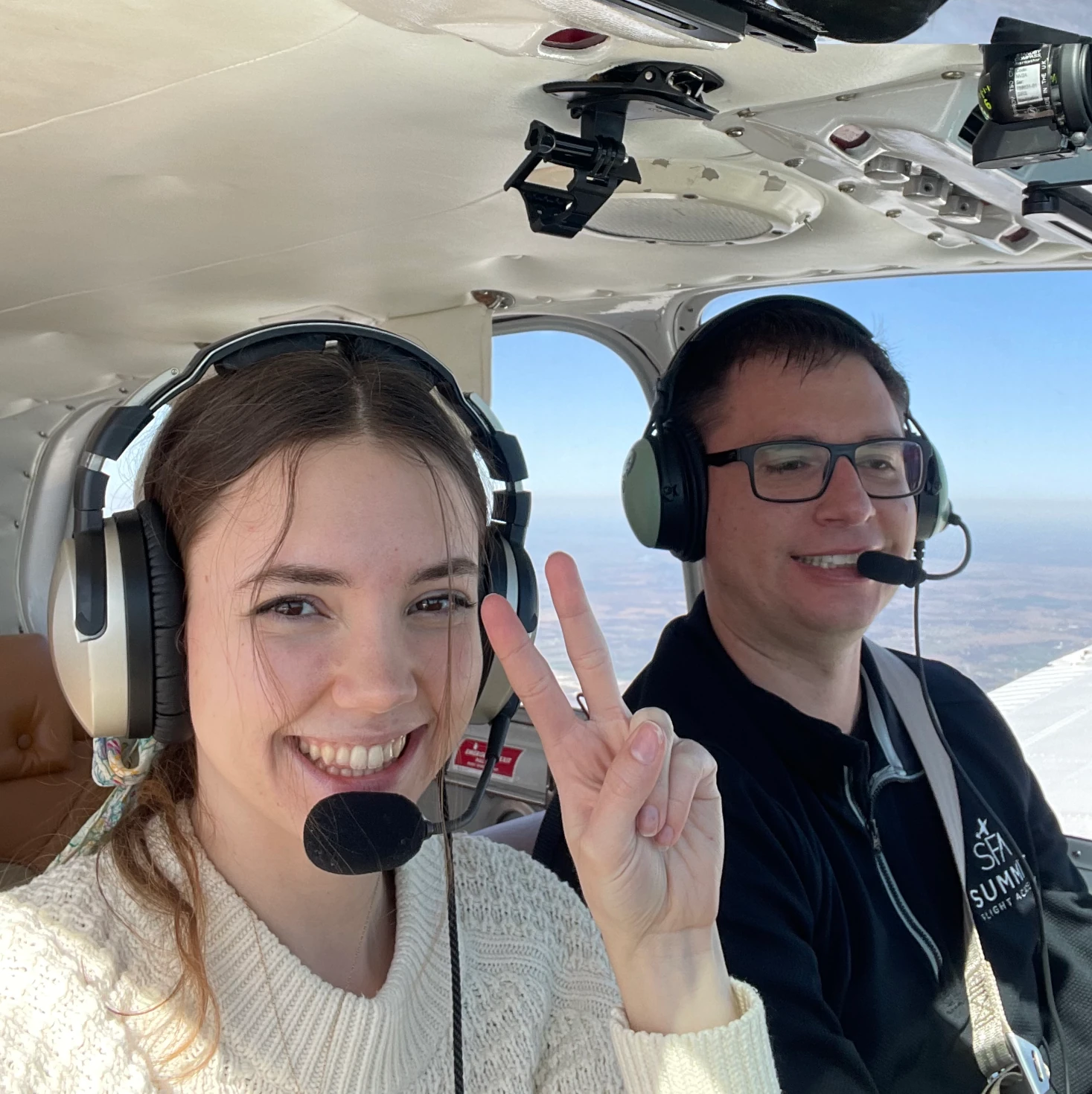
Flight training is expensive. There’s no sense pretending otherwise. We publish every package price up front because you deserve to see the number before you commit, and our financing partners offer options to qualified applicants if you’d rather spread it out.
What you can control is how far each dollar goes. The goal is to make every hour count. Flying the fewest hours possible is a different goal, and usually a worse one. Students who fly regularly retain what they learn and spend less time reviewing. Students who fly once every few weeks often spend a good part of each lesson warming back up, and that is an expensive way to stand still.
The same goes for studying. Your instructor can explain a concept in the airplane, but the cockpit is a pricey classroom for something you could have learned at home. Expect homework, independent study, and dedicated ground lessons throughout your training. Even after you pass the written, there’s plenty more to learn.
Our advice is simple. Budget for more than the FAA minimum, plan to fly consistently, and show up prepared. If your schedule or budget only allows a lesson every few weeks, talk to us before you start. It can make more sense to wait until you can commit to a steadier pace than to spend money repeating lessons. Our guide to the cheapest way to become a pilot has more on this.
A word to parents and anyone helping pay
First, thank you. Flight training is a big investment, and we don’t take the trust you’re placing in us lightly.
There’s one thing we’d ask you to understand. Even if you’re paying for the training, your student needs to own it. Think about what we’re preparing them to do. One day soon they’ll be alone in an airplane, making decisions without an instructor or a parent beside them. That independence doesn’t appear on solo day. We start building it on day one.
So we expect students to communicate with their instructors, know where they are in training, and know what they need to work on. After every lesson, we debrief: what went well, what needs improvement, and what comes next. If you’re curious how things are going, ask your student. They should be able to give you a good rundown.
We’re always glad to talk with you about billing, scheduling, paperwork, or any safety concern. What we don’t typically do is send separate lesson-by-lesson progress reports to parents or sponsors. Your student has to become the person who can take charge of an airplane, and that starts with being the one who reports on their own training. If your student is still in high school, our post on when high school students should start flight training covers the calendar side of that conversation.
What Happens When the Checkride Gets Close?
This is where we ask students to focus. The final month before a checkride is the most demanding stretch of training. You’ll fly often, study on your own, spend time on the ground with your instructor, and complete your mock checkride about two weeks before the real thing.
If you’re planning a family vacation, a busy sports season, or any other big commitment, tell us early. An extended break right before a checkride makes it hard to hold the proficiency you worked so hard to build. Our instructors see this most often with high school seniors in the spring, when prom, graduation, and senior trips all land at once.
One more thing: sometimes checkrides get postponed. The weather doesn’t cooperate. The examiner’s schedule changes. Or the mock checkride turns up a few things that still need work. We know a delay is frustrating when you’ve been working toward a date for months. We’d still rather postpone than send someone who isn’t ready. The date matters. Your readiness matters more. If a checkride is on your horizon, our checkride guide for beginners explains what the examiner is looking for.
You’re going to have some bad days
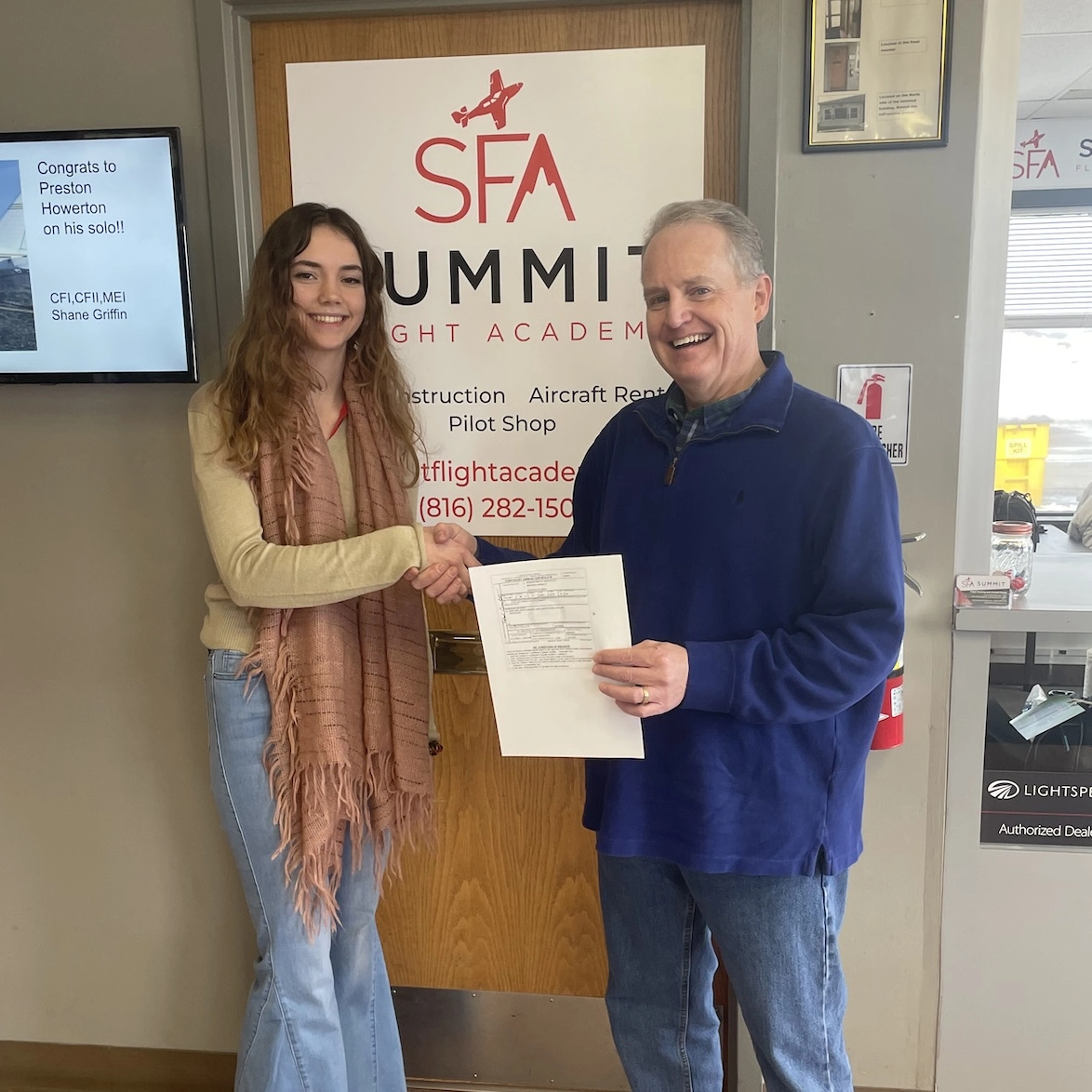
We should mention this too. Not every lesson will feel like progress. You’ll have days when everything clicks, and days when you can’t make a decent landing to save your life. That’s part of learning.
We’ve trained plenty of good pilots who struggled with something along the way. What matters is whether you’re willing to learn from a tough lesson and come back ready to try again. Our instructors will encourage you, challenge you, celebrate your milestones, and sometimes give you feedback you won’t love hearing. That’s our job. Your part is to show up prepared, ask questions, take ownership of your progress, and keep working. If you want to see what that looks like in practice, our discovery flight page describes the first hour.
You don’t need to be a natural. You don’t need to have everything figured out before you begin. You need to be willing to put in the effort. Our goal at Summit Flight Academy is to help you become the kind of pilot we’d trust to fly the people we love. The certificate is the proof. We take that seriously.
Frequently Asked Questions
How long does it take to become a private pilot?
It depends on how often you fly. Our packages run from 3 to 4 months at five or six days a week to 9 to 10 months at one or two lessons a week. The FAA minimum is 40 flight hours, and the national average is closer to 75. Weather, maintenance, and your own consistency all move the number. See our private pilot training page for each pace.
Do I need a medical certificate before I start?
You can take lessons with an instructor without one, but you’ll need an FAA medical certificate before your first solo. We recommend scheduling the exam early. Our medical certificate guide explains the process.
What happens if I fail the checkride?
You can retest after additional training and a new endorsement from your instructor. Our mock checkride exists to catch problems before the examiner does, which is why we’d rather postpone than send you unprepared. Our road to your checkride guide walks through every step leading up to it.
Is there financing for flight training?
Yes. Every package has a monthly payment option, and financing is available to qualified applicants through our lending partners. Our financing page has the details.
What’s the best first step?
A discovery flight. You’ll fly with one of our instructors, take the controls, and find out whether this is for you before you commit to a program.
Take the first step with a discovery flight
The best way to find out whether pilot training is right for you is to get in the airplane. A discovery flight puts you in the left seat with one of our instructors at Lee’s Summit Municipal Airport, and it’s the same conversation we’ve had here, in the air instead of on a page. Book your discovery flight and we’ll talk through the rest in person.